Importer's forced labour policy (Alaska): Free template
Got contracts to review? While you're here for policies, let Cobrief make contract review effortless—start your free review now.
Customize this template for free
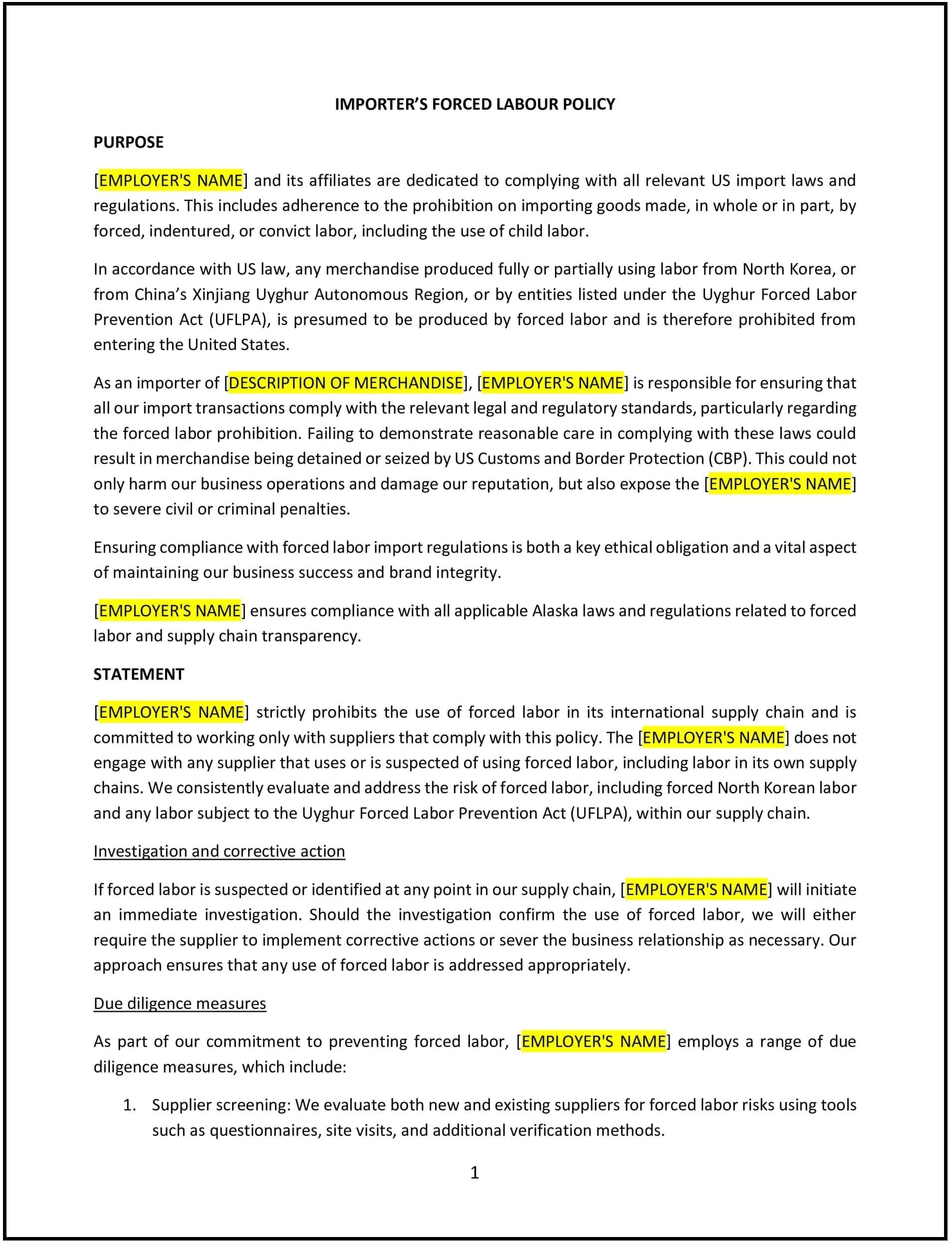
Importer’s forced labor policy (Alaska)
In Alaska, an importer’s forced labor policy outlines a company’s commitment to ensuring that its supply chain is free from products or materials produced through forced labor. This policy provides guidelines for assessing supplier practices, conducting audits, and addressing non-compliance, helping businesses align with federal laws such as the U.S. Tariff Act and the Uyghur Forced Labor Prevention Act (UFLPA). By implementing this policy, businesses can uphold ethical practices, protect their reputation, and contribute to combating forced labor globally.
Given Alaska’s industries, such as fishing, resource extraction, and trade, businesses must ensure that imported goods and materials comply with legal and ethical standards.
How to use this importer’s forced labor policy (Alaska)
- Define scope: Specify which goods, materials, or suppliers are subject to the policy, focusing on high-risk areas or industries linked to forced labor concerns.
- Establish due diligence procedures: Include steps for vetting suppliers, such as requiring certifications, conducting audits, and assessing risk factors related to forced labor.
- Require supplier compliance: Mandate that suppliers adhere to anti-forced labor standards and provide documentation verifying compliance.
- Outline response measures: Provide a framework for addressing violations, including terminating contracts, reporting issues, and remediating harm where feasible.
- Train employees: Educate relevant staff on identifying forced labor risks and implementing the policy effectively within procurement and supply chain operations.
Benefits of using an importer’s forced labor policy (Alaska)
An importer’s forced labor policy offers significant benefits for businesses in Alaska. Here’s how it helps:
- Supports compliance: Helps businesses adhere to federal laws prohibiting the importation of goods made with forced labor, reducing the risk of penalties or legal actions.
- Protects reputation: Demonstrates a commitment to ethical sourcing, fostering trust among customers, stakeholders, and partners.
- Mitigates supply chain risks: Reduces the likelihood of disruptions caused by forced labor violations or regulatory investigations.
- Enhances transparency: Provides clear guidelines for monitoring supply chain practices and ensuring accountability among suppliers.
- Contributes to social responsibility: Aligns with global efforts to eradicate forced labor and improve working conditions in supply chains.
Tips for using an importer’s forced labor policy (Alaska)
- Focus on high-risk areas: Prioritize due diligence for suppliers operating in industries or regions associated with forced labor risks.
- Use certifications: Require suppliers to provide certifications or third-party audit reports confirming compliance with anti-forced labor standards.
- Monitor continuously: Implement ongoing monitoring systems to identify potential risks and ensure supplier practices remain compliant over time.
- Engage stakeholders: Collaborate with suppliers, industry groups, and NGOs to improve awareness and implementation of ethical sourcing practices.
- Update regularly: Revise the policy to reflect changes in laws, regulations, or supply chain dynamics.