Importer's forced labour policy (Connecticut): Free template
Got contracts to review? While you're here for policies, let Cobrief make contract review effortless—start your free review now.
Customize this template for free
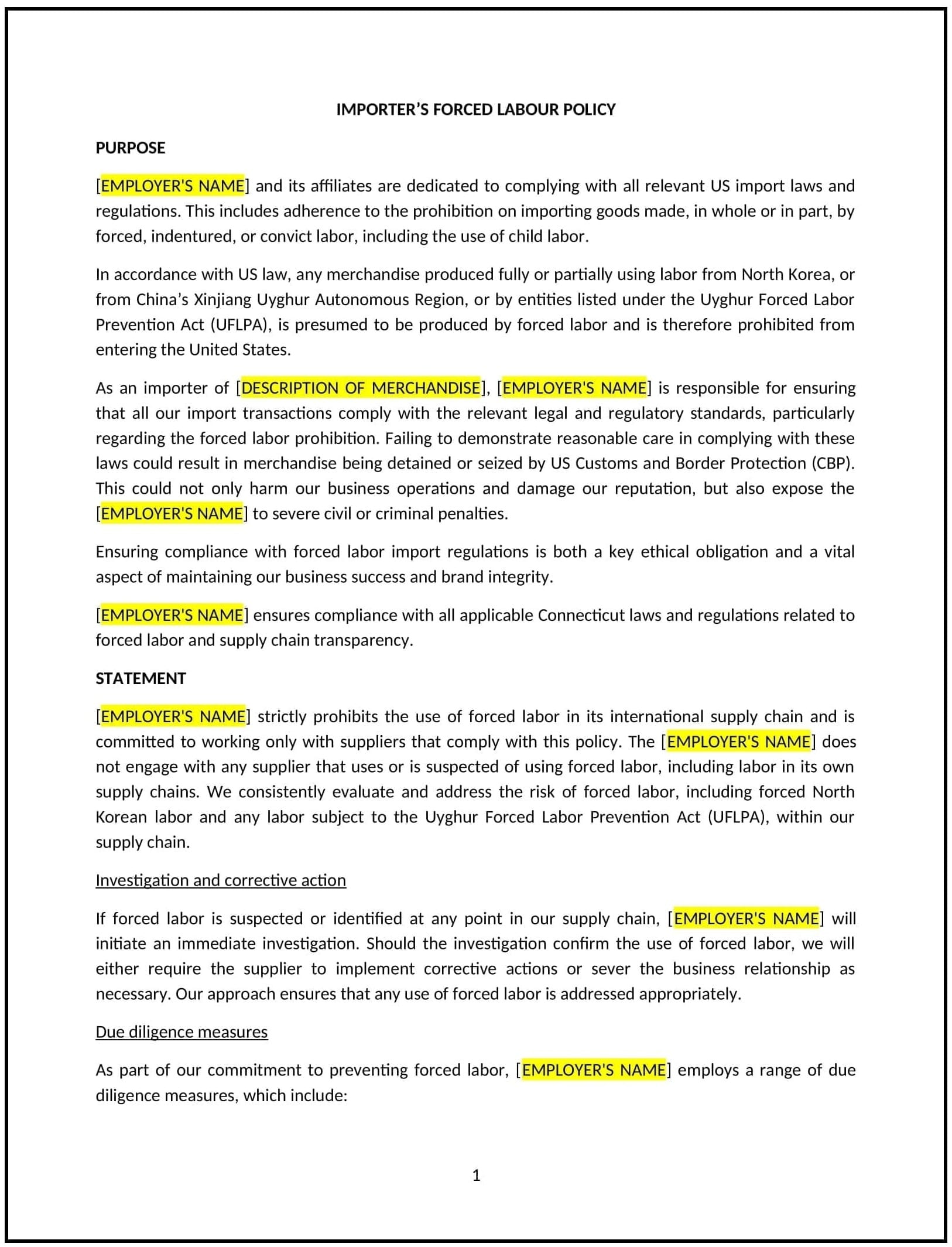
Importer's forced labour policy (Connecticut)
An importer’s forced labour policy helps Connecticut businesses ensure that they do not engage in or support forced labour practices in their supply chains. This policy outlines the company’s commitment to identifying, preventing, and addressing forced labour, trafficking, and other forms of exploitation within the sourcing and importation of goods. It defines procedures for investigating suppliers, addressing risks, and complying with federal and state regulations on forced labour and human trafficking.
By implementing this policy, businesses can mitigate risks, uphold ethical sourcing practices, and contribute to global efforts to eliminate forced labour, enhancing their reputation and ensuring compliance with both domestic and international laws.
How to use this importer's forced labour policy (Connecticut)
- Define forced labour: Clearly explain what constitutes forced labour, including situations where individuals are coerced or exploited through threat, violence, or other forms of manipulation, and how this applies to the company’s operations and supply chains.
- Implement due diligence procedures: Establish protocols for conducting due diligence on suppliers to assess the risk of forced labour in their operations. This includes evaluating labour practices, auditing supply chains, and assessing the integrity of business partners.
- Set up supplier monitoring: Outline the company’s process for monitoring suppliers’ compliance with the policy, including regular audits, inspections, and checks for signs of forced labour or trafficking.
- Provide training: Offer training for employees, especially those in procurement, sourcing, and supply chain management, on identifying indicators of forced labour and how to handle suspected violations.
- Address violations: Define the process for investigating and addressing any cases of forced labour found within the supply chain, including the steps for severing ties with non-compliant suppliers and implementing corrective actions.
- Ensure compliance with laws: Make sure the policy complies with relevant federal and state laws on forced labour, including the Tariff Act of 1930, the Trafficking Victims Protection Act (TVPA), and Connecticut-specific regulations on human trafficking.
Benefits of using this importer's forced labour policy (Connecticut)
This policy offers several benefits for Connecticut businesses:
- Promotes ethical sourcing: Demonstrates the company’s commitment to ethical and responsible sourcing practices, which can improve its reputation and align with corporate social responsibility (CSR) values.
- Reduces legal risks: Helps the business avoid penalties, lawsuits, and reputational damage related to the use of forced labour in its supply chain by ensuring compliance with applicable laws.
- Enhances transparency: Provides clear guidelines for suppliers and internal stakeholders, promoting transparency in the supply chain and demonstrating the company’s commitment to ethical business practices.
- Increases consumer trust: By publicly committing to eliminating forced labour, businesses build trust with consumers who prioritize ethical sourcing and human rights protections.
- Strengthens supply chain integrity: A proactive approach to preventing forced labour helps to protect the business from risks associated with unreliable or unethical suppliers, contributing to long-term supply chain stability.
Tips for using this importer's forced labour policy (Connecticut)
- Communicate clearly: Ensure that all employees, particularly those in procurement and supply chain management, understand the policy and its implications.
- Monitor supplier practices: Regularly assess suppliers to ensure they comply with the policy and maintain ethical labour standards. Use third-party auditors if necessary to conduct independent assessments.
- Foster collaboration: Work with industry groups, NGOs, and other stakeholders to share best practices and promote transparency in supply chains.
- Act on violations: Address any identified violations of the policy swiftly and transparently, severing ties with non-compliant suppliers and taking corrective actions.
- Review periodically: Regularly review and update the policy to reflect any changes in Connecticut laws, federal regulations, or industry best practices, ensuring its continued effectiveness.