Importer's forced labour policy (Delaware): Free template
Got contracts to review? While you're here for policies, let Cobrief make contract review effortless—start your free review now.
Customize this template for free
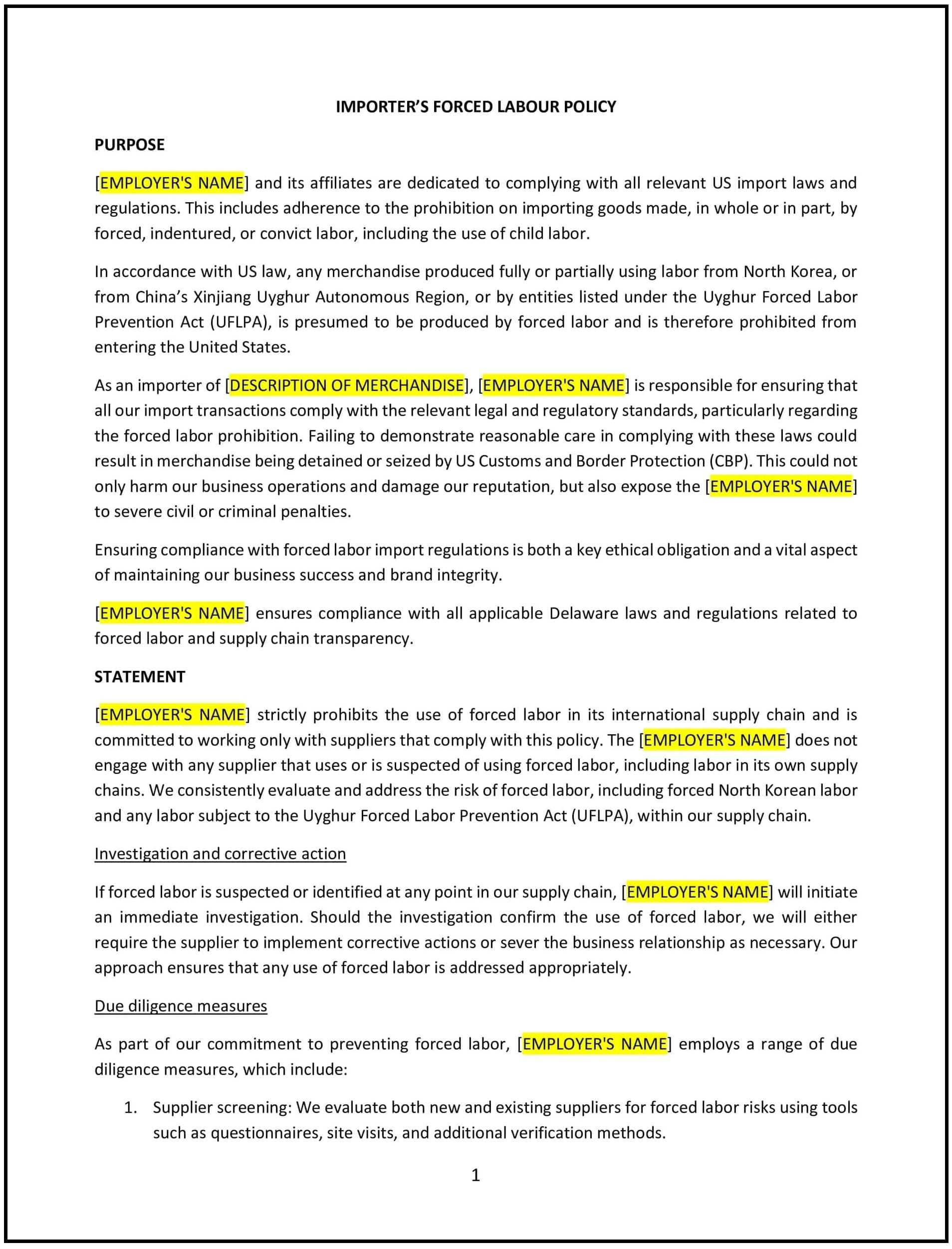
Importer's forced labor policy (Delaware)
An importer’s forced labor policy helps Delaware businesses ensure that imported goods comply with U.S. and international laws prohibiting forced labor. This policy outlines guidelines for supplier due diligence, risk assessment, and corrective actions to uphold ethical sourcing practices and regulatory compliance.
By implementing this policy, businesses can prevent forced labor in their supply chains, protect their reputation, and adhere to legal requirements such as the U.S. Customs and Border Protection (CBP) regulations.
How to use this importer’s forced labor policy (Delaware)
- Conduct supplier due diligence: Require suppliers to certify that their goods are produced without forced labor, including child or coerced labor.
- Implement risk assessments: Regularly assess supply chains for risks of forced labor, especially in high-risk regions or industries.
- Establish compliance procedures: Outline steps for verifying supplier compliance, such as audits, certifications, or on-site inspections.
- Create a reporting mechanism: Provide a confidential channel for employees or stakeholders to report concerns about forced labor in the supply chain.
- Develop corrective action plans: Specify procedures for addressing violations, such as terminating contracts or working with suppliers to implement remediation measures.
- Ensure compliance: Align the policy with U.S. CBP regulations, Delaware laws, and international standards to avoid penalties and legal risks.
Benefits of using this importer’s forced labor policy (Delaware)
This policy offers several benefits for Delaware businesses:
- Promotes ethical practices: Demonstrates the company’s commitment to preventing forced labor and supporting human rights.
- Reduces legal risks: Ensures compliance with U.S. CBP regulations and other applicable laws, minimizing the risk of fines or import bans.
- Enhances reputation: Builds trust with customers, investors, and stakeholders by maintaining ethical sourcing practices.
- Mitigates supply chain disruptions: Proactively addresses forced labor risks to avoid import bans or delays.
- Strengthens supplier relationships: Encourages transparency and collaboration with suppliers to uphold ethical standards.
Tips for using this importer’s forced labor policy (Delaware)
- Communicate the policy effectively: Ensure suppliers, employees, and stakeholders understand the company’s commitment to preventing forced labor.
- Train employees: Provide training on identifying forced labor risks and monitoring supplier compliance.
- Leverage technology: Use tools to trace supply chains and monitor risks associated with forced labor.
- Partner with experts: Collaborate with third-party auditors or organizations specializing in ethical sourcing to enhance due diligence efforts.
- Review regularly: Update the policy to reflect changes in U.S. CBP regulations, Delaware laws, or supply chain dynamics.