Importer’s forced labour policy (Georgia): Free template
Got contracts to review? While you're here for policies, let Cobrief make contract review effortless—start your free review now.
Customize this template for free
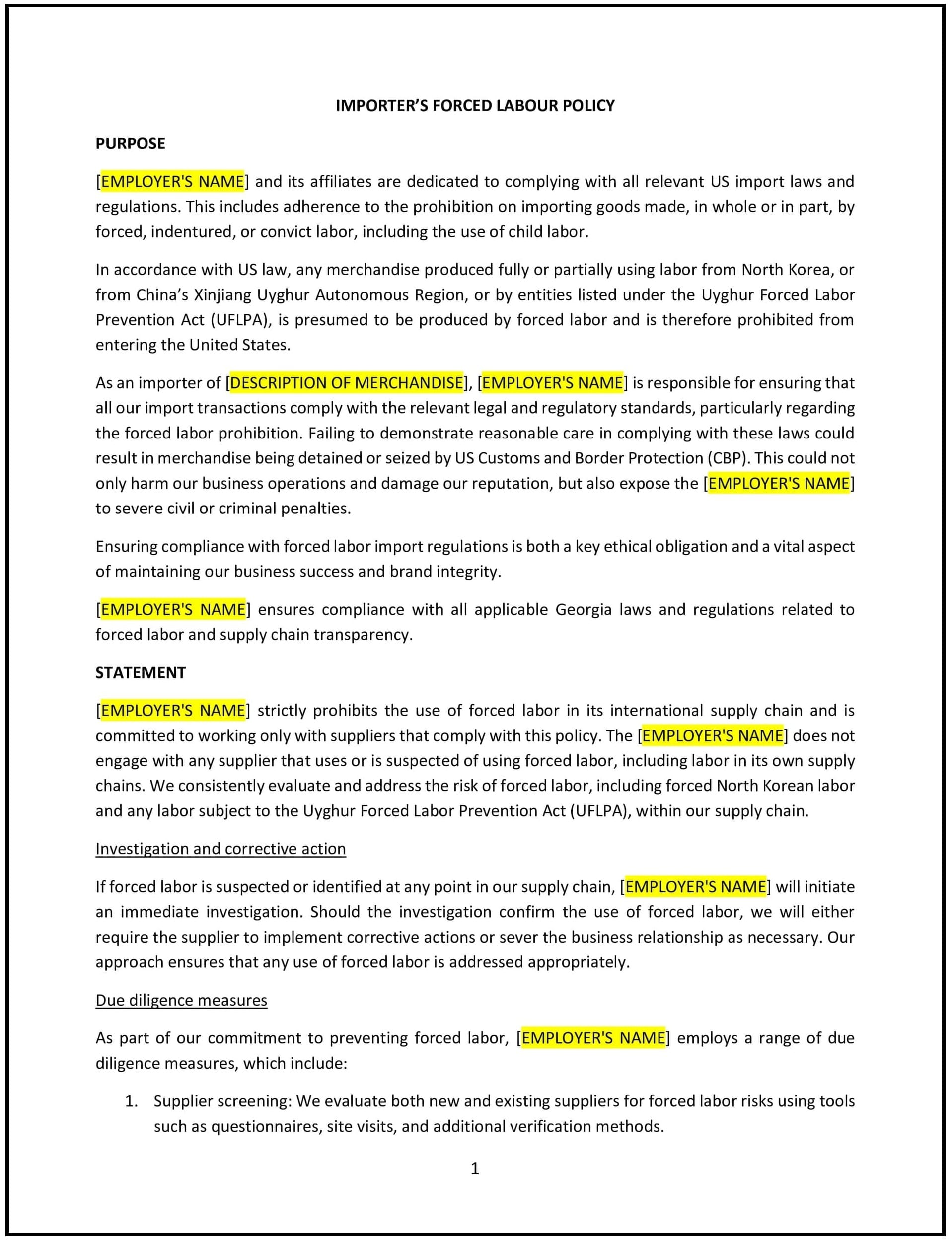
Importer's forced labour policy (Georgia)
This importer’s forced labour policy is designed to help Georgia businesses ensure their supply chains are free from forced labor and other unethical practices. The policy outlines expectations for suppliers, monitoring procedures, and corrective actions to uphold ethical sourcing standards.
By implementing this policy, businesses can promote human rights, protect their reputation, and align with ethical trade practices.
How to use this importer’s forced labour policy (Georgia)
- Define forced labor: Provide a clear definition, including practices such as involuntary work, bonded labor, or withholding wages.
- Establish supplier expectations: Require suppliers to adhere to ethical labor standards, including avoiding forced labor in their operations and supply chains.
- Include contractual requirements: Ensure supplier agreements include clauses prohibiting forced labor and outlining consequences for violations.
- Conduct supplier assessments: Regularly evaluate suppliers through audits, certifications, or on-site inspections to verify compliance with ethical standards.
- Set monitoring protocols: Develop procedures for tracking supplier practices, including reviewing documentation and conducting worker interviews.
- Encourage reporting: Create a system for employees, suppliers, or other stakeholders to report suspected forced labor practices confidentially.
- Take corrective action: Define steps for addressing violations, such as working with suppliers to resolve issues or terminating contracts if necessary.
- Review and update regularly: Periodically reassess the policy to reflect changes in Georgia’s trade dynamics, industry standards, or regulations.
Benefits of using this importer’s forced labour policy (Georgia)
Implementing this policy provides several advantages for Georgia businesses:
- Promotes ethical sourcing: Ensures supply chains align with international labor standards and human rights principles.
- Protects reputation: Demonstrates a commitment to ethical business practices, building trust with customers and stakeholders.
- Reduces legal risks: Clear guidelines help businesses address potential violations and avoid regulatory penalties.
- Enhances supplier relationships: Establishing transparent expectations fosters collaboration and accountability.
- Reflects Georgia-specific trade needs: Tailoring the policy to local industries and trade practices ensures its effectiveness.
Tips for using this importer’s forced labour policy (Georgia)
- Partner with reliable suppliers: Work with suppliers that have a proven track record of ethical labor practices.
- Provide training: Educate employees and suppliers about forced labor risks and the importance of ethical sourcing.
- Monitor proactively: Use tools such as supply chain audits and certifications to identify and address issues early.
- Respond quickly: Take immediate action to address reports of forced labor and prevent recurrence.
- Collaborate with local organizations: Partner with Georgia-based trade and labor advocacy groups to strengthen policy implementation.