Importer's forced labour policy (Idaho): Free template
Got contracts to review? While you're here for policies, let Cobrief make contract review effortless—start your free review now.
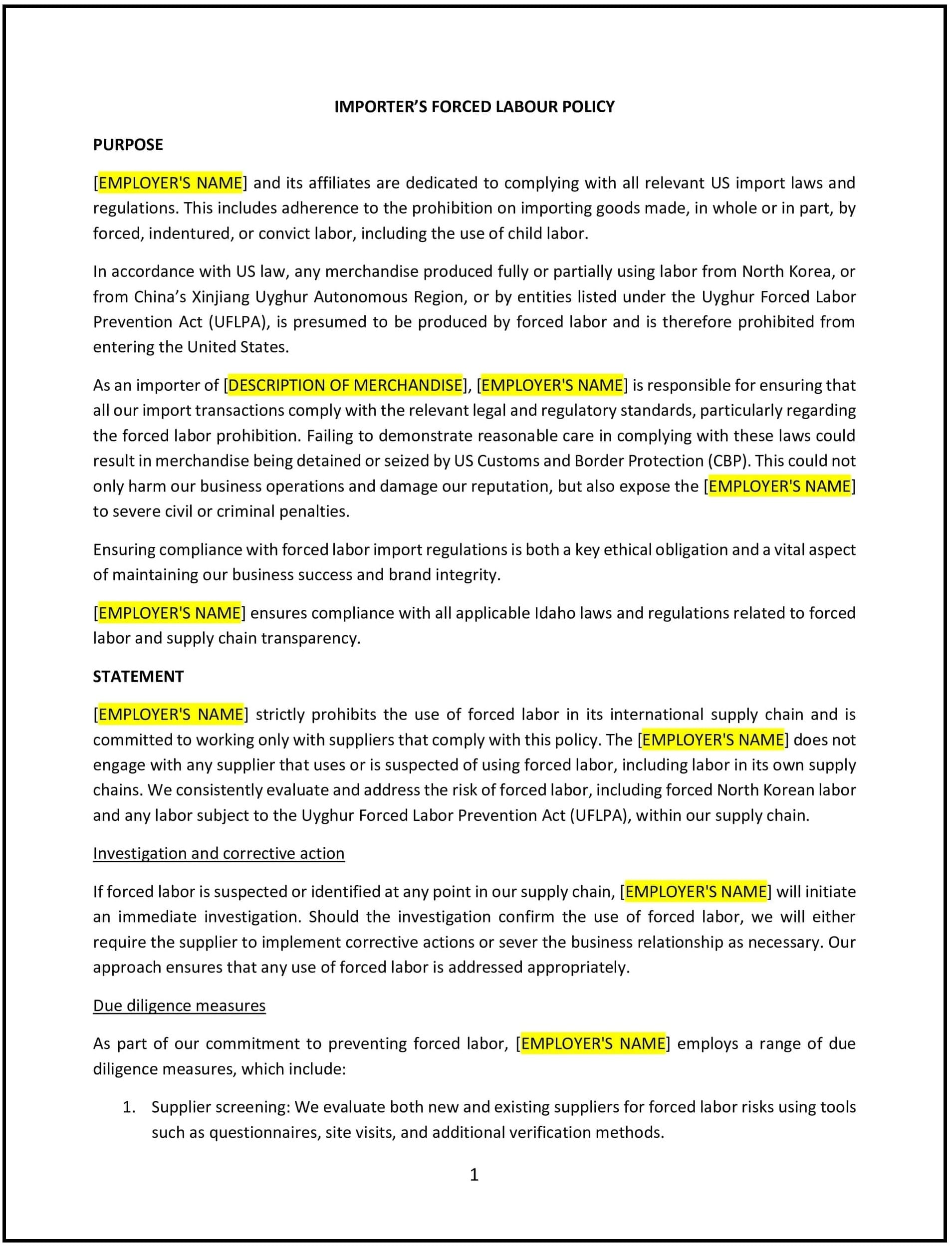
Customize this template for free
Importer’s forced labor policy (Idaho)
An importer’s forced labor policy helps Idaho businesses establish guidelines for preventing forced labor in their supply chains. This policy outlines the business’s commitment to ethical sourcing, due diligence processes, and compliance with federal and international laws, such as the U.S. Tariff Act of 1930 and the International Labour Organization (ILO) standards. It reflects the business’s dedication to human rights, ethical practices, and responsible supply chain management.
By implementing this policy, businesses can reduce the risk of forced labor in their supply chains, protect their reputation, and contribute to global efforts to eradicate forced labor.
How to use this importer’s forced labor policy (Idaho)
- Define forced labor: Clearly define forced labor as any work or service that is exacted from an individual under threat, coercion, or penalty, and without voluntary consent.
- Establish due diligence processes: Outline steps for assessing and monitoring supply chains to identify and mitigate risks of forced labor, such as supplier audits, risk assessments, and third-party certifications.
- Set supplier standards: Provide guidelines for suppliers, including a code of conduct that prohibits forced labor and requires adherence to ethical labor practices.
- Implement reporting mechanisms: Create a process for employees, suppliers, and stakeholders to report suspected cases of forced labor, ensuring confidentiality and protection from retaliation.
- Conduct training: Train employees and suppliers on recognizing and preventing forced labor, as well as the importance of ethical sourcing.
- Monitor and review: Regularly review supply chain practices and update the policy to address emerging risks and align with evolving laws and standards.
- Communicate expectations: Ensure all stakeholders understand the policy and their responsibilities in preventing forced labor.
Benefits of using this importer’s forced labor policy (Idaho)
This policy provides numerous benefits for Idaho businesses:
- Reduces legal and reputational risks: By addressing forced labor risks, businesses can avoid penalties, seizures, and damage to their reputation.
- Promotes ethical practices: The policy demonstrates the business’s commitment to human rights and ethical sourcing, enhancing its brand image.
- Strengthens supply chain resilience: Identifying and mitigating forced labor risks helps create a more transparent and sustainable supply chain.
- Builds stakeholder trust: A strong commitment to eradicating forced labor fosters trust with customers, investors, and partners.
- Aligns with global standards: The policy helps businesses comply with international laws and standards, such as the U.S. Tariff Act and ILO conventions.
- Encourages accountability: The policy holds suppliers and employees accountable for maintaining ethical labor practices.
- Supports corporate social responsibility: The policy reflects the business’s dedication to social responsibility and ethical business practices.
Tips for using this importer’s forced labor policy (Idaho)
- Communicate the policy effectively: Share the policy with employees, suppliers, and stakeholders through training sessions, contracts, and internal communications.
- Train employees and suppliers: Provide regular training on recognizing and preventing forced labor, as well as the importance of ethical sourcing.
- Conduct regular audits: Perform supplier audits and risk assessments to identify and address potential forced labor risks in the supply chain.
- Collaborate with third parties: Partner with ethical certification organizations or auditors to verify supplier compliance with the policy.
- Document processes: Maintain records of due diligence efforts, audits, and corrective actions to demonstrate accountability and transparency.
- Review the policy regularly: Update the policy as needed to reflect changes in laws, industry standards, or supply chain risks.
- Lead by example: Encourage leadership to model a commitment to ethical sourcing and human rights.