Importer’s forced labour policy (Iowa): Free template
Got contracts to review? While you're here for policies, let Cobrief make contract review effortless—start your free review now.
Customize this template for free
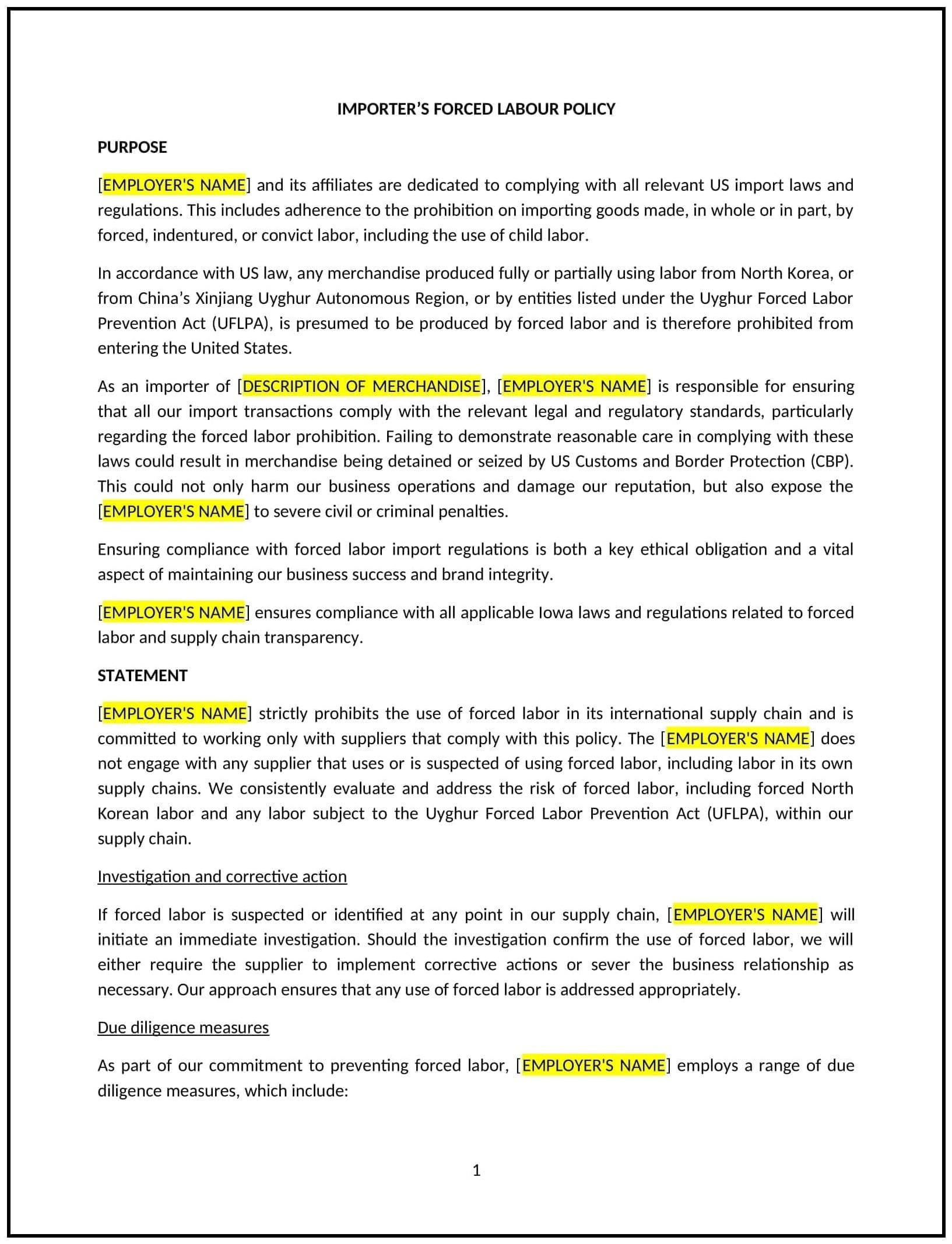
Importer's forced labour policy (Iowa)
An importer's forced labour policy is designed to prevent the use of forced labour in the supply chain of businesses operating in Iowa. This policy provides clear guidelines on how businesses should identify, prevent, and address forced labour issues related to imported goods. By implementing such a policy, businesses can ensure they operate ethically, uphold human rights, and protect their reputation by adhering to international standards and regulations.
By adopting this policy, businesses in Iowa can promote ethical sourcing, mitigate the risks of forced labour, and ensure that they are part of a responsible and sustainable global supply chain.
How to use this importer's forced labour policy (Iowa)
- Define forced labour: Clearly describe what constitutes forced labour, including coercion, deception, and human trafficking, and provide examples of how forced labour might manifest in the supply chain.
- Conduct supply chain assessments: Businesses should regularly assess their supply chains to identify and eliminate any risks of forced labour, using audits, inspections, and verification processes.
- Set expectations for suppliers: Outline the expectations businesses have of suppliers, including requiring them to sign commitments to adhere to ethical labour practices and compliance with forced labour laws.
- Implement risk management strategies: Develop and implement strategies to address any identified risks, including monitoring, reporting, and corrective action plans.
- Provide training for staff: Educate employees, especially those in procurement and supply chain management, on how to identify forced labour, the company’s policies on forced labour, and how to address issues when they arise.
- Establish a reporting mechanism: Create a clear and confidential reporting process for employees, suppliers, and other stakeholders to report suspected cases of forced labour or unethical practices in the supply chain.
- Collaborate with third-party organizations: Partner with NGOs, auditors, or industry groups to monitor supply chains and ensure compliance with forced labour laws and best practices.
- Review and update the policy regularly: Periodically review and update the policy to reflect changes in legal requirements, best practices, and the business’s supply chain needs.
Benefits of using this importer's forced labour policy (Iowa)
This policy offers several key benefits for Iowa businesses:
- Protects business reputation: By ensuring that forced labour is not part of the supply chain, businesses safeguard their brand image and demonstrate a commitment to ethical practices.
- Reduces legal risks: Clear guidelines and monitoring mechanisms help businesses avoid potential legal repercussions related to forced labour violations.
- Strengthens supply chain integrity: A policy on forced labour ensures that businesses can trust their suppliers and protect themselves from unethical practices that could damage their business relationships.
- Enhances corporate social responsibility (CSR): This policy supports businesses in fulfilling their CSR obligations by promoting human rights and ethical treatment of workers in the supply chain.
- Builds consumer trust: Consumers are increasingly concerned with ethical sourcing, and businesses that can prove they operate without forced labour gain customer loyalty and trust.
- Promotes long-term sustainability: By addressing forced labour, businesses foster a more responsible and sustainable supply chain, supporting fair labour practices globally.
Tips for using this importer's forced labour policy (Iowa)
- Conduct thorough due diligence: Businesses should ensure that all suppliers undergo regular assessments and audits to ensure they adhere to the policy and ethical standards.
- Implement corrective actions: If forced labour is identified, businesses should have a clear and effective process for addressing it, including corrective actions and potential severance of business relationships with non-compliant suppliers.
- Maintain transparency: Businesses should be transparent about their sourcing practices, the steps taken to combat forced labour, and the results of their audits.
- Develop a strong partnership with suppliers: Work closely with suppliers to foster a collaborative approach to eliminating forced labour, ensuring mutual understanding and commitment to ethical practices.
- Provide resources for reporting: Make it easy for employees, suppliers, and stakeholders to report forced labour concerns, and ensure that all reports are addressed promptly and confidentially.
- Regularly update training materials: Ensure that all employees involved in the supply chain are regularly trained on identifying and preventing forced labour, as well as on the company’s policies and procedures.