Importer's forced labour policy (Kentucky): Free template
Got contracts to review? While you're here for policies, let Cobrief make contract review effortless—start your free review now.
Customize this template for free
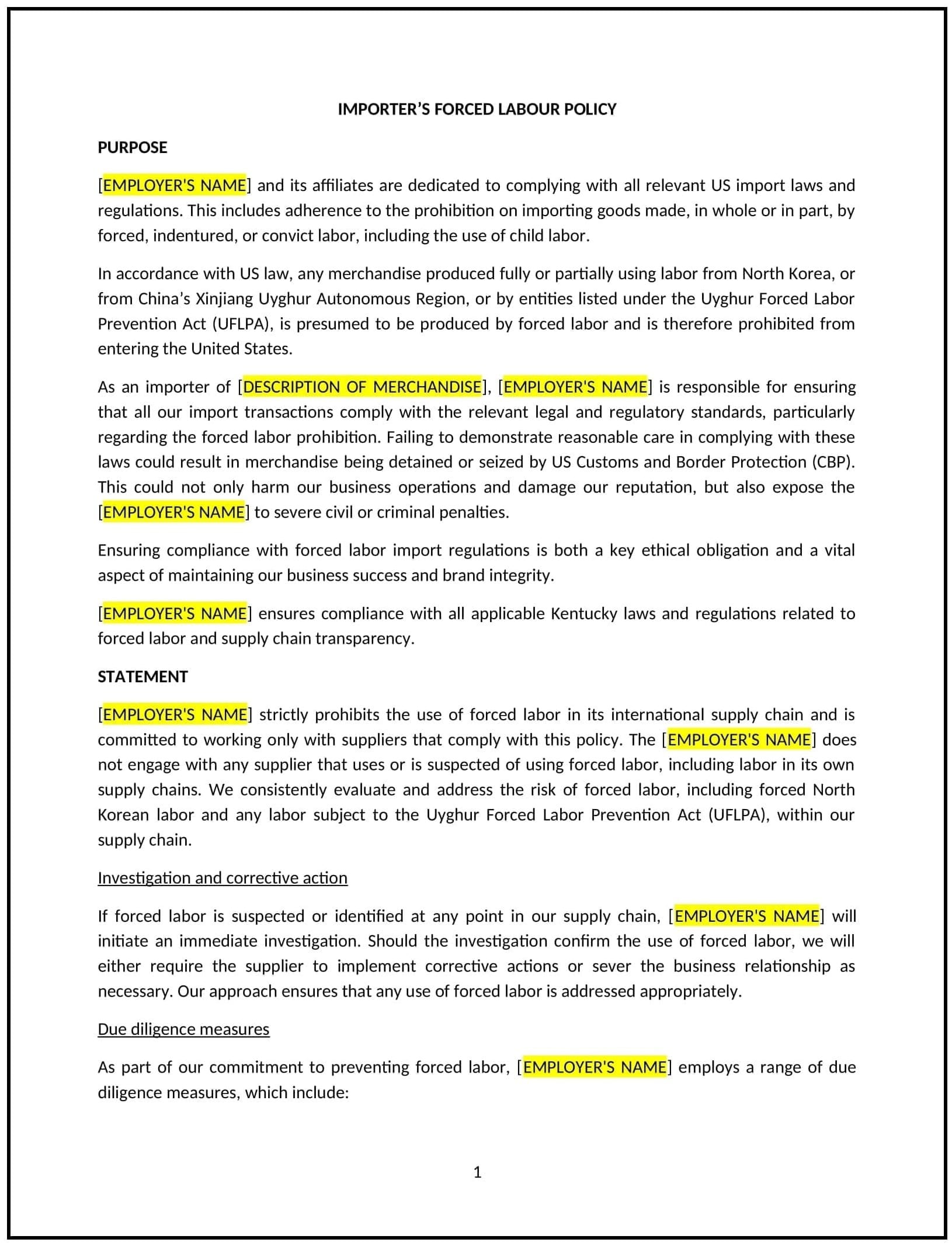
Importer's forced labour policy (Kentucky)
An importer's forced labour policy outlines the steps Kentucky businesses take to prevent forced labour and human trafficking in their supply chains, ensuring that all goods imported into the business are sourced ethically. This policy defines the company’s commitment to combating forced labour and protecting workers’ rights throughout its supply chain.
By adopting this policy, businesses can help prevent exploitation, align with ethical sourcing standards, and mitigate reputational and legal risks.
How to use this importer's forced labour policy (Kentucky)
- Define forced labour: Clearly define what constitutes forced labour, including coerced work, exploitation, and trafficking, and provide examples of situations where forced labour may occur.
- Set supplier expectations: Outline the requirements that suppliers must meet regarding labour practices, including adherence to anti-forced labour standards and compliance with applicable international, federal, and state laws.
- Conduct due diligence: Establish procedures for vetting and auditing suppliers to ensure they meet the business’s ethical standards and do not use forced labour in their operations.
- Monitor supply chains: Implement a system for ongoing monitoring and reporting to track the supply chain for signs of forced labour, using audits, certifications, and third-party assessments.
- Address incidents: Detail the steps to take if forced labour is discovered in the supply chain, including terminating relationships with non-compliant suppliers and reporting the issue to relevant authorities.
- Provide training: Offer training for employees and key stakeholders on recognizing and preventing forced labour and trafficking within the supply chain.
- Encourage transparency: Promote an open dialogue with suppliers and stakeholders about forced labour risks and encourage sharing of information to improve labour practices.
Benefits of using this importer's forced labour policy (Kentucky)
This policy provides several key benefits for Kentucky businesses:
- Reduces legal risks: Helps businesses avoid legal penalties associated with forced labour and human trafficking violations.
- Protects reputation: Demonstrates the business’s commitment to ethical sourcing, which can enhance its reputation with customers, investors, and the public.
- Promotes ethical sourcing: Encourages fair treatment and respect for workers’ rights throughout the supply chain.
- Enhances supplier relationships: Builds trust with suppliers and stakeholders by setting clear, ethical standards for business practices.
- Supports compliance with global standards: Aligns with international frameworks and human rights conventions, promoting ethical business operations on a global scale.
Tips for using this importer's forced labour policy (Kentucky)
- Communicate the policy: Ensure employees and suppliers are aware of the policy and its requirements by integrating it into supplier contracts and sharing it during onboarding.
- Conduct regular audits: Implement frequent audits and inspections to verify that suppliers adhere to forced labour-free standards and maintain transparency.
- Collaborate with stakeholders: Work with NGOs, government bodies, and industry groups to stay informed about best practices for preventing forced labour in the supply chain.
- Provide training: Ensure employees are trained to recognize the signs of forced labour and understand how to report concerns.
- Review periodically: Update the policy regularly to incorporate new laws, regulations, and best practices related to forced labour prevention.