Importer's forced labour policy (Louisiana): Free template
Got contracts to review? While you're here for policies, let Cobrief make contract review effortless—start your free review now.
Customize this template for free
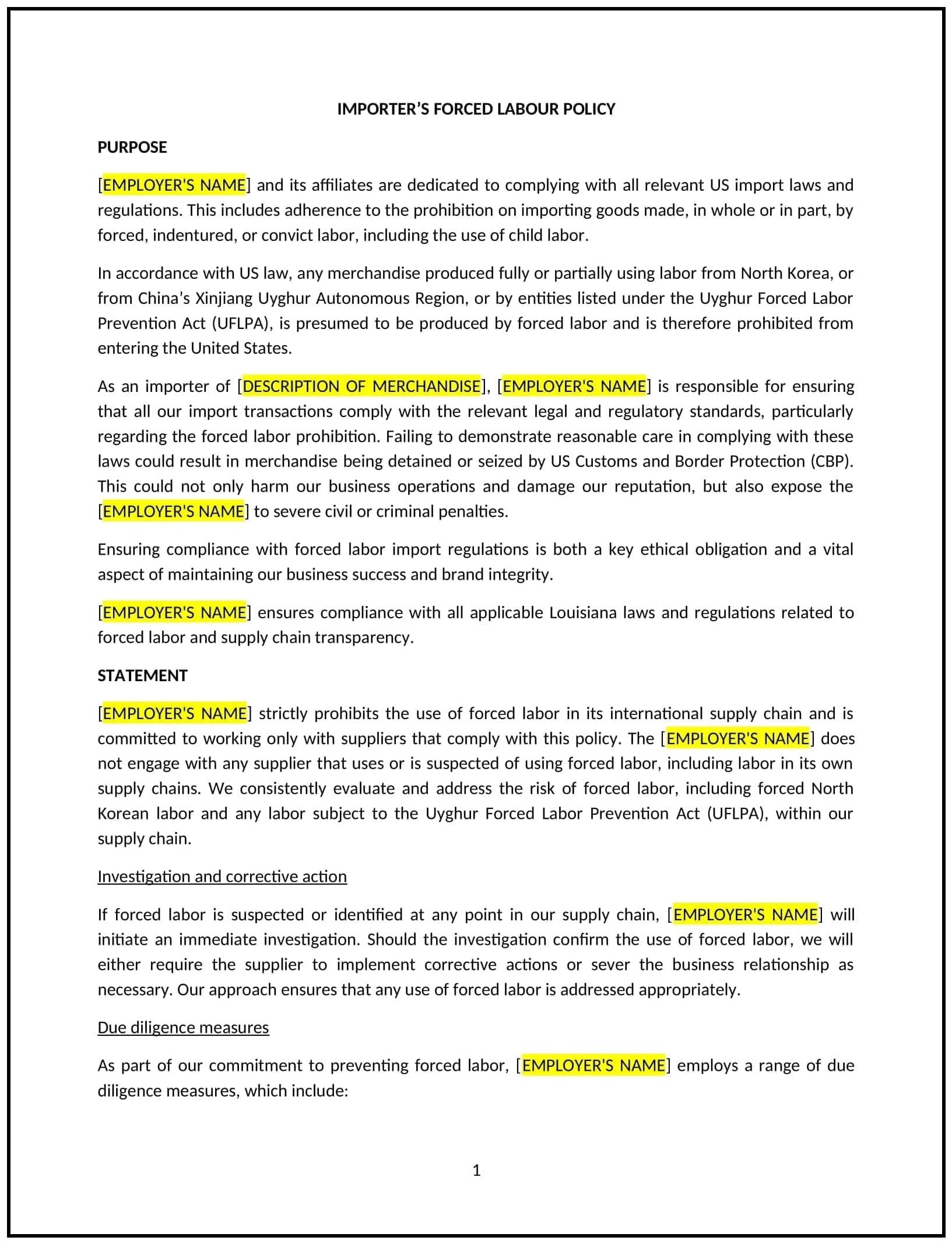
Importer’s forced labor policy (Louisiana)
This importer’s forced labor policy is designed to help Louisiana businesses establish guidelines for preventing and addressing the use of forced labor in their supply chains. It outlines the company’s commitment to ethical sourcing, responsibilities, and procedures for identifying and mitigating risks of forced labor in imported goods.
By implementing this policy, businesses can protect their reputation, ensure ethical practices, and support global efforts to combat forced labor.
How to use this importer’s forced labor policy (Louisiana)
- Define forced labor: Clearly describe what constitutes forced labor, including practices such as coercion, involuntary servitude, and bonded labor.
- Establish supplier expectations: Require suppliers to adhere to ethical labor standards and certify that their goods are free from forced labor.
- Implement risk assessment procedures: Outline methods for assessing supply chain risks, such as audits, questionnaires, or third-party certifications.
- Include reporting mechanisms: Provide channels for employees, suppliers, or third parties to report suspected forced labor practices confidentially.
- Detail corrective actions: Specify steps for addressing violations, such as supplier termination, remediation plans, or reporting to authorities.
- Include training requirements: Require regular training for employees and suppliers on recognizing and addressing forced labor risks.
Benefits of using an importer’s forced labor policy (Louisiana)
Implementing this policy provides several advantages for Louisiana businesses:
- Promotes ethical sourcing: Ensures the supply chain aligns with the company’s values and labor standards.
- Protects brand reputation: Reduces the risk of association with unethical labor practices.
- Reduces supply chain risks: Proactively identifies and mitigates forced labor risks in imported goods.
- Enhances accountability: Establishes clear expectations for suppliers and employees.
- Reflects Louisiana-specific needs: Addresses regional supply chain considerations and supports local ethical business practices.
Tips for using this importer’s forced labor policy (Louisiana)
- Engage suppliers: Communicate the policy clearly and require supplier acknowledgment and compliance.
- Conduct regular audits: Monitor supplier practices through scheduled and unscheduled audits or assessments.
- Leverage technology: Use tools to track and analyze supply chain risks, such as forced labor detection software.
- Partner with NGOs or third parties: Collaborate with organizations specializing in ethical sourcing and labor rights to strengthen monitoring efforts.
- Update regularly: Revise the policy as necessary to reflect changes in laws, supply chain practices, or business priorities.