Importer's forced labour policy (Maine): Free template
Got contracts to review? While you're here for policies, let Cobrief make contract review effortless—start your free review now.
Customize this template for free
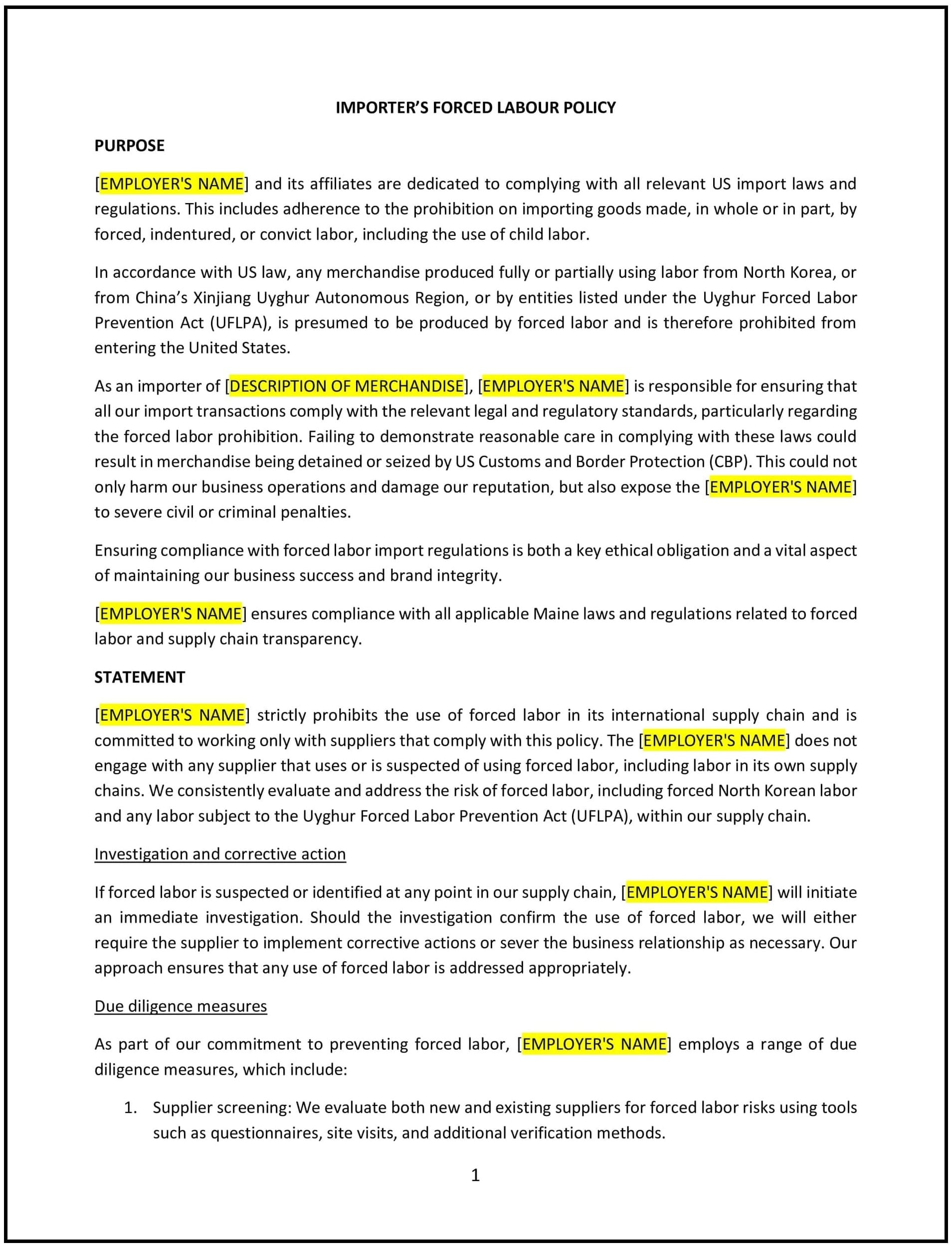
Importer's forced labor policy (Maine): Free template
This importer’s forced labor policy is designed to help Maine businesses comply with federal laws prohibiting the importation of goods produced using forced labor. It establishes guidelines for vetting suppliers, conducting due diligence, and maintaining ethical sourcing practices.
By implementing this policy, Maine businesses can mitigate legal and reputational risks while promoting ethical labor practices in their supply chains.
How to use this importer’s forced labor policy (Maine)
- Define forced labor: Specify what constitutes forced labor, including practices like coercion, withholding wages, and involuntary work under international and U.S. laws.
- Outline supplier vetting procedures: Detail how suppliers will be assessed, including requiring certifications of compliance with labor laws.
- Conduct due diligence: Include steps for identifying and mitigating risks of forced labor in the supply chain, such as audits and third-party assessments.
- Provide reporting protocols: Establish procedures for employees or stakeholders to report concerns related to forced labor in the supply chain.
- Include corrective actions: Specify the steps the business will take if forced labor is identified, such as terminating supplier relationships or reporting violations to authorities.
- Ensure compliance: Reaffirm the business’s commitment to adhering to Maine and federal laws, including the U.S. Customs and Border Protection (CBP) regulations.
- Review regularly: Update the policy to reflect changes in legal requirements or supply chain practices.
Benefits of using this importer’s forced labor policy (Maine)
Implementing this policy provides several benefits for Maine businesses:
- Ensures compliance: Aligns with U.S. laws prohibiting the importation of goods produced using forced labor.
- Protects reputation: Demonstrates the business’s commitment to ethical sourcing and human rights.
- Reduces supply chain risks: Mitigates potential disruptions caused by non-compliant suppliers.
- Promotes transparency: Provides clear guidelines for ethical supply chain management.
- Enhances stakeholder trust: Builds confidence among customers, investors, and employees in the business’s values and practices.
Tips for using this importer’s forced labor policy (Maine)
- Vet suppliers thoroughly: Use tools like supplier questionnaires, certifications, and audits to assess compliance.
- Train employees: Provide training on identifying and addressing forced labor risks in the supply chain.
- Monitor compliance: Conduct regular audits and require periodic certifications from suppliers to ensure adherence.
- Engage third-party assessors: Partner with external organizations to verify labor practices in high-risk regions.
- Document efforts: Maintain detailed records of due diligence activities, supplier assessments, and corrective actions.
- Stay informed: Monitor updates to federal and international labor laws to keep the policy compliant and relevant.