Importer's forced labour policy (Minnesota): Free template
Got contracts to review? While you're here for policies, let Cobrief make contract review effortless—start your free review now.
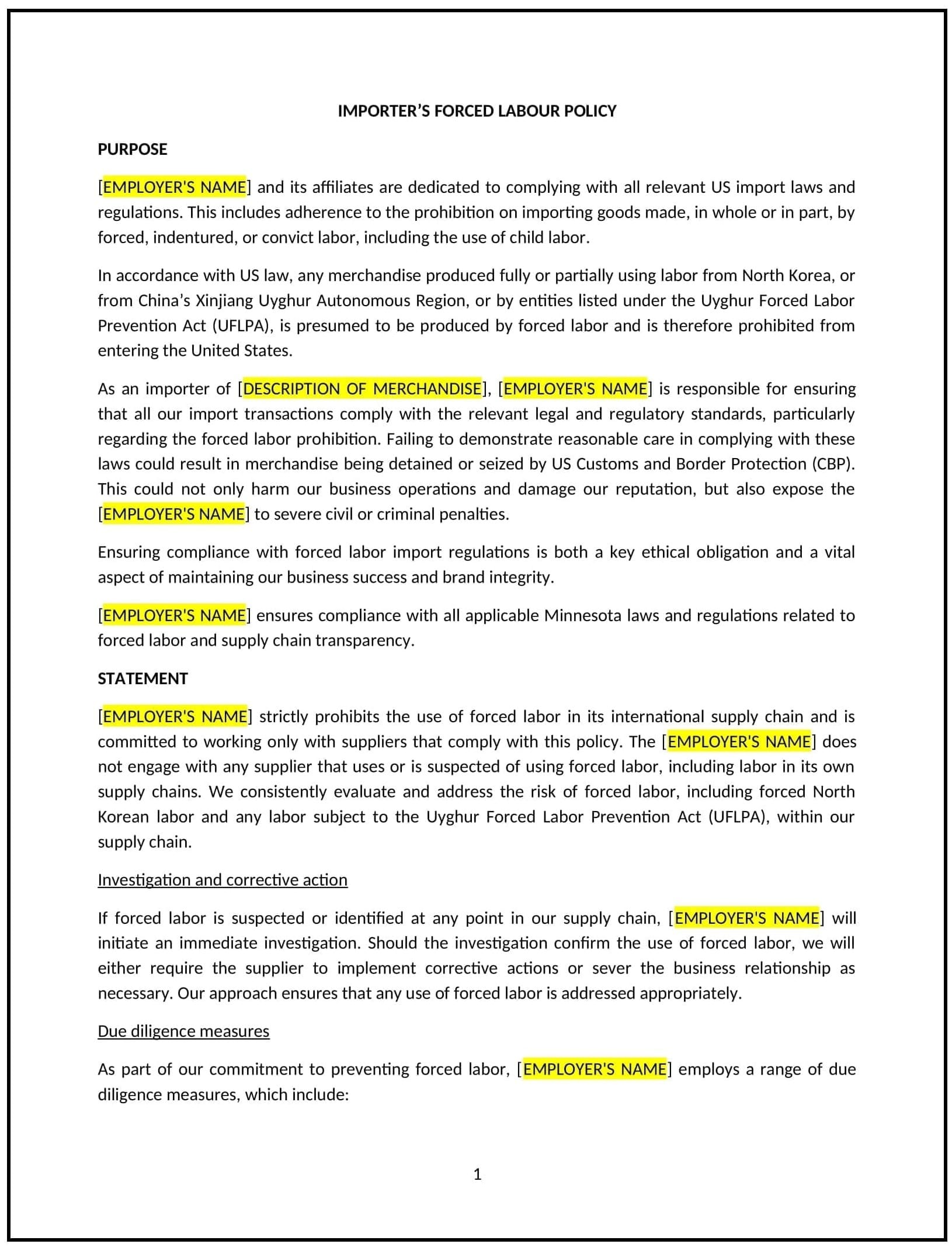
Customize this template for free
Importer's forced labour policy (Minnesota)
This importer's forced labour policy is designed to help Minnesota businesses mitigate the risk of engaging in or supporting forced labour practices in their supply chains. It outlines the company's commitment to ensuring that goods imported into the state are free from forced, bonded, and child labour. The policy includes procedures for identifying and preventing forced labour, as well as the steps businesses should take to address any violations.
By implementing this policy, businesses can maintain ethical sourcing practices, protect their reputation, and support compliance with both state and federal regulations concerning forced labour.
How to use this importer's forced labour policy (Minnesota)
- Define forced labour: Clearly explain what constitutes forced, bonded, or child labour, ensuring that employees and suppliers understand the types of labour that are considered unacceptable.
- Establish due diligence processes: Outline the steps businesses will take to verify that their suppliers and partners are not using forced labour, such as requiring certifications, conducting audits, and reviewing supply chain practices.
- Set expectations for suppliers: Communicate the company’s zero-tolerance policy toward forced labour to suppliers, and outline the requirements they must meet to ensure compliance.
- Implement corrective actions: Detail the process for addressing any suspected or confirmed incidents of forced labour, including how suppliers will be notified, investigated, and what steps will be taken to remove or replace them.
- Monitor and report: Set up procedures for ongoing monitoring of suppliers and their compliance with the policy, including periodic reviews and internal reporting mechanisms for employees to report concerns.
- Ensure transparency: Require transparency in all supply chain practices, including the disclosure of the sourcing of goods and materials, to facilitate accountability and prevent forced labour.
Benefits of using an importer's forced labour policy (Minnesota)
Implementing this policy provides several advantages for Minnesota businesses:
- Promotes ethical sourcing: Businesses that implement this policy demonstrate their commitment to sourcing goods responsibly and ethically, reducing the risk of supporting exploitative labour practices.
- Enhances reputation: A clear commitment to preventing forced labour in the supply chain helps protect and improve the company’s reputation, attracting ethically-conscious consumers and business partners.
- Reduces legal and financial risk: By proactively preventing forced labour, businesses can reduce the risk of legal consequences, fines, or damage to their brand due to involvement in unethical practices.
- Strengthens supplier relationships: Suppliers that adhere to ethical labour standards can become long-term, trusted partners, contributing to a more stable and reputable supply chain.
- Reflects Minnesota-specific considerations: Tailors the policy to meet the state's requirements and expectations regarding labour practices and business ethics, promoting responsible sourcing within the local context.
Tips for using this importer's forced labour policy (Minnesota)
- Communicate clearly: Ensure all employees and suppliers are informed about the policy, its importance, and how it will be implemented throughout the supply chain.
- Set up supplier audits: Conduct regular audits of suppliers and partners to ensure that forced labour is not present in the supply chain, and that suppliers are meeting ethical labour standards.
- Offer supplier education: Provide training or resources for suppliers on identifying and eliminating forced labour within their operations, helping them comply with the company’s policy.
- Establish a whistleblower program: Encourage employees, suppliers, and partners to report concerns about forced labour without fear of retaliation, ensuring accountability throughout the supply chain.
- Review regularly: Periodically review the policy to ensure it is effective in preventing forced labour and updated to comply with any changes in federal or state regulations.