Importer's forced labour policy (Mississippi): Free template
Got contracts to review? While you're here for policies, let Cobrief make contract review effortless—start your free review now.
Customize this template for free
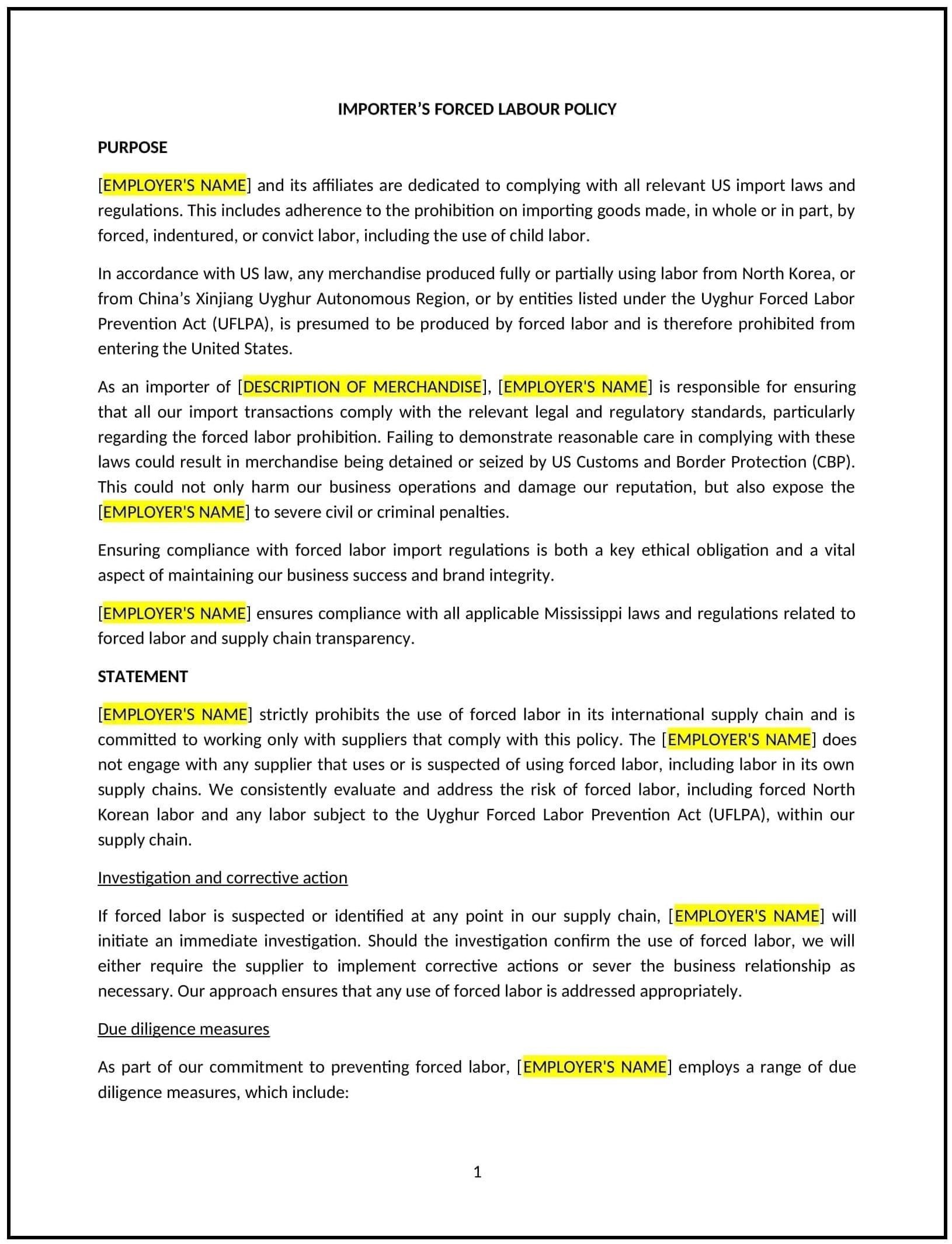
Importer's forced labour policy (Mississippi)
An importer's forced labour policy is designed to help Mississippi businesses ensure they do not import goods that are produced using forced labour or human trafficking. This policy outlines the steps businesses must take to prevent the use of forced labour in their supply chains, including conducting due diligence on suppliers and ensuring compliance with federal and international regulations.
By adopting this policy, businesses can demonstrate their commitment to ethical sourcing, improve transparency in their supply chains, and mitigate the risk of being involved in illegal or unethical practices.
How to use this importer's forced labour policy (Mississippi)
- Define forced labour: Clearly define what constitutes forced labour, including slavery, human trafficking, bonded labour, and other forms of exploitation, to ensure all stakeholders understand the scope of the policy.
- Implement due diligence: Outline the steps businesses should take to identify and assess potential risks of forced labour in their supply chains. This includes reviewing suppliers' practices, evaluating labor conditions, and ensuring that the suppliers are compliant with relevant laws.
- Establish supplier requirements: Specify the requirements businesses must impose on suppliers to prevent forced labour. This includes requiring them to adhere to local and international labour standards and allowing for audits and inspections to verify compliance.
- Provide training and awareness: Ensure that employees, particularly those involved in procurement and supply chain management, receive regular training on the risks of forced labour and how to identify and address such issues.
- Conduct audits and inspections: Establish procedures for periodic audits and inspections of suppliers to verify compliance with the policy. This can include reviewing records, conducting site visits, and interviewing workers to ensure that no forced labour is being used.
- Create a reporting mechanism: Set up a confidential reporting system where employees, suppliers, or other stakeholders can report concerns about potential forced labour without fear of retaliation.
- Address violations: Clearly define the steps businesses will take if they find evidence of forced labour, including terminating relationships with non-compliant suppliers, reporting violations to authorities, and cooperating with investigations.
- Review and update the policy: Regularly review and update the policy to reflect changes in laws, industry standards, and the evolving risk landscape regarding forced labour.
Benefits of using this importer's forced labour policy (Mississippi)
This policy offers several benefits for Mississippi businesses:
- Mitigates legal risks: By complying with anti-forced labour laws and industry regulations, businesses reduce their risk of legal issues, fines, and penalties.
- Enhances reputation: Businesses that demonstrate a commitment to ethical sourcing and human rights can strengthen their reputation among customers, investors, and the public.
- Builds trust with consumers: Consumers are increasingly concerned about the ethical practices of the brands they support. A strong anti-forced labour policy can increase consumer confidence and loyalty.
- Improves supply chain transparency: Implementing the policy improves visibility into the supply chain, helping businesses identify and address risks and vulnerabilities.
- Promotes ethical sourcing: Businesses that uphold ethical sourcing standards contribute to the global effort to eliminate forced labour and human trafficking from supply chains.
Tips for using this importer's forced labour policy (Mississippi)
- Communicate the policy to suppliers: Ensure that all suppliers are aware of the policy and the expectations regarding forced labour prevention. Require them to confirm their commitment to the policy.
- Conduct regular training: Provide training for employees involved in sourcing and supply chain management to recognize and address the risks of forced labour in their operations.
- Collaborate with industry groups: Work with other businesses, industry groups, and non-governmental organizations (NGOs) to stay informed about best practices and developments related to forced labour.
- Maintain robust documentation: Keep thorough records of supplier assessments, audits, and corrective actions taken, as this documentation can be important for demonstrating compliance in case of audits or investigations.
- Engage with third-party auditors: Consider hiring third-party auditors or using external experts to assess supplier compliance and provide unbiased assessments of potential risks.