Information security policy (Alabama): Free template
Got contracts to review? While you're here for policies, let Cobrief make contract review effortless—start your free review now.
Customize this template for free
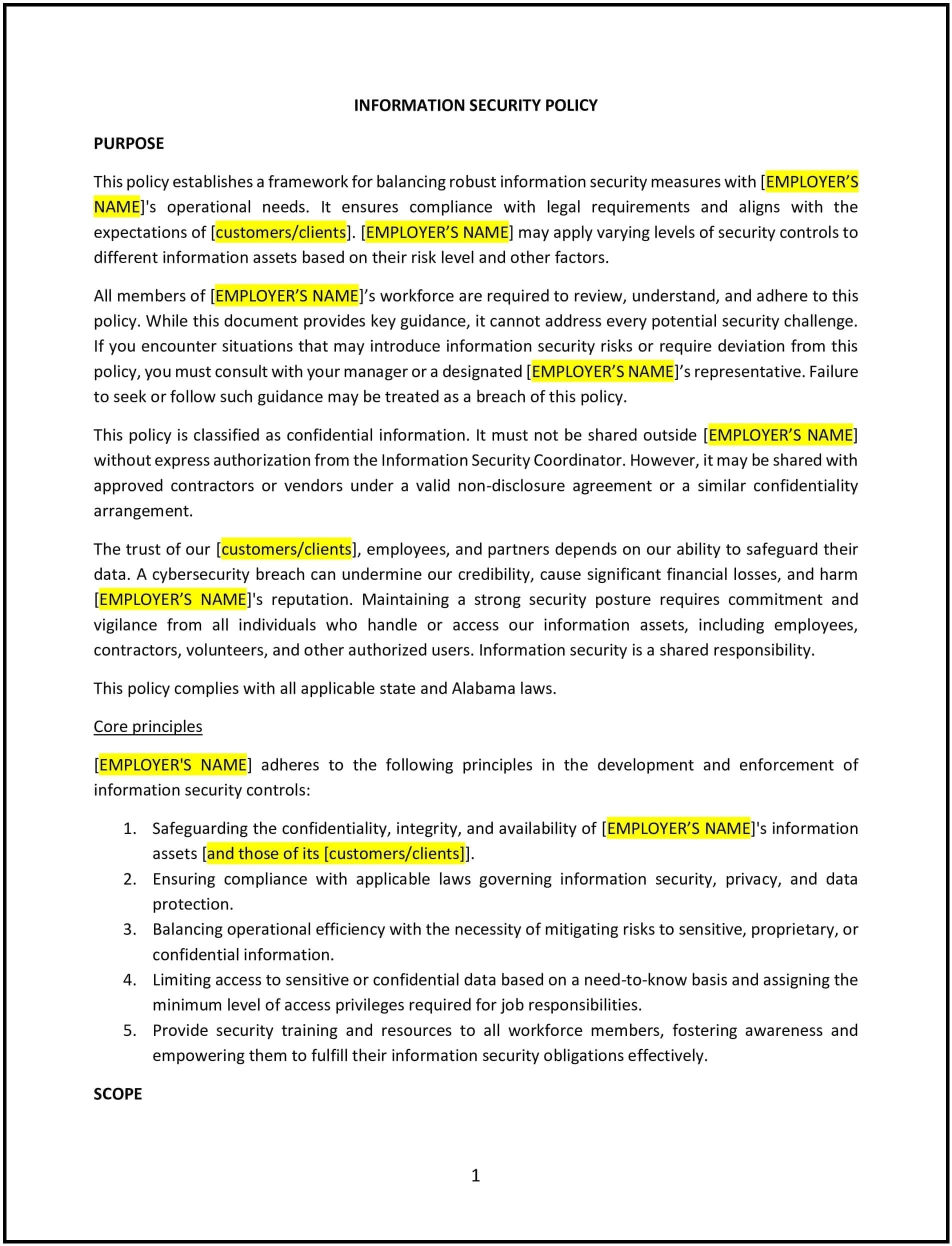
Information security policy (Alabama)
An information security policy outlines the procedures and measures a business implements to protect sensitive data from unauthorized access, breaches, or loss. For SMBs in Alabama, this policy helps safeguard customer information, intellectual property, and internal data while ensuring compliance with applicable privacy and cybersecurity standards.
By detailing best practices, roles, and responsibilities, this policy fosters a culture of security awareness and minimizes risks associated with data vulnerabilities.
How to use this information security policy (Alabama)
- Define data protection goals: Clearly state the purpose of the policy, such as protecting sensitive information, ensuring business continuity, and maintaining customer trust.
- Identify sensitive data: Specify the types of data covered under the policy, including financial records, customer information, and intellectual property.
- Establish access controls: Outline measures to limit access to sensitive information, such as role-based permissions, multi-factor authentication, and password policies.
- Detail incident response procedures: Provide steps for reporting, investigating, and mitigating security incidents, ensuring timely action to reduce potential damage.
- Include employee responsibilities: Specify actions employees must take, such as following secure practices for sharing information, recognizing phishing attempts, and maintaining device security.
Benefits of using an information security policy (Alabama)
An information security policy protects your business and its data assets. Here’s how it helps:
- Reduces risk: Minimizes the likelihood of data breaches, cyberattacks, and unauthorized access to sensitive information.
- Enhances compliance: Supports adherence to state and federal data protection regulations, as well as industry standards like GDPR or CCPA.
- Builds customer trust: Demonstrates your commitment to safeguarding customer data, improving brand reputation and loyalty.
- Promotes security awareness: Educates employees on best practices for identifying and preventing security threats.
- Ensures business continuity: Protects critical information and systems, enabling your business to recover quickly from potential security incidents.
Tips for implementing an information security policy (Alabama)
- Conduct regular audits: Assess your information security systems and practices periodically to identify vulnerabilities and make necessary improvements.
- Provide ongoing training: Offer regular security training to employees, covering topics such as password management, phishing awareness, and safe internet use.
- Use encryption: Protect sensitive data during transmission and storage by implementing robust encryption protocols.
- Develop a disaster recovery plan: Include steps for data backup and recovery to ensure operational continuity in case of security breaches or system failures.
- Monitor systems continuously: Use monitoring tools to detect unauthorized access or unusual activity, addressing threats in real time.