Information security policy (Alaska): Free template
Got contracts to review? While you're here for policies, let Cobrief make contract review effortless—start your free review now.
Customize this template for free
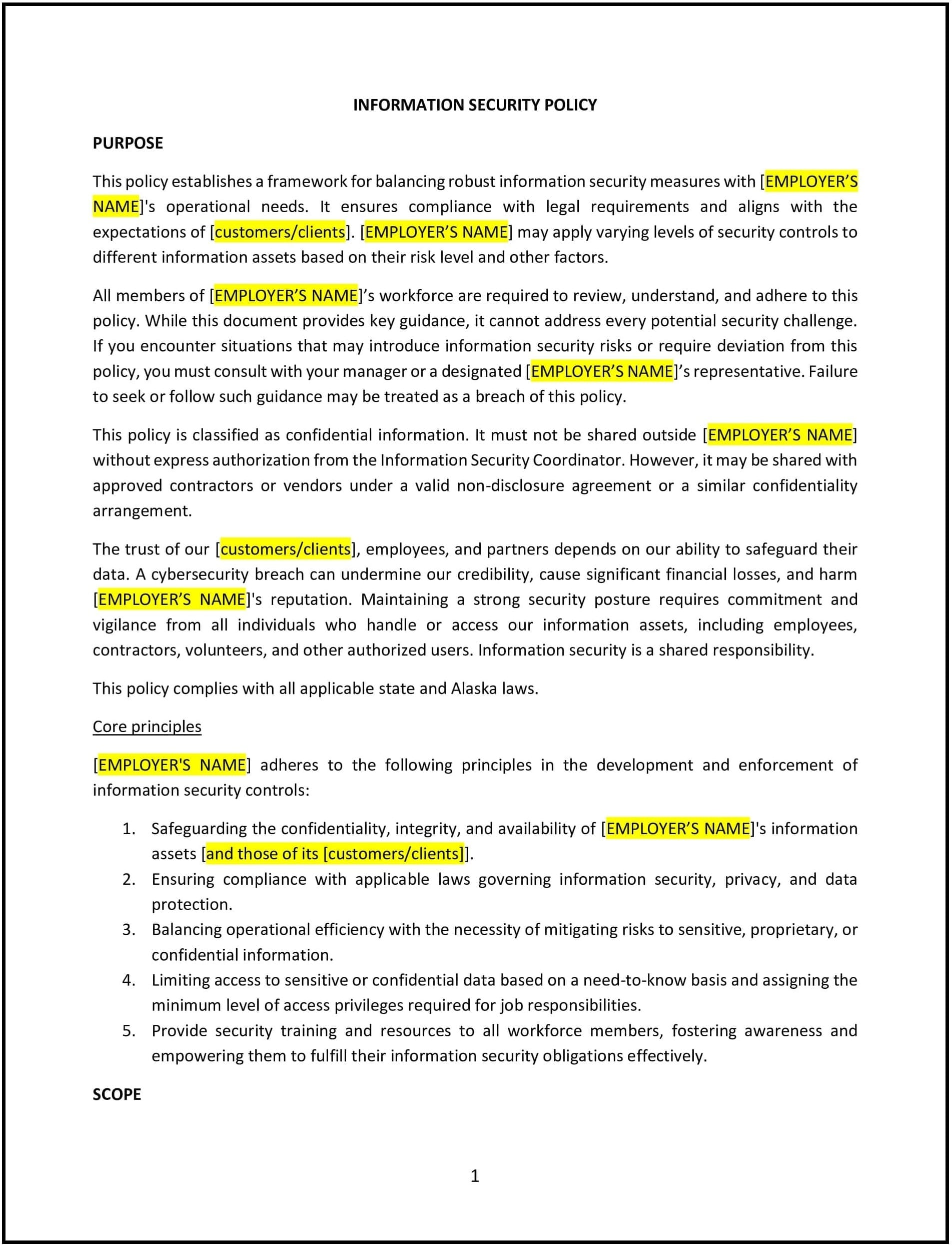
Information security policy (Alaska)
In Alaska, an information security policy establishes guidelines for protecting sensitive data and ensuring that the company’s information systems are secure from unauthorized access, breaches, and other cyber threats. This policy outlines employee responsibilities, security protocols, and measures to safeguard company, client, and employee information. By implementing an information security policy, businesses can reduce risks, protect their reputation, and ensure compliance with applicable laws and standards.
Given Alaska’s unique challenges, such as remote work environments and reliance on digital communication in isolated areas, businesses must tailor their information security practices to address these conditions effectively.
How to use this information security policy (Alaska)
- Define data categories: Identify the types of information the policy covers, such as employee records, client data, financial information, and proprietary business data.
- Outline access controls: Specify who can access different types of information and implement role-based permissions to minimize risks.
- Include cybersecurity measures: Provide protocols for using secure passwords, enabling multi-factor authentication, and protecting systems from malware or phishing attacks.
- Establish incident response procedures: Include steps for reporting and addressing security breaches or unauthorized access to data.
- Provide training: Regularly educate employees on best practices for information security and their roles in maintaining a secure environment.
Benefits of using an information security policy (Alaska)
An information security policy provides significant advantages for businesses in Alaska. Here’s how it helps:
- Protects sensitive data: Safeguards company and client information from breaches or unauthorized access, reducing reputational and financial risks.
- Enhances operational continuity: Minimizes disruptions caused by security incidents, ensuring consistent business operations.
- Supports compliance: Helps businesses adhere to state and federal data protection laws and industry-specific security standards.
- Reduces risk: Provides clear guidelines to mitigate common threats, such as phishing, malware, or accidental data exposure.
- Builds trust: Demonstrates a commitment to protecting sensitive information, enhancing relationships with clients, partners, and employees.
Tips for using an information security policy (Alaska)
- Adapt for remote work: Include guidelines for securing remote work environments, such as using VPNs and ensuring physical device security.
- Use secure systems: Invest in reliable security tools, such as firewalls, encryption software, and intrusion detection systems, to protect company data.
- Conduct regular audits: Periodically review systems and practices to identify vulnerabilities and implement necessary improvements.
- Address physical security: Ensure that physical access to servers, file storage, and other critical systems is restricted to authorized personnel.
- Update as needed: Revise the policy regularly to reflect changes in technology, laws, or the business environment.