Information security policy (Arizona): Free template
Got contracts to review? While you're here for policies, let Cobrief make contract review effortless—start your free review now.
Customize this template for free
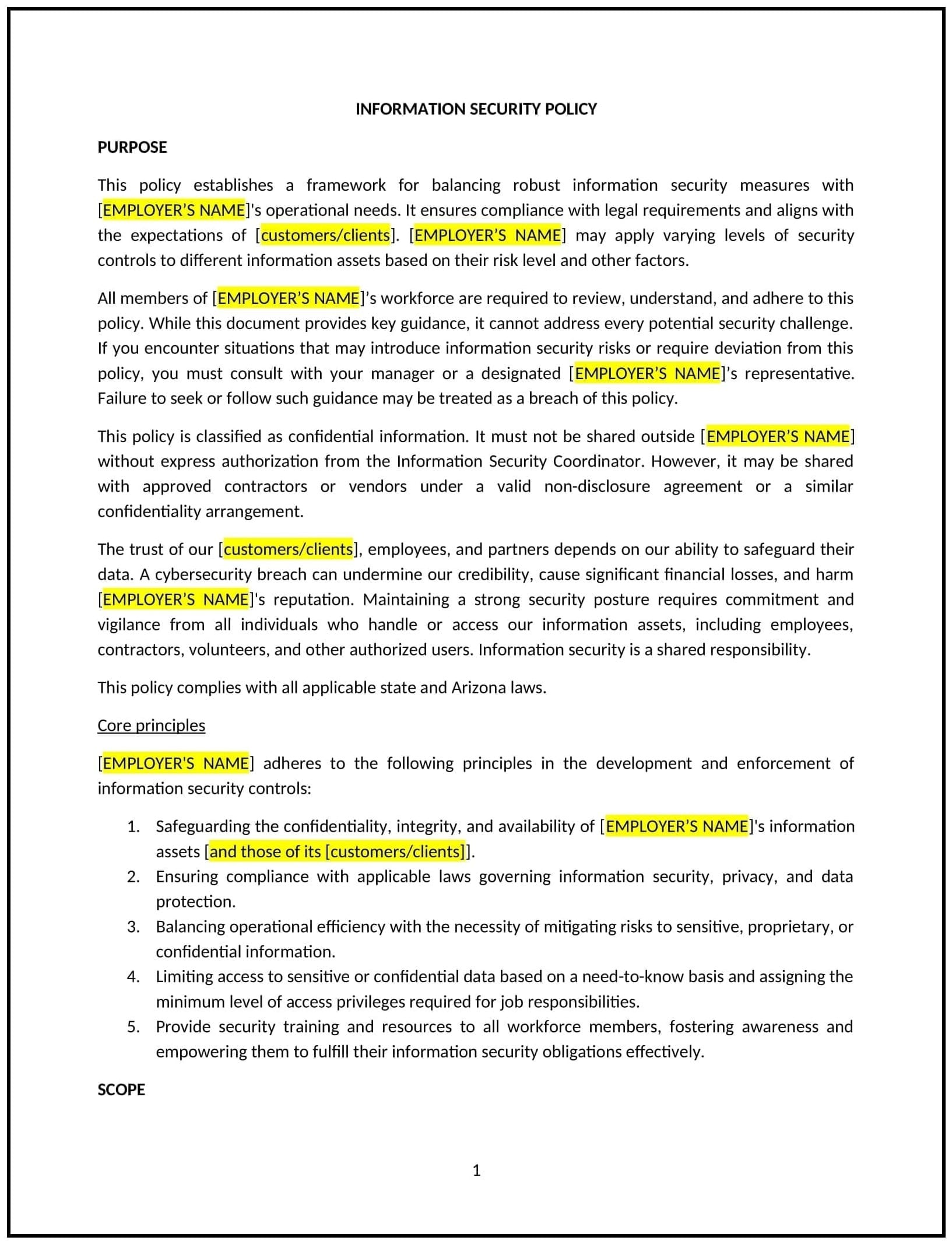
Information security policy (Arizona)
In Arizona, an information security policy provides businesses with guidelines for protecting sensitive data and ensuring compliance with state and federal regulations, including data protection laws and industry standards. This policy establishes procedures for managing, accessing, and safeguarding information to minimize risks of breaches or unauthorized access.
This policy outlines roles and responsibilities, access controls, data handling practices, and incident response protocols. By implementing this policy, Arizona businesses can enhance security, maintain trust, and support compliance with legal and regulatory requirements.
How to use this information security policy (Arizona)
- Define roles and responsibilities: Assign specific roles for managing and protecting information, such as IT administrators or data stewards.
- Establish access controls: Limit access to sensitive information based on job responsibilities and enforce authentication methods like multi-factor authentication.
- Include data handling procedures: Provide guidelines for securely storing, transferring, and disposing of sensitive information.
- Address incident response: Outline steps for detecting, reporting, and mitigating security breaches or threats.
- Conduct training: Educate employees on best practices for information security and the importance of following the policy.
Benefits of using an information security policy (Arizona)
This policy provides several advantages for Arizona businesses:
- Enhances data protection: Safeguards sensitive business, employee, and client information from unauthorized access or breaches.
- Supports compliance: Aligns with Arizona and federal data protection laws, reducing the risk of legal penalties.
- Reduces risks: Establishes proactive measures to identify and address vulnerabilities before they lead to security incidents.
- Builds trust: Demonstrates the company’s commitment to safeguarding information, fostering confidence among stakeholders.
- Improves operational efficiency: Standardizes security practices, making it easier to manage and protect information.
Tips for using an information security policy (Arizona)
- Address Arizona-specific risks: Include measures to protect data from threats such as extreme weather impacting physical servers or compliance with industry-specific regulations like healthcare or finance.
- Use technology: Leverage encryption, firewalls, and secure backup solutions to enhance data security.
- Monitor compliance: Regularly audit systems and processes to ensure adherence to the policy and identify areas for improvement.
- Include third-party security: Require vendors and partners to comply with similar information security standards to protect shared data.
- Update regularly: Revise the policy to reflect changes in technology, threats, or legal requirements.