Information security policy (Colorado): Free template
Got contracts to review? While you're here for policies, let Cobrief make contract review effortless—start your free review now.
Customize this template for free
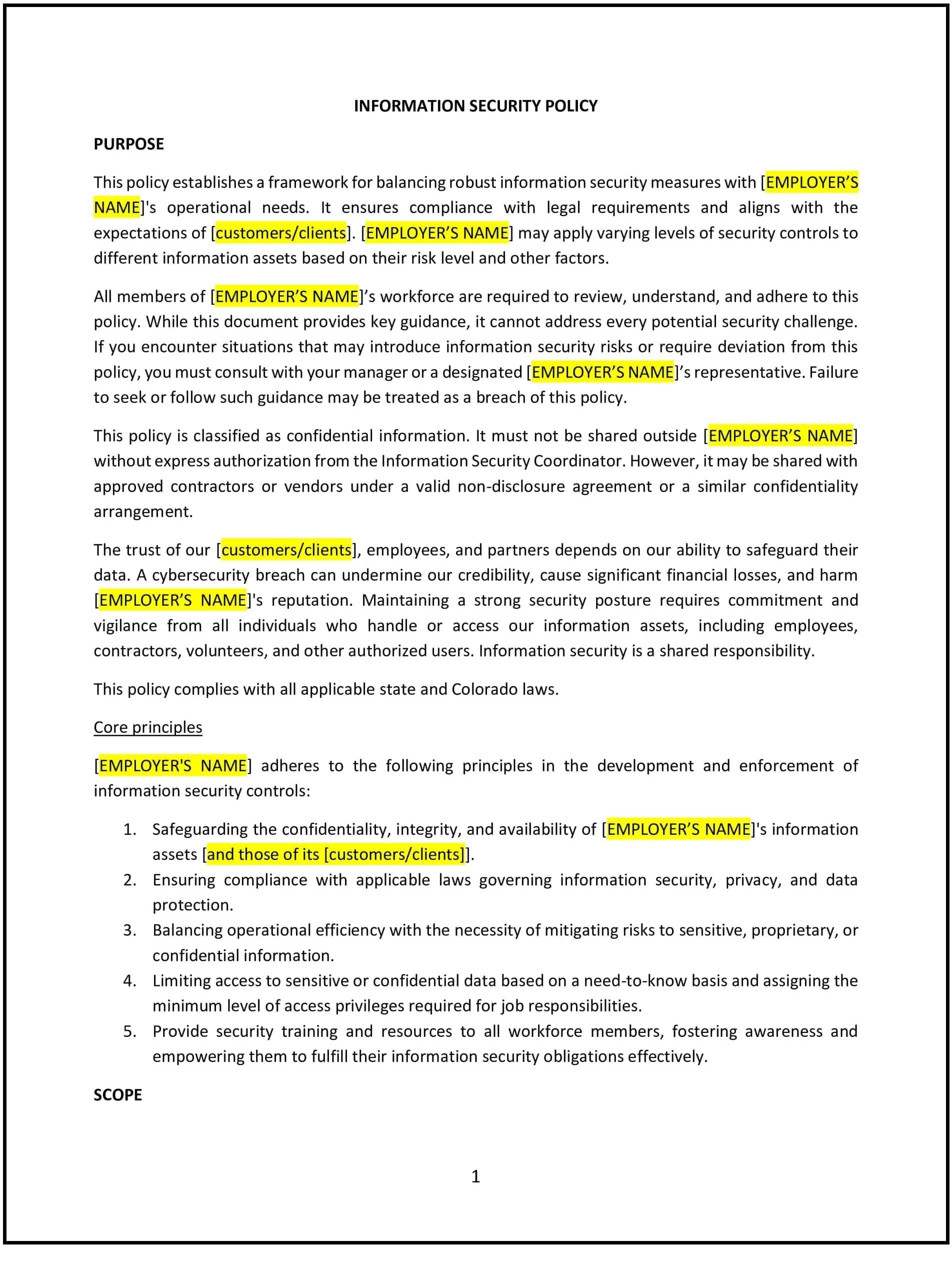
Information security policy (Colorado)
In Colorado, an information security policy establishes guidelines for protecting the confidentiality, integrity, and availability of sensitive business and customer data. This policy defines protocols for managing cybersecurity risks, safeguarding digital assets, and ensuring compliance with state and federal regulations, such as Colorado's Consumer Data Protection Act (CDPA). By implementing this policy, businesses can reduce the risk of data breaches, protect their reputation, and maintain customer trust.
How to use this information security policy (Colorado)
- Identify sensitive data: Define what constitutes sensitive information, such as customer data, financial records, and intellectual property, and classify it based on sensitivity levels.
- Implement access controls: Establish protocols to ensure that only authorized employees can access sensitive data, using methods such as role-based access and multi-factor authentication.
- Establish incident response procedures: Develop a clear plan for responding to data breaches or security incidents, including notification timelines, containment measures, and communication with stakeholders.
- Train employees: Provide regular cybersecurity training to all employees, emphasizing the importance of protecting sensitive data and recognizing potential threats like phishing or malware.
- Conduct regular audits: Periodically review security practices, systems, and policies to identify vulnerabilities and implement necessary updates or improvements.
- Ensure compliance with regulations: Regularly evaluate the policy against Colorado-specific data protection laws, such as CDPA, and any relevant federal standards.
Benefits of using this information security policy (Colorado)
This policy offers several advantages for Colorado businesses:
- Protects business data: Safeguards sensitive information from cyber threats, minimizing the risk of financial loss, reputational damage, and operational disruptions.
- Supports compliance: Helps the business adhere to Colorado’s data protection laws and federal regulations, reducing the risk of legal penalties or enforcement actions.
- Enhances customer trust: Demonstrates the business’s commitment to data security, strengthening relationships with customers and partners.
- Improves operational resilience: Reduces downtime and disruption by preparing the business to quickly respond to security incidents.
- Encourages accountability: Clearly defines employee responsibilities, fostering a culture of vigilance and proactive data protection.
Tips for using this information security policy (Colorado)
- Reflect Colorado-specific requirements: Ensure the policy aligns with the CDPA, which requires businesses to protect consumer data and report breaches in a timely manner.
- Use encryption: Implement encryption for sensitive data at rest and in transit to protect against unauthorized access.
- Regularly test systems: Conduct penetration tests and vulnerability assessments to identify weaknesses and improve security measures.
- Collaborate with IT specialists: Work with cybersecurity experts to ensure the policy incorporates best practices and keeps up with evolving threats.
- Monitor third-party vendors: Ensure that vendors and contractors handling sensitive data comply with the business’s security standards.