Information security policy (Connecticut): Free template
Got contracts to review? While you're here for policies, let Cobrief make contract review effortless—start your free review now.
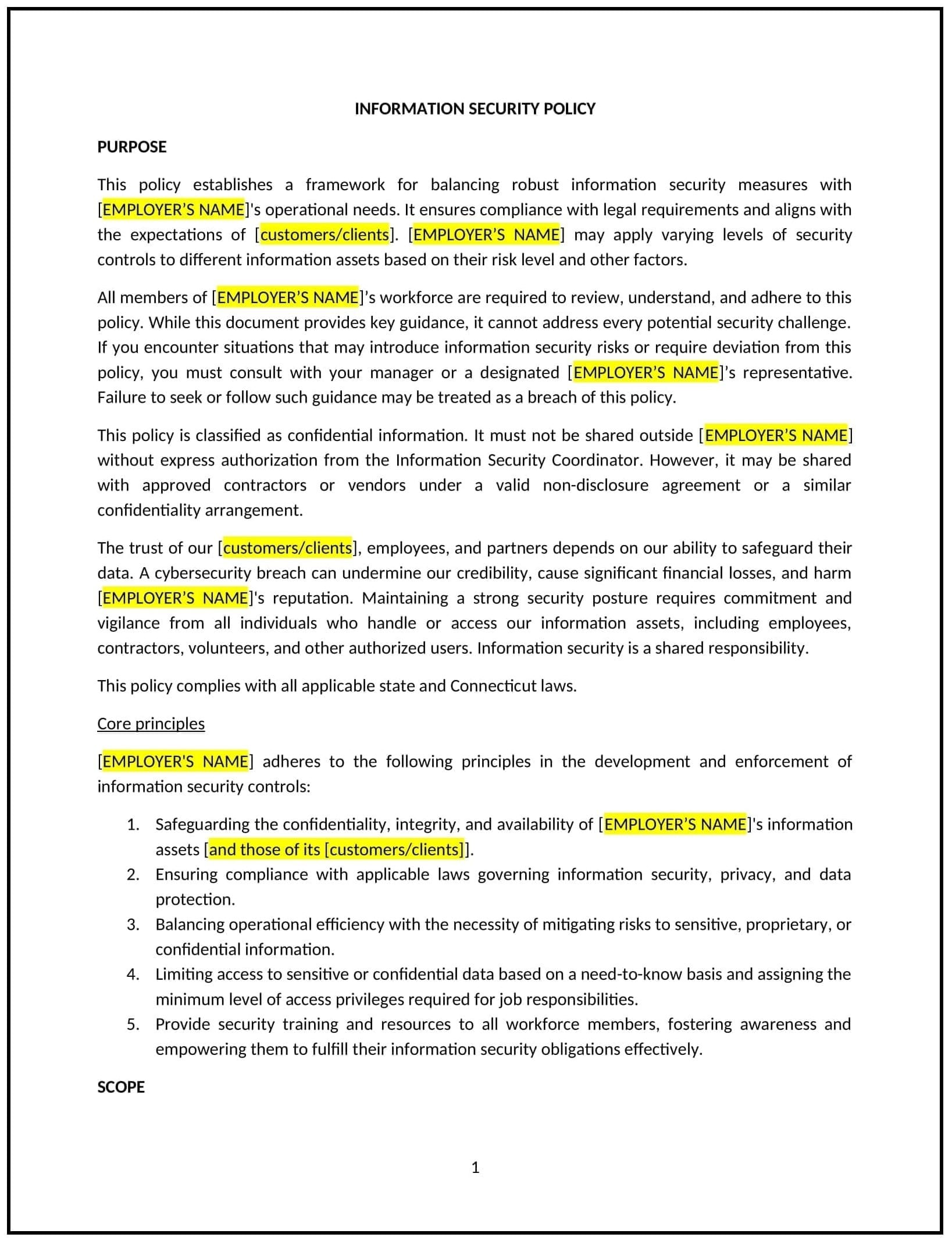
Customize this template for free
Information security policy (Connecticut)
An information security policy helps Connecticut businesses protect sensitive data, ensure the confidentiality, integrity, and availability of information, and mitigate risks related to cyber threats and data breaches. This policy outlines the measures the company takes to safeguard both digital and physical data, as well as the responsibilities of employees in maintaining the security of company information.
By implementing this policy, businesses can prevent data breaches, comply with relevant data protection regulations, and safeguard business operations and client trust.
How to use this information security policy (Connecticut)
- Define data security objectives: Clearly articulate the company’s commitment to protecting sensitive data, including personal, financial, and proprietary information.
- Identify data types and classifications: Specify which types of data require protection, including customer information, employee records, financial data, intellectual property, and confidential business plans.
- Implement security controls: Set up controls to protect information from unauthorized access, modification, or destruction. These may include password policies, encryption, secure file storage, firewalls, and antivirus software.
- Assign responsibilities: Assign roles and responsibilities for managing information security, including the IT department, data owners, and employees, ensuring that everyone understands their role in securing information.
- Monitor compliance: Establish procedures for monitoring and auditing security practices to detect any vulnerabilities, breaches, or non-compliance, and take corrective actions as necessary.
- Address data breach response: Define steps to take in the event of a data breach, including how to identify, contain, report, and resolve the breach, as well as notifying affected parties in compliance with state and federal laws.
Benefits of using this information security policy (Connecticut)
This policy offers several benefits for Connecticut businesses:
- Reduces risk of data breaches: Helps protect sensitive business, employee, and customer data from cyberattacks, ensuring that confidential information is kept secure.
- Enhances trust: Demonstrates the company’s commitment to data security, fostering trust with clients, customers, and partners.
- Ensures legal compliance: Helps businesses comply with state, federal, and international data protection laws, such as Connecticut's data breach notification law and GDPR, mitigating the risk of fines or legal action.
- Protects business assets: Safeguards company intellectual property, financial data, and trade secrets, ensuring the continuity of business operations.
- Increases employee awareness: Promotes a culture of data security within the organization, ensuring that employees understand their role in protecting company information and following security protocols.
Tips for using this information security policy (Connecticut)
- Communicate expectations clearly: Ensure that all employees understand the policy and the importance of following security protocols to protect company information.
- Regularly train employees: Provide ongoing training on data security best practices, recognizing phishing attacks, securing devices, and handling sensitive information.
- Implement robust controls: Use encryption, secure access controls, and strong authentication to protect sensitive data and minimize risks.
- Monitor systems and networks: Regularly monitor company systems and networks for signs of potential security vulnerabilities or breaches, and take immediate action when necessary.
- Review periodically: Update the policy to reflect new threats, business practices, or regulatory changes, ensuring it stays relevant and effective in securing company data.