Information security policy (Delaware): Free template
Got contracts to review? While you're here for policies, let Cobrief make contract review effortless—start your free review now.
Customize this template for free
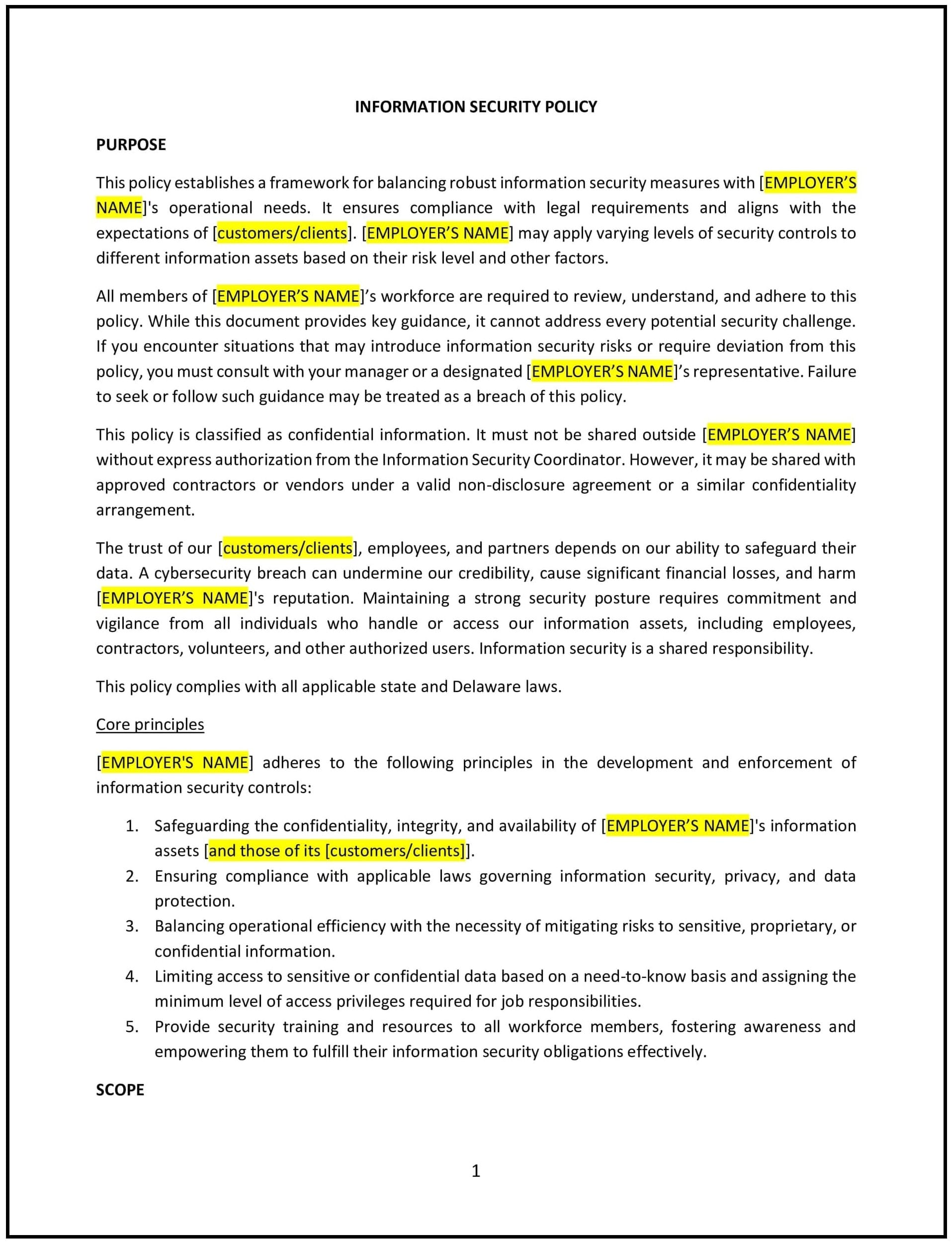
Information security policy (Delaware)
An information security policy helps Delaware businesses protect sensitive data, prevent cyber threats, and ensure compliance with applicable state and federal regulations. This policy outlines guidelines for safeguarding company and customer information, managing access controls, and responding to security incidents.
By implementing this policy, businesses can mitigate security risks, protect their reputation, and maintain operational integrity.
How to use this information security policy (Delaware)
- Identify sensitive data: Define the types of information that require protection, such as customer data, financial records, and intellectual property.
- Establish access controls: Specify who can access sensitive information, and implement measures like multi-factor authentication and role-based permissions.
- Define acceptable use: Provide guidelines for appropriate use of company devices, systems, and networks to minimize security risks.
- Outline incident response procedures: Detail steps for identifying, reporting, and addressing security breaches or data leaks.
- Train employees: Conduct regular training on cybersecurity best practices, such as recognizing phishing attempts and creating strong passwords.
- Monitor and review: Regularly assess the effectiveness of security measures and update the policy to address new threats or regulatory changes.
Benefits of using this information security policy (Delaware)
This policy offers several benefits for Delaware businesses:
- Protects sensitive data: Reduces the risk of unauthorized access or data breaches by implementing robust security measures.
- Ensures compliance: Aligns with Delaware and federal data protection regulations, reducing the risk of legal penalties.
- Mitigates cyber threats: Proactively addresses vulnerabilities to protect company assets and customer information.
- Enhances customer trust: Demonstrates the company’s commitment to safeguarding information, improving customer confidence.
- Promotes a security-first culture: Encourages employees to prioritize cybersecurity in their daily activities.
Tips for using this information security policy (Delaware)
- Communicate the policy clearly: Ensure employees understand their responsibilities for protecting company and customer information.
- Use security tools: Implement tools such as firewalls, encryption, and endpoint protection to strengthen defenses.
- Encourage reporting: Create a process for employees to report potential security threats or breaches promptly.
- Update regularly: Review and revise the policy to reflect changes in Delaware laws, industry standards, or emerging cyber threats.
- Test systems: Conduct regular security audits and penetration testing to identify and address vulnerabilities.