Information security policy (Georgia): Free template
Got contracts to review? While you're here for policies, let Cobrief make contract review effortless—start your free review now.
Customize this template for free
Information security policy (Georgia)
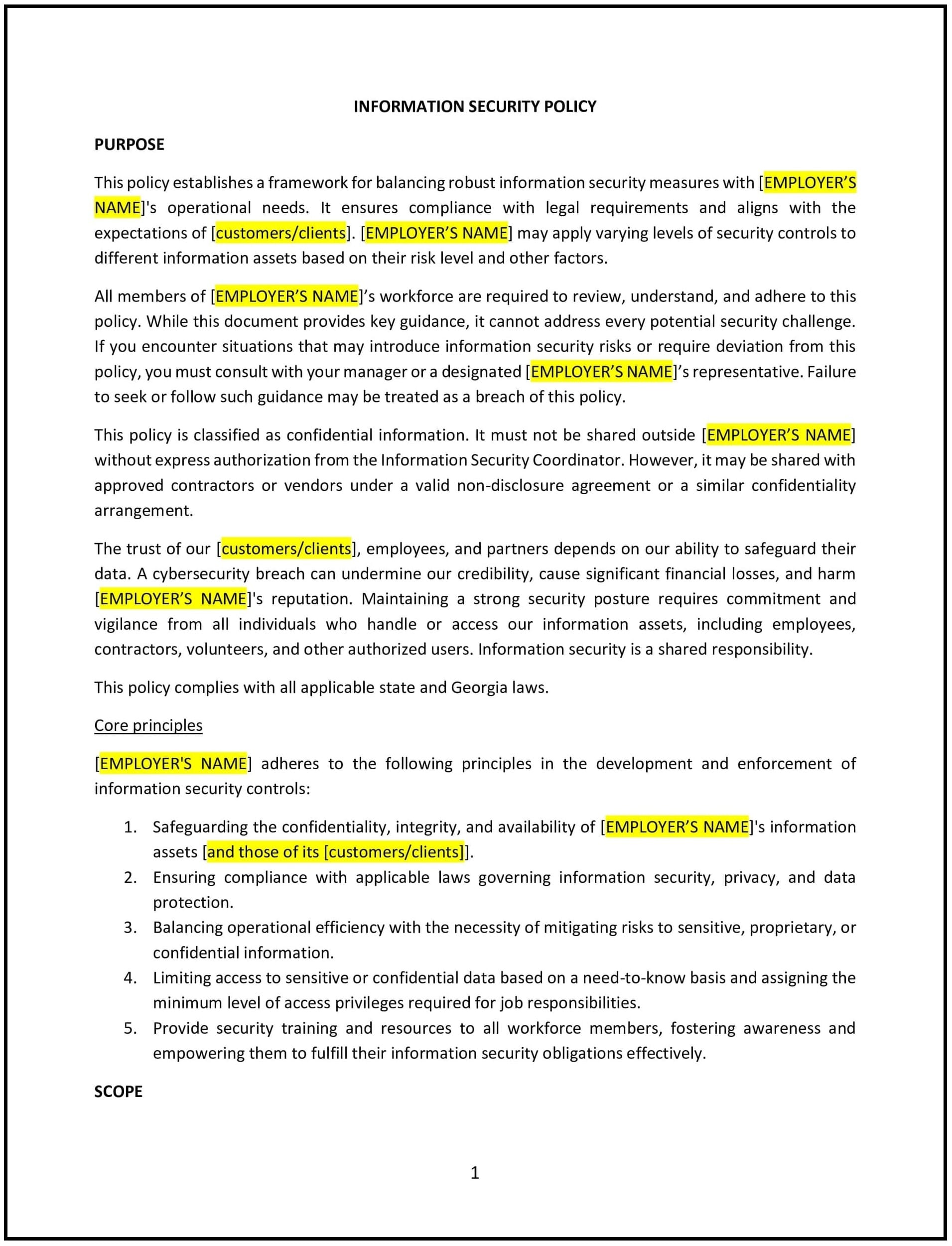
This information security policy is designed to help Georgia businesses protect sensitive data, prevent unauthorized access, and safeguard IT systems. The policy outlines security protocols, employee responsibilities, and incident response measures to minimize risks and ensure operational continuity.
By implementing this policy, businesses can enhance data protection, build trust, and reduce vulnerabilities in their information systems.
How to use this information security policy (Georgia)
- Define information security: Specify what constitutes sensitive or protected information, including customer data, intellectual property, and financial records.
- Establish access controls: Implement role-based access to information systems, ensuring employees have access only to the data necessary for their roles.
- Outline employee responsibilities: Require employees to follow best practices, such as using strong passwords, reporting suspicious activity, and avoiding unauthorized software installations.
- Include data encryption protocols: Require the use of encryption for transmitting and storing sensitive data to reduce the risk of unauthorized access.
- Develop an incident response plan: Create a clear plan for addressing security breaches, including steps for containment, investigation, and recovery.
- Schedule regular audits: Conduct periodic security assessments to identify vulnerabilities and evaluate the effectiveness of current protocols.
- Provide security training: Educate employees on recognizing phishing attempts, avoiding malware, and safeguarding data.
- Review and update regularly: Periodically assess the policy to reflect changes in Georgia-specific regulations, emerging security threats, or technological advancements.
Benefits of using this information security policy (Georgia)
Implementing this policy provides several advantages for Georgia businesses:
- Protects sensitive data: Robust security protocols reduce the risk of data breaches and unauthorized access.
- Enhances customer trust: A commitment to information security reassures clients that their data is handled responsibly.
- Minimizes financial risks: Proactive measures lower the likelihood of fines, lawsuits, or financial losses due to security incidents.
- Improves operational continuity: Safeguarding IT systems ensures uninterrupted business operations.
- Reflects Georgia-specific needs: Tailoring the policy to local business practices and regulatory requirements enhances its effectiveness.
Tips for using this information security policy (Georgia)
- Communicate clearly: Share the policy with employees during onboarding and provide regular updates to reinforce its importance.
- Monitor access: Regularly review access permissions to ensure employees only access the information necessary for their roles.
- Stay informed: Keep up with evolving cybersecurity threats and adapt protocols accordingly.
- Test incident response plans: Conduct simulations to ensure employees and IT staff are prepared to handle security breaches effectively.
- Collaborate locally: Partner with Georgia-based IT security firms or organizations to strengthen your cybersecurity framework.