Information security policy (Indiana): Free template
Got contracts to review? While you're here for policies, let Cobrief make contract review effortless—start your free review now.
Customize this template for free
Information security policy (Indiana): Free template
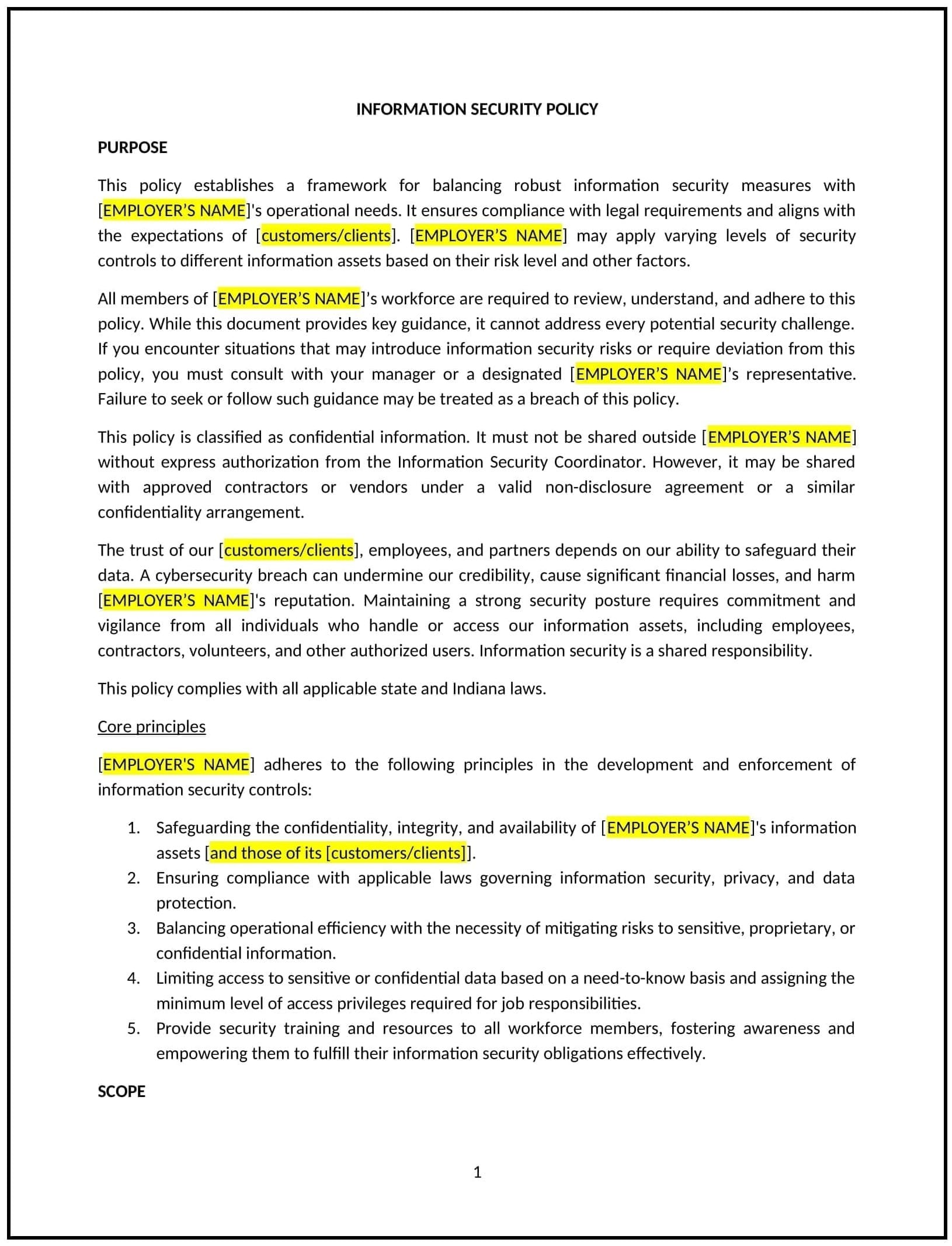
The information security policy helps Indiana businesses protect sensitive data and safeguard IT systems from threats, including cyberattacks, data breaches, and unauthorized access. This policy outlines the business's commitment to maintaining the confidentiality, integrity, and availability of information across its networks, systems, and processes. It includes guidelines for secure data handling, user access, system security, and incident response procedures. By using this template, businesses can mitigate information security risks, protect client and employee data, and foster trust in their ability to manage sensitive information securely.
By implementing this policy, Indiana businesses can reduce the risk of data breaches, enhance the security of business-critical systems, and promote a culture of information security across all levels of the organization.
How to use this information security policy (Indiana)
- Define sensitive information: Clearly outline what constitutes sensitive or confidential information within the business, including personally identifiable information (PII), financial data, proprietary business data, and any other types of information that need protection.
- Implement access control measures: Specify how user access to systems and data will be controlled. The policy should include procedures for granting, modifying, and revoking access rights based on job roles and responsibilities. Multi-factor authentication and strong password policies should be considered as part of access control.
- Secure data storage and transmission: Outline the requirements for securely storing and transmitting sensitive information, including encryption, secure servers, and data backup protocols. The policy should address both physical and electronic data security, ensuring that data is protected in all formats.
- Establish employee responsibilities: Define the responsibilities of employees in maintaining information security, such as adhering to password policies, reporting suspicious activities, and participating in security training. Employees should also understand the consequences of non-compliance with security policies.
- Provide incident response procedures: Establish a clear process for responding to information security incidents, including data breaches, cyberattacks, or unauthorized access. The policy should outline the steps for identifying, containing, investigating, and remediating security incidents, along with reporting requirements.
- Require security training and awareness: Specify that employees will undergo regular training to recognize security threats, such as phishing scams or malware, and understand how to handle sensitive data securely. Security awareness should be incorporated into employee onboarding and periodic refresher training.
- Protect physical security: Address physical security measures, including restricting physical access to systems and data storage areas, using locked cabinets for sensitive documents, and securing devices that store or process sensitive information.
- Monitor and audit security: Outline procedures for regularly monitoring and auditing information security controls and systems to detect vulnerabilities, suspicious activities, or policy violations. The policy should specify how audits will be conducted and how findings will be addressed.
- Implement third-party security management: Set expectations for third-party vendors and partners who handle sensitive business data or systems. The policy should outline the requirements for assessing the security practices of third-party contractors and ensuring their compliance with the business’s security standards.
- Review and update the policy: Regularly review and update the information security policy to address emerging threats, evolving best practices, and changes in technology. The policy should be periodically assessed to ensure it remains effective in managing information security risks.
Benefits of using this information security policy (Indiana)
Implementing this policy provides several key benefits for Indiana businesses:
- Reduces data security risks: By outlining specific protocols for data protection, businesses can minimize the likelihood of data breaches, cyberattacks, and unauthorized access to sensitive information.
- Builds customer trust: Customers and clients are more likely to trust businesses that prioritize information security, which can enhance customer loyalty and satisfaction.
- Enhances legal protection: The policy helps businesses address information security regulations and standards, reducing the risk of legal consequences related to data protection violations.
- Promotes a culture of security: A clear policy encourages all employees to take responsibility for information security, fostering a culture where security is a top priority across the organization.
- Safeguards business reputation: By mitigating security risks and protecting sensitive data, businesses can avoid the reputational damage that can result from security breaches or non-compliance with data protection regulations.
- Improves operational efficiency: Implementing structured security practices can prevent downtime caused by cyberattacks or security incidents, leading to improved productivity and business continuity.
Tips for using this information security policy (Indiana)
- Communicate the policy effectively: Ensure all employees are aware of the information security policy and understand their roles in maintaining security. Provide access to the policy through employee handbooks, onboarding, and internal communications.
- Regularly update security measures: Security threats evolve rapidly, so it is essential to regularly assess and update the business’s security practices. Stay informed about emerging threats and incorporate them into the policy to address new challenges.
- Provide continuous training: Ensure that all employees, from new hires to long-term staff, receive regular security training. Include training on common security threats, such as phishing or social engineering attacks, and ensure employees know how to identify and respond to potential security risks.
- Conduct regular audits and risk assessments: Regularly review the effectiveness of security controls by conducting internal audits and risk assessments. This will help identify vulnerabilities and areas for improvement to continuously strengthen the organization’s security posture.
- Implement incident response drills: Practice how the organization will respond to a security incident through mock drills or tabletop exercises. This prepares employees to react quickly and effectively to real-life breaches or attacks.