Got contracts to review? While you're here for policies, let Cobrief make contract review effortless—start your free review now.
Customize this template for free
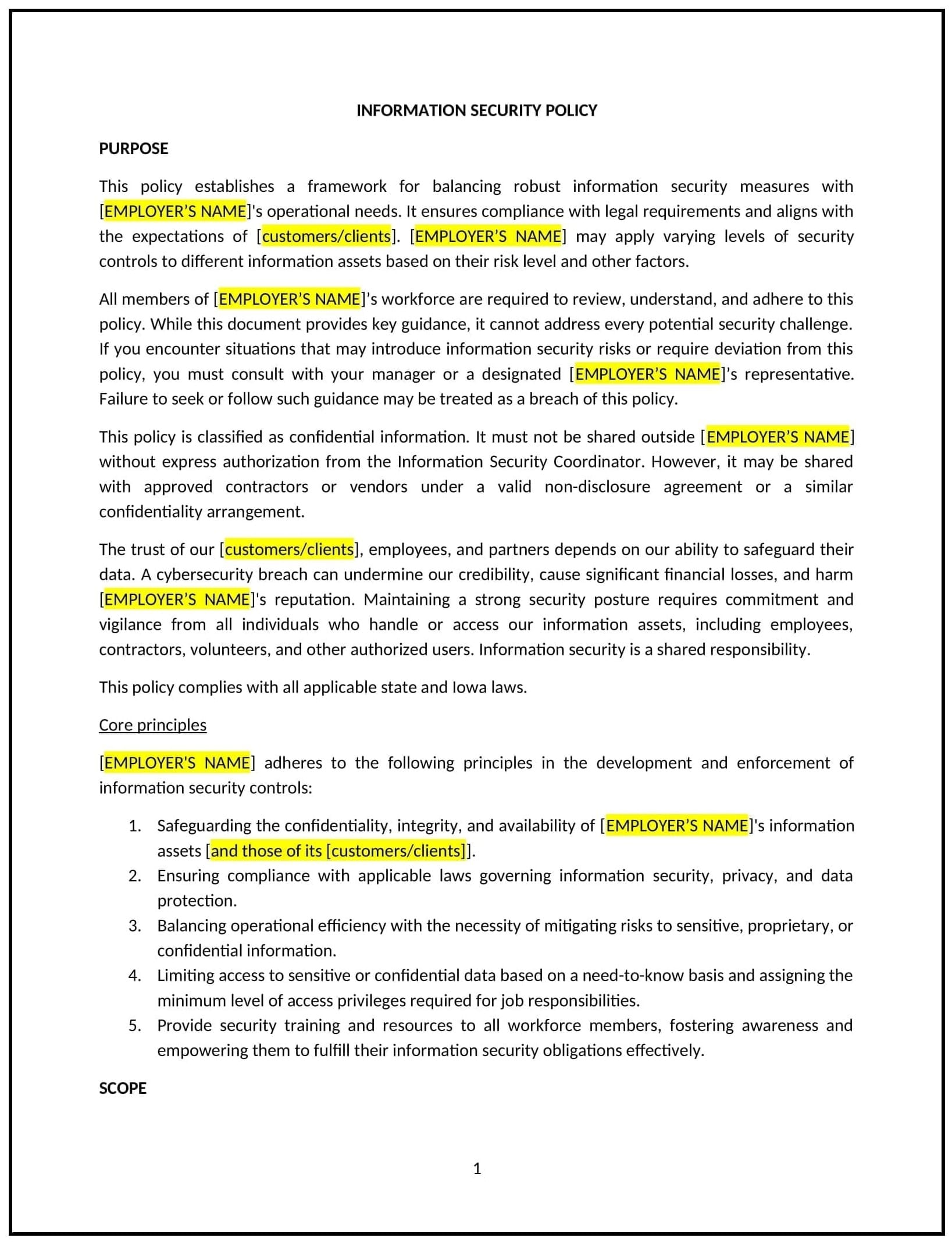
Information security policy (Iowa)
An information security policy helps Iowa businesses protect sensitive data and digital assets from unauthorized access, loss, or damage. This policy outlines guidelines for safeguarding both physical and electronic information, ensuring that the company and its employees follow best practices in data protection. It is vital for maintaining the trust of customers, complying with industry standards, and mitigating the risks associated with data breaches and cyber-attacks.
By implementing this policy, businesses in Iowa can strengthen their information security posture, prevent data breaches, and build a culture of security within the organization.
How to use this information security policy (Iowa)
- Define sensitive information: Businesses should identify what constitutes sensitive information, including personally identifiable information (PII), financial data, intellectual property, and customer data.
- Establish access controls: Outline processes for granting, modifying, and revoking access to sensitive data based on roles and responsibilities within the company.
- Implement encryption measures: Specify the use of encryption for storing and transmitting sensitive data to ensure its protection against unauthorized access.
- Set password policies: Develop guidelines for creating strong passwords, including minimum length, complexity, and regular password changes, to prevent unauthorized access.
- Create a data backup plan: Implement regular data backup procedures to prevent loss of critical information in case of system failures or cyber-attacks.
- Monitor network activity: Set up systems for monitoring network traffic to detect and respond to potential security threats, such as unauthorized access or malware.
- Conduct employee training: Regularly train employees on information security best practices, phishing prevention, and how to recognize potential threats.
- Develop an incident response plan: Create a clear plan for responding to information security incidents, including data breaches, cyber-attacks, and security vulnerabilities, outlining roles, reporting, and mitigation procedures.
- Review and update regularly: Periodically assess the policy to ensure it reflects current security risks, legal requirements, and technology developments.
Benefits of using this information security policy (Iowa)
This policy offers several key benefits for Iowa businesses:
- Protects sensitive data: A comprehensive information security policy helps businesses safeguard confidential information, reducing the risk of breaches or unauthorized access.
- Reduces legal risks: By following established security protocols, businesses minimize the likelihood of facing penalties, fines, or lawsuits due to data breaches or non-compliance with regulations.
- Builds customer trust: Customers are more likely to trust businesses that demonstrate a commitment to safeguarding their data, enhancing brand reputation and customer loyalty.
- Improves operational efficiency: Clear security protocols help ensure data is accessible to authorized individuals while minimizing disruptions from security incidents.
- Strengthens resilience: By proactively addressing security risks, businesses can better withstand cyber-attacks, data breaches, and other security threats.
- Promotes a culture of security: A well-defined policy fosters awareness and accountability among employees, ensuring that everyone contributes to maintaining information security.
Tips for using this information security policy (Iowa)
- Regularly review security systems: Businesses should conduct periodic security assessments, vulnerability scans, and penetration testing to identify and address weaknesses in their systems.
- Keep software up to date: Ensure that all systems and software, including antivirus programs and firewalls, are updated regularly to protect against new threats.
- Limit data access: Implement the principle of least privilege, granting access only to those employees who need it to perform their job functions.
- Encourage strong password habits: Promote the use of multi-factor authentication and strong password management tools to reduce the risk of unauthorized access.
- Foster a security-aware culture: Conduct regular security training and awareness campaigns to educate employees on potential threats, including phishing scams and social engineering tactics.
- Backup data regularly: Ensure that backups are performed frequently and stored securely, preferably with off-site or cloud-based solutions to prevent data loss in case of an emergency.
- Respond promptly to incidents: Have a clear and well-documented incident response plan that all employees are familiar with, ensuring quick action in the event of a breach or security threat.