Information security policy (Kansas): Free template
Got contracts to review? While you're here for policies, let Cobrief make contract review effortless—start your free review now.
Customize this template for free
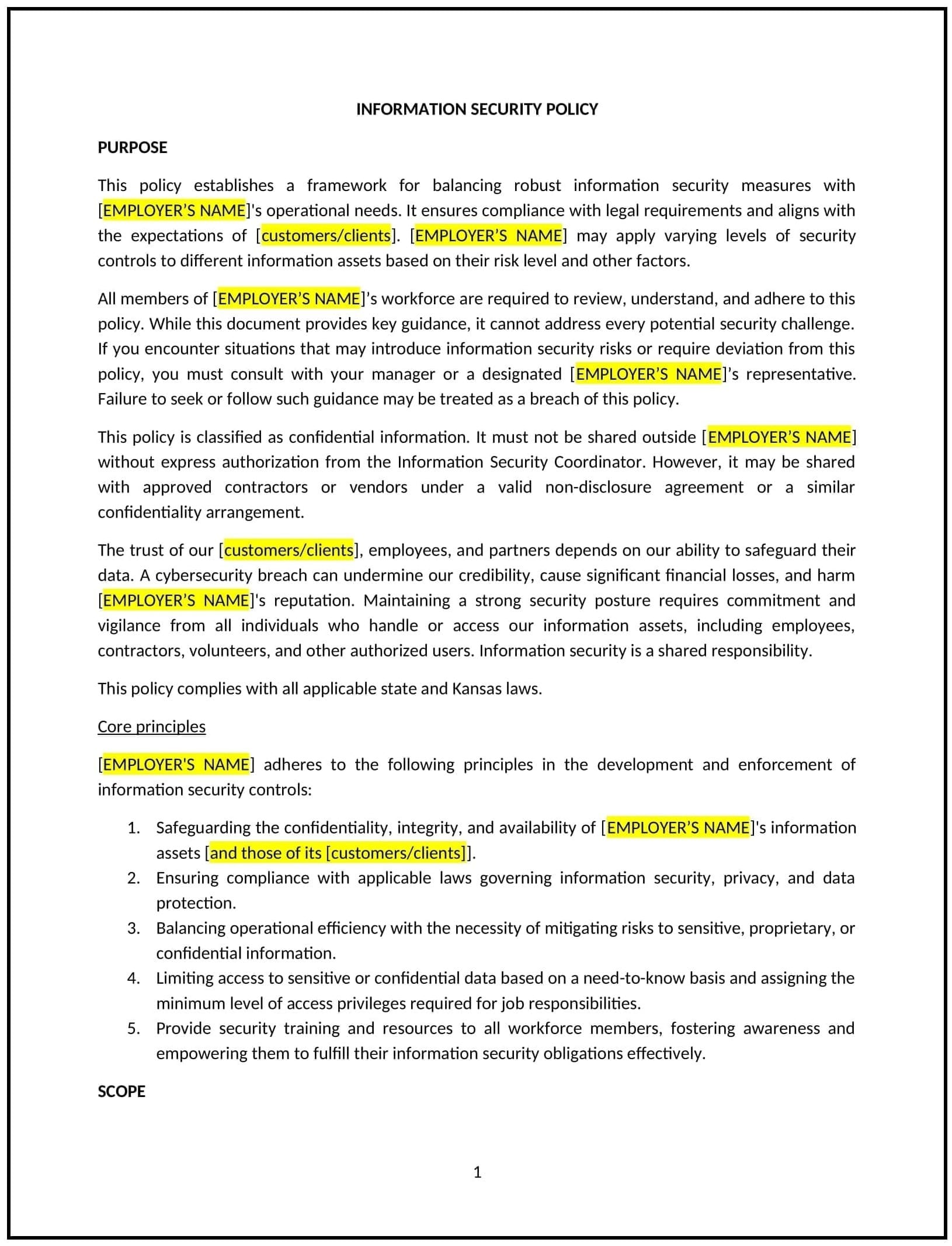
Information security policy (Kansas)
An information security policy helps Kansas businesses protect their digital and physical assets, ensuring that confidential data is safeguarded from unauthorized access, breaches, and cyber threats. This policy outlines the measures businesses will take to protect sensitive information, establish security protocols, and define roles and responsibilities related to information security.
By implementing this policy, businesses can prevent data breaches, protect their reputation, and ensure compliance with legal requirements related to information protection.
How to use this information security policy (Kansas)
- Define sensitive information: Businesses should specify what constitutes sensitive information, including customer data, intellectual property, financial records, and employee personal data.
- Establish access controls: Businesses should set clear guidelines on who can access sensitive information, based on job responsibilities, and implement systems to limit access.
- Implement security protocols: Businesses should put in place measures such as encryption, multi-factor authentication, and firewalls to protect sensitive data from unauthorized access or cyber threats.
- Develop incident response procedures: Businesses should have a plan for responding to data breaches or security incidents, outlining steps to contain the breach, notify stakeholders, and recover data.
- Educate employees: Businesses should offer regular training on information security best practices, including safe handling of data, recognizing phishing attempts, and using secure passwords.
- Regularly update security measures: Businesses should continuously monitor their information security systems and update software, tools, and protocols to address emerging threats and vulnerabilities.
- Review and update regularly: Businesses should assess and update the policy at regular intervals, especially in response to new risks, technologies, or legal requirements.
Benefits of using an information security policy (Kansas)
- Protects sensitive data: A strong security policy helps businesses secure sensitive data, reducing the risk of data breaches and loss of critical information.
- Enhances trust and reputation: Businesses that prioritize information security gain the trust of customers, clients, and employees, enhancing their reputation as responsible and reliable.
- Prevents financial loss: By safeguarding against cyber threats, businesses can reduce the financial consequences of data breaches, including fines, legal fees, and loss of revenue.
- Promotes compliance: A clear information security policy helps businesses comply with data protection regulations, including those related to customer privacy and security.
- Improves operational continuity: By preventing security incidents, businesses can ensure their operations run smoothly without disruptions caused by data breaches or cyberattacks.
- Strengthens overall risk management: Information security is a critical part of a comprehensive risk management strategy, helping businesses identify and address potential vulnerabilities.
Tips for using this information security policy (Kansas)
- Communicate the policy clearly: Businesses should ensure all employees understand their role in maintaining information security, including their responsibilities for handling data securely.
- Provide regular training: Businesses should conduct ongoing security training for employees to keep them informed of emerging threats and best practices for protecting sensitive information.
- Use strong authentication methods: Businesses should implement strong authentication measures, such as multi-factor authentication, to enhance access controls and reduce the risk of unauthorized access.
- Regularly test security systems: Businesses should conduct regular security audits and penetration testing to identify vulnerabilities and ensure that security measures are effective.
- Monitor for potential threats: Businesses should use monitoring tools to detect unusual activity and potential threats in real time, enabling quick responses to emerging risks.
- Keep security software up to date: Businesses should ensure that all software, including antivirus programs and firewalls, is regularly updated to protect against new cyber threats.