Got contracts to review? While you're here for policies, let Cobrief make contract review effortless—start your free review now.
Customize this template for free
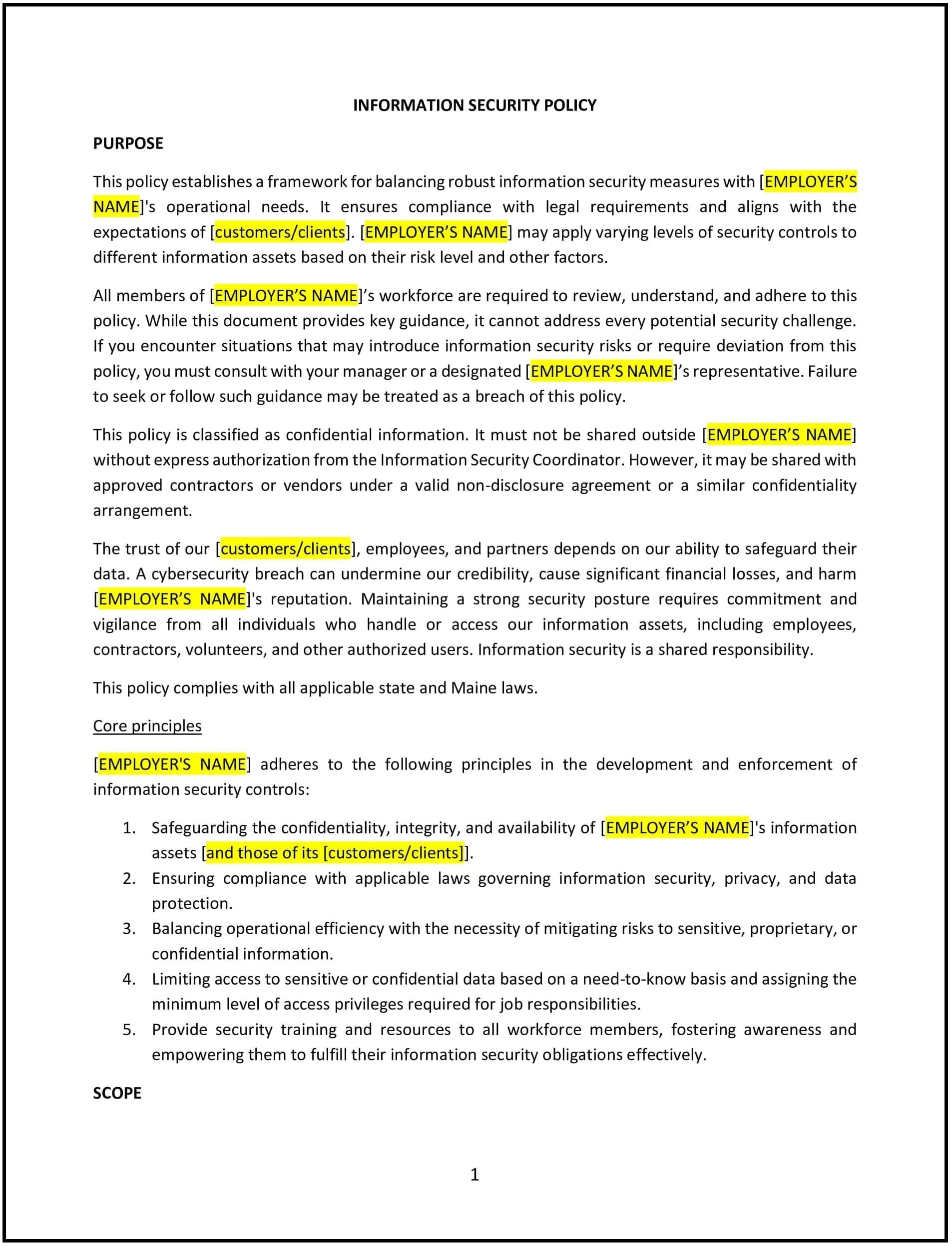
Information security policy (Maine): Free template
This information security policy is designed to help Maine businesses protect sensitive data, prevent unauthorized access, and support compliance with state and federal regulations. It outlines standards for managing digital and physical information, responding to security incidents, and maintaining a secure work environment.
By implementing this policy, Maine businesses can safeguard critical assets, build trust with stakeholders, and reduce risks associated with data breaches.
How to use this information security policy (Maine)
- Define scope and purpose: Clearly state that the policy applies to all employees, contractors, and third-party vendors who handle company information.
- Identify sensitive information: Specify what constitutes sensitive data, such as customer information, financial records, trade secrets, and personal employee data.
- Establish access controls: Detail procedures for granting, modifying, and revoking access to information systems and data.
- Outline security measures: Include requirements such as password protection, encryption, two-factor authentication, and regular software updates.
- Address incident response: Provide steps for identifying, reporting, and resolving security incidents or data breaches.
- Include employee responsibilities: Emphasize the role of employees in safeguarding information, such as avoiding phishing scams and reporting suspicious activities.
- Review regularly: Update the policy to reflect changes in Maine regulations, technological advancements, or business needs.
Benefits of using this information security policy (Maine)
Implementing this policy provides several benefits for Maine businesses:
- Protects sensitive data: Reduces the risk of unauthorized access, data breaches, and information theft.
- Ensures compliance: Aligns with state and federal regulations, such as data protection and privacy laws.
- Enhances trust: Builds confidence among customers, partners, and employees in the business’s commitment to security.
- Mitigates risks: Establishes proactive measures to prevent and respond to security incidents.
- Promotes accountability: Clarifies employee roles and responsibilities in maintaining information security.
Tips for using this information security policy (Maine)
- Train employees: Provide regular training on information security best practices and awareness of common threats like phishing.
- Monitor systems: Implement tools to track and analyze access logs, user activity, and potential vulnerabilities.
- Conduct audits: Regularly review security protocols, systems, and compliance with the policy.
- Secure devices: Require employees to use company-approved devices with up-to-date security software for work-related tasks.
- Encrypt data: Ensure all sensitive data is encrypted both in transit and at rest.
- Document incidents: Maintain detailed records of security breaches and response efforts to improve future practices.