Information security policy (Minnesota): Free template
Got contracts to review? While you're here for policies, let Cobrief make contract review effortless—start your free review now.
Customize this template for free
Information security policy (Minnesota)
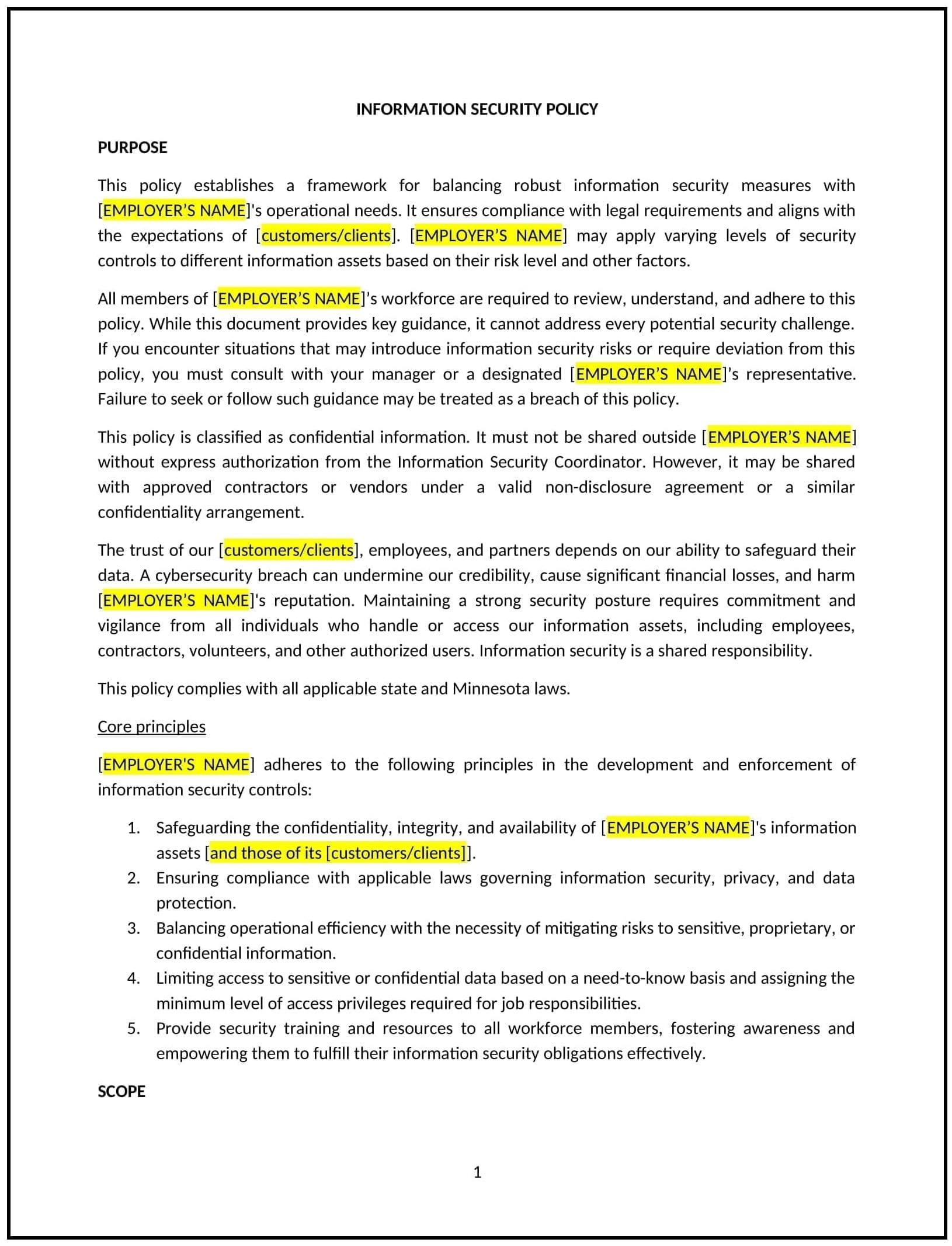
This information security policy is designed to help Minnesota businesses safeguard their digital and physical information assets. It outlines the company’s approach to preventing unauthorized access, data breaches, and other security risks, while establishing protocols for handling, storing, and transmitting sensitive information. The policy also addresses the roles and responsibilities of employees in protecting information security.
By implementing this policy, businesses can protect client, employee, and company data from potential security threats, reduce the risk of data breaches, and support compliance with applicable laws and industry standards.
How to use this information security policy (Minnesota)
- Define information security roles: Assign responsibility for information security to key personnel within the organization, such as an Information Security Officer (ISO) or IT department, ensuring that there is a designated team overseeing the company’s security efforts.
- Implement access controls: Establish procedures to control who has access to sensitive information, including the use of role-based access controls, password management protocols, and multi-factor authentication (MFA).
- Outline data protection measures: Specify how sensitive data should be protected, including encryption standards, data backup procedures, and secure communication methods.
- Set guidelines for information storage: Define secure practices for storing and handling physical and electronic information, ensuring that sensitive data is not easily accessible to unauthorized individuals.
- Provide employee training: Regularly train employees on information security best practices, including identifying phishing attempts, using strong passwords, and securely handling company data.
- Monitor and audit security practices: Implement continuous monitoring of information security practices, including periodic security audits and vulnerability assessments to identify potential weaknesses.
- Establish an incident response plan: Create a detailed plan for responding to data breaches, security incidents, or other emergencies, including how employees should report incidents and the steps to mitigate damage.
Benefits of using an information security policy (Minnesota)
Implementing this policy provides several advantages for Minnesota businesses:
- Protects sensitive data: By safeguarding company, client, and employee data, businesses can reduce the risk of data breaches, which can result in financial loss and damage to reputation.
- Enhances trust and credibility: Clients, customers, and partners are more likely to trust businesses that prioritize information security and demonstrate a commitment to protecting sensitive data.
- Reduces legal and financial risk: Businesses that protect sensitive data are less likely to face fines, lawsuits, or reputational damage from data breaches, particularly under data protection regulations.
- Increases employee awareness: Regular training and awareness initiatives help employees understand the importance of data security and how they can contribute to protecting the company’s information assets.
- Reflects Minnesota-specific considerations: Tailors the policy to meet Minnesota’s specific data protection regulations and business needs, taking into account the local regulatory landscape and industry best practices.
Tips for using this information security policy (Minnesota)
- Communicate clearly: Ensure that all employees understand the importance of information security, their roles in protecting data, and the procedures for reporting security incidents.
- Train regularly: Conduct ongoing security training to keep employees up-to-date on new security threats, best practices, and the tools available to help secure company data.
- Review access controls: Regularly audit access permissions to ensure that only authorized employees have access to sensitive information and systems.
- Implement strong encryption: Require encryption for sensitive data, both at rest and in transit, to protect it from unauthorized access.
- Monitor for threats: Use security tools and software to monitor for potential threats, such as malware, phishing attacks, and unauthorized access attempts.
- Review and update the policy: Periodically review and update the policy to address emerging security threats, regulatory changes, and advancements in technology.