Information security policy (Mississippi): Free template
Got contracts to review? While you're here for policies, let Cobrief make contract review effortless—start your free review now.
Customize this template for free
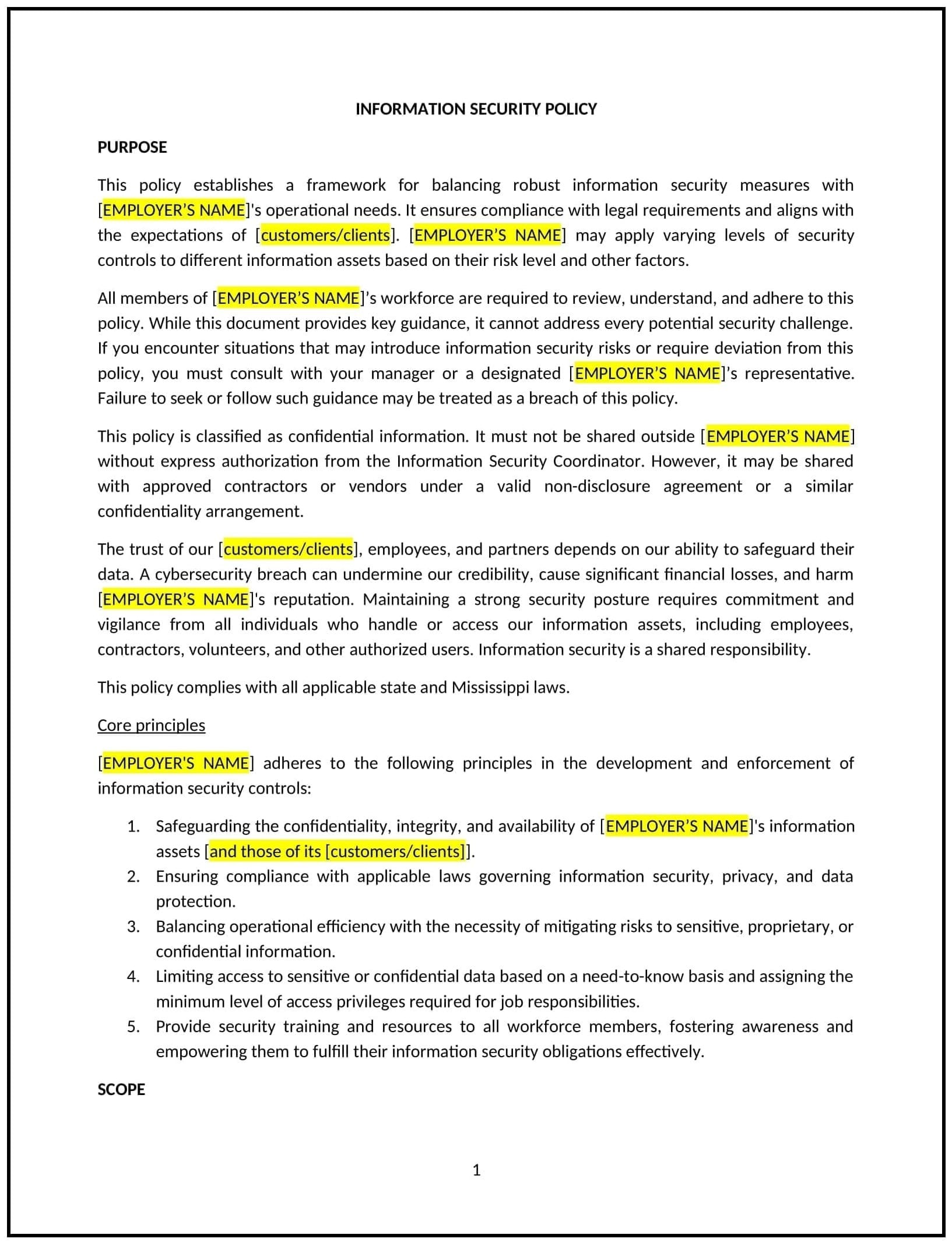
Information security policy (Mississippi)
An information security policy helps Mississippi businesses safeguard sensitive data, protect against unauthorized access, and mitigate the risk of cyber threats. This policy outlines the steps businesses should take to secure their information systems, protect intellectual property, and ensure the confidentiality, integrity, and availability of company data.
By implementing this policy, businesses can reduce the risk of data breaches, demonstrate their commitment to protecting customer and employee data, and ensure they comply with relevant regulations.
How to use this information security policy (Mississippi)
- Define sensitive data: Identify and classify sensitive information, including personal data, financial records, intellectual property, and confidential business information. Establish guidelines for handling, storing, and transmitting this data securely.
- Implement data protection measures: Outline the security measures businesses should use to protect sensitive data, such as encryption, secure passwords, and multi-factor authentication (MFA).
- Define access controls: Set guidelines for restricting access to sensitive information based on job responsibilities. Ensure that only authorized personnel can access certain types of data, and establish procedures for reviewing and updating access rights regularly.
- Train employees on security protocols: Provide employees with regular training on information security best practices, including how to recognize phishing attempts, maintain strong passwords, and avoid risky online behaviors.
- Monitor information systems: Implement continuous monitoring of information systems to detect any unusual activity, potential threats, or vulnerabilities. Set up intrusion detection systems (IDS) and perform regular system audits.
- Establish incident response procedures: Develop a plan for responding to security breaches or data incidents, including steps for identifying the cause, containing the breach, notifying affected parties, and reporting the issue to authorities if required.
- Conduct risk assessments: Regularly assess potential risks to the business's information systems and take steps to mitigate those risks. This can include reviewing security protocols, conducting penetration testing, and addressing any identified weaknesses.
- Ensure third-party security: Set requirements for third-party vendors or service providers who handle company data, including the use of security protocols and compliance with the business’s information security standards.
- Maintain business continuity plans: Ensure the business has a plan in place to maintain operations in the event of a security breach, data loss, or other disaster. This may include data backups, cloud storage, and disaster recovery plans.
- Review and update the policy: Periodically review and update the information security policy to reflect changes in technology, threats, and regulations.
Benefits of using this information security policy (Mississippi)
This policy offers several benefits for Mississippi businesses:
- Protects sensitive data: By implementing security measures, businesses can protect sensitive data from unauthorized access, theft, or loss, reducing the risk of data breaches.
- Complies with regulations: The policy helps businesses comply with industry regulations and data protection laws, such as GDPR, HIPAA, or CCPA, reducing the risk of legal issues or penalties.
- Enhances customer trust: Businesses that take information security seriously can build trust with their customers by demonstrating their commitment to protecting personal and financial data.
- Reduces financial risk: A data breach or security incident can be costly, both in terms of financial loss and damage to reputation. This policy helps mitigate those risks.
- Improves operational efficiency: With clear security protocols and incident response procedures in place, businesses can react quickly to threats and minimize downtime.
- Strengthens brand reputation: A business that prioritizes information security is seen as responsible and trustworthy, enhancing its reputation and competitive advantage.
Tips for using this information security policy (Mississippi)
- Communicate the policy to all employees: Ensure that every employee is aware of the information security policy and understands their responsibilities in maintaining data security. Provide regular training to reinforce key security practices.
- Conduct security audits: Perform regular audits to ensure that information systems are secure and that the company is following the policy correctly. This can include vulnerability assessments and penetration testing.
- Implement role-based access: Establish role-based access controls to limit access to sensitive information based on employees' job functions. Regularly review and update access permissions to ensure that only authorized personnel can view or modify sensitive data.
- Create strong authentication protocols: Use multi-factor authentication (MFA) and strong password policies to protect access to company systems, especially for employees accessing sensitive or confidential information.
- Monitor third-party vendors: Ensure that third-party vendors who have access to company data adhere to the same security standards outlined in the policy. Regularly assess vendor compliance through audits or questionnaires.
- Review and update security measures regularly: Stay updated on emerging threats and new security technologies to ensure that the business’s information security practices remain effective and relevant.