Information security policy (Missouri): Free template
Got contracts to review? While you're here for policies, let Cobrief make contract review effortless—start your free review now.
Customize this template for free
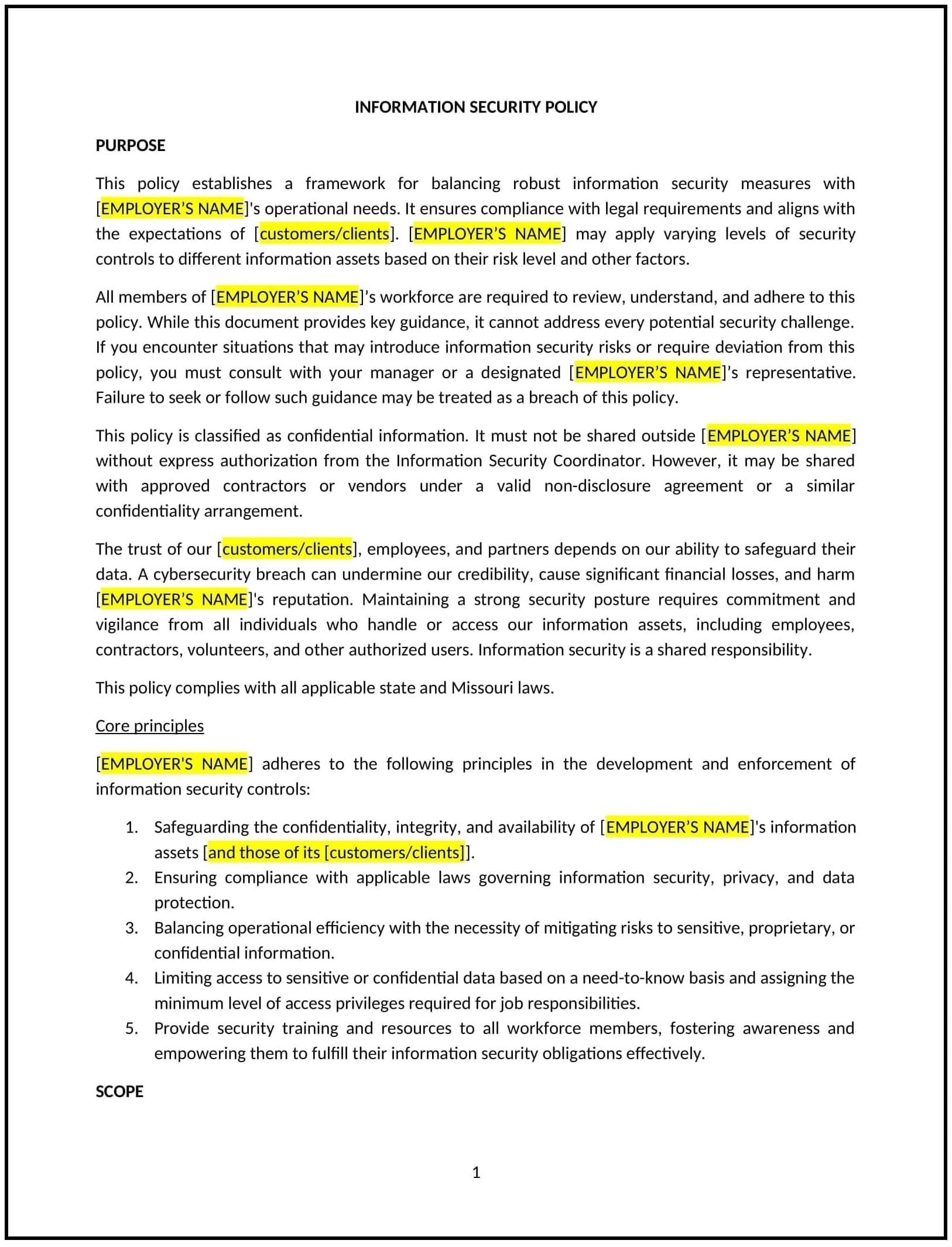
Information security policy (Missouri)
An information security policy helps businesses in Missouri protect sensitive company data, customer information, and intellectual property from unauthorized access, loss, or theft. This policy outlines the procedures for safeguarding digital and physical data, establishing access controls, and setting guidelines for using technology and handling confidential information. It aims to ensure that all employees understand their roles in maintaining data security and follow best practices to minimize security risks.
By adopting this policy, businesses in Missouri can protect their assets, enhance customer trust, and reduce the risk of data breaches and cybersecurity threats.
How to use this information security policy (Missouri)
- Define data security goals: Clearly state the business’s commitment to protecting sensitive information from unauthorized access, use, disclosure, alteration, and destruction.
- Implement access controls: Specify procedures for granting, modifying, and revoking access to company systems and data, ensuring that only authorized employees have access to confidential information.
- Establish guidelines for data handling: Outline how data should be handled, stored, and transmitted, including encryption requirements, backup procedures, and data disposal practices.
- Address cybersecurity risks: Set protocols for managing cybersecurity risks, including using firewalls, antivirus software, and intrusion detection systems to protect against external threats.
- Train employees: Offer regular training on information security best practices, such as recognizing phishing attempts, creating strong passwords, and reporting potential security breaches.
- Create incident response protocols: Define the steps employees should take if they identify a data breach or security threat, including reporting the incident and containing the threat.
- Monitor and audit: Establish procedures for regularly monitoring company systems, auditing data access, and reviewing security policies to ensure ongoing compliance and effectiveness.
- Review regularly: Periodically review and update the policy to reflect new threats, regulatory changes, and advancements in technology.
Benefits of using this information security policy (Missouri)
This policy provides several benefits for businesses in Missouri:
- Protects sensitive data: A robust information security policy helps prevent unauthorized access, data breaches, and cyberattacks, safeguarding valuable business and customer data.
- Reduces legal risks: By following best practices for data security, businesses reduce the risk of legal consequences, including fines and lawsuits, resulting from data breaches or non-compliance with data protection laws.
- Enhances customer trust: Demonstrating a commitment to information security helps build customer confidence, showing that the business takes data protection seriously.
- Prevents financial losses: Effective data security measures reduce the likelihood of financial losses due to fraud, theft, or downtime caused by cyberattacks.
- Improves operational continuity: By minimizing the risk of data breaches and cybersecurity threats, businesses can ensure smooth operations and avoid disruptions that could impact productivity or service delivery.
- Aligns with industry standards: An information security policy helps businesses meet industry regulations and standards, ensuring that they are in compliance with relevant laws regarding data protection.
Tips for using this information security policy (Missouri)
- Communicate the policy clearly: Ensure that all employees are aware of the policy and understand their roles in maintaining information security by including it in employee handbooks and offering regular training sessions.
- Implement strong access controls: Ensure that employees only have access to the data necessary for their roles, and review access regularly to prevent unauthorized use.
- Monitor systems continuously: Use monitoring tools to detect potential security risks, track data access, and identify suspicious activities in real-time.
- Regularly update security measures: Continuously evaluate and update security systems, including firewalls, antivirus software, and encryption methods, to address emerging threats and vulnerabilities.
- Provide secure data disposal: Establish guidelines for securely disposing of data and electronic devices, including methods like shredding physical documents and wiping hard drives.
- Encourage a security-aware culture: Foster a company-wide culture of security awareness, where employees are encouraged to report suspicious activities and follow best practices for data protection.
- Review regularly: Periodically review the policy to ensure it remains relevant to the business’s evolving needs, technological advancements, and changes in Missouri law or industry regulations.