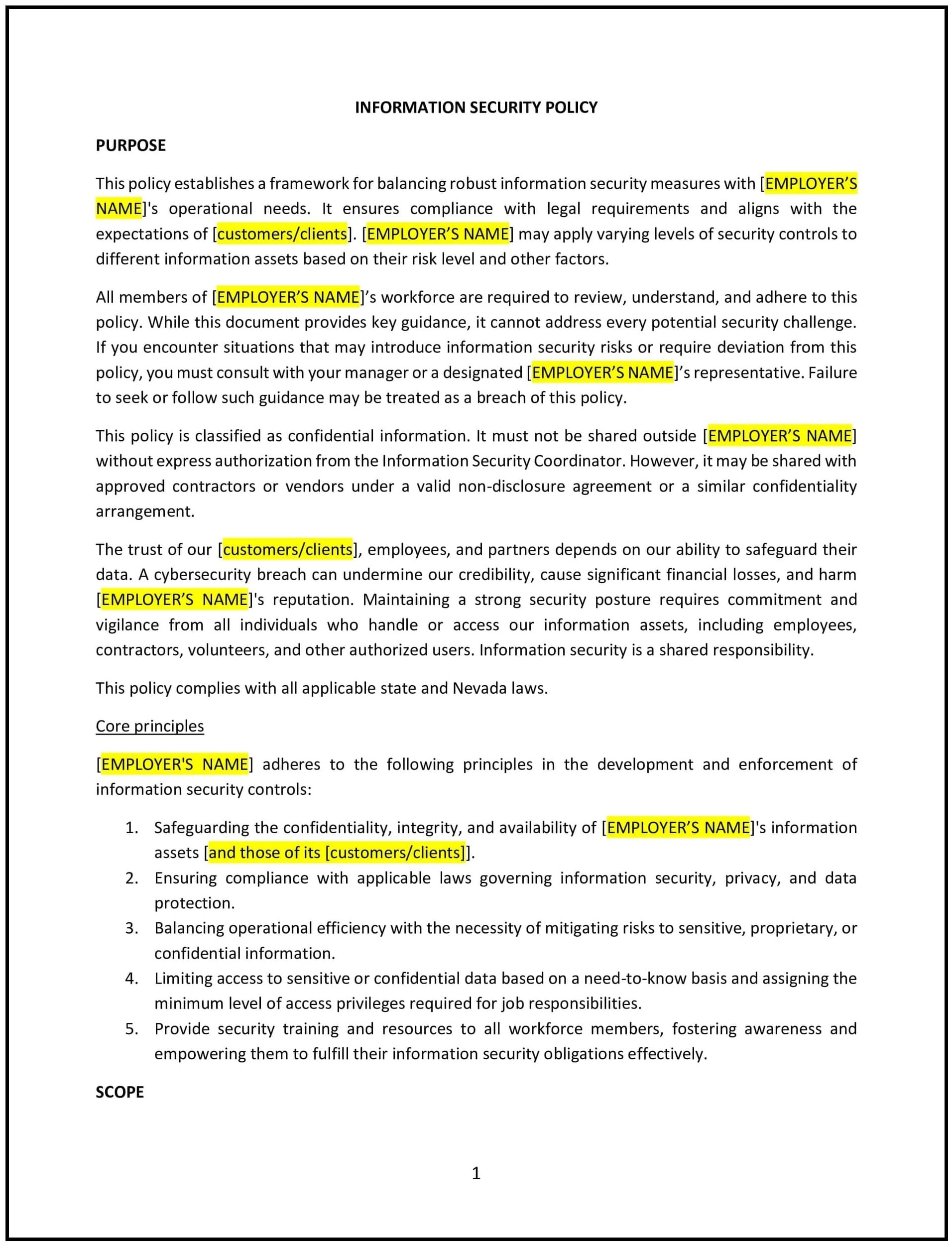
Information security policy (Nevada): Free template
Outlines measures to safeguard sensitive data, prevent breaches, and ensure compliance with cybersecurity laws.
- Policies
- Nevada
Information security policy (Nevada)
This information decurity policy is designed to help Nevada businesses protect sensitive data, mitigate cybersecurity risks, and comply with applicable state and federal regulations. It provides clear guidelines for safeguarding business and customer information while maintaining secure operations.
By adopting this policy, businesses can reduce the risk of data breaches, protect their reputation, and enhance operational resilience.
How to use this information security policy (Nevada)
- Define sensitive information: Specify what constitutes sensitive information, such as customer data, employee records, and proprietary business information.
- Establish access controls: Implement protocols to restrict access to sensitive information based on employee roles and responsibilities.
- Provide training: Educate employees on cybersecurity best practices, including password management, phishing awareness, and secure data handling.
- Use data protection measures: Apply measures like encryption, secure backups, and endpoint protection to safeguard sensitive data.
- Monitor network activity: Deploy monitoring tools to detect unauthorized access or suspicious activity and respond promptly to threats.
- Develop an incident response plan: Outline the steps to take in case of a data breach or cybersecurity incident, including containment and reporting procedures.
- Conduct regular audits: Schedule audits to evaluate the effectiveness of current security practices and identify areas for improvement.
- Comply with legal requirements: Ensure adherence to Nevada’s data protection laws and federal regulations such as HIPAA, if applicable.
Benefits of using this information security policy (Nevada)
This policy provides several benefits for Nevada businesses:
- Protects sensitive information: Prevents unauthorized access to critical business, employee, and customer data.
- Enhances regulatory compliance: Supports compliance with Nevada data protection laws and federal regulations.
- Builds stakeholder trust: Demonstrates a commitment to safeguarding information, fostering trust among customers and employees.
- Mitigates cybersecurity risks: Reduces the likelihood of costly data breaches or cyberattacks.
- Improves operational resilience: Ensures that business operations remain secure and uninterrupted.
Tips for using this information security policy (Nevada)
- Communicate the policy: Share the policy with all employees and provide regular training to reinforce its importance.
- Review technology: Regularly update security tools to address evolving cybersecurity threats.
- Involve employees: Encourage employees to report potential risks or security concerns without fear of retaliation.
- Review vendor compliance: Ensure third-party vendors adhere to the company’s information security standards.
- Update periodically: Review the policy annually or after significant changes to technology, regulations, or business operations.
Frequently asked questions (FAQs)
Similar templates
Where deals go from offer to paid
