Information security policy (North Carolina): Free template
Got contracts to review? While you're here for policies, let Cobrief make contract review effortless—start your free review now.
Customize this template for free
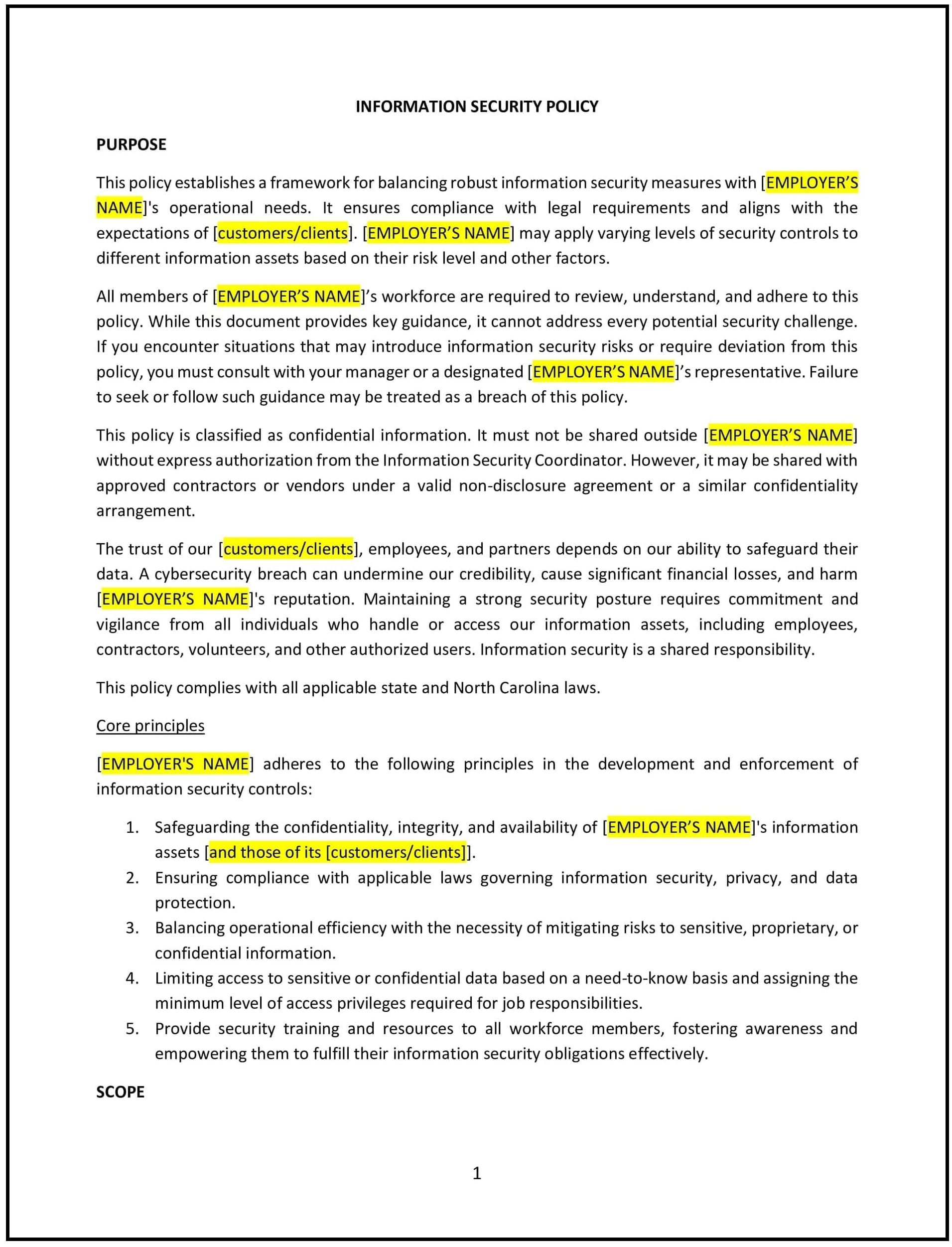
Information security policy (North Carolina)
An information security policy helps North Carolina businesses protect sensitive data and digital assets by establishing guidelines for securing information systems, managing data access, and preventing breaches. This policy outlines the company’s commitment to safeguarding business, customer, and employee data and sets the standards for securing networks, devices, and databases.
By adopting this policy, businesses can reduce the risk of data breaches, comply with data protection regulations, and build trust with clients and employees.
How to use this information security policy (North Carolina)
- Define information security goals: Clearly state the company’s commitment to protecting sensitive information, preventing unauthorized access, and ensuring business continuity in the event of a data breach.
- Identify sensitive information: Specify what constitutes sensitive or confidential data, including customer information, employee data, intellectual property, financial records, and business plans.
- Establish access controls: Define who has access to sensitive information and outline the security measures (e.g., password protection, encryption) required to protect data from unauthorized access.
- Implement security protocols: Specify the security tools, software, and procedures employees must follow to safeguard company data, including firewalls, antivirus software, and secure data storage methods.
- Reflect North Carolina-specific considerations: Ensure the policy complies with North Carolina’s data protection and privacy regulations, as well as applicable federal laws, such as the Health Insurance Portability and Accountability Act (HIPAA) and the General Data Protection Regulation (GDPR) where applicable.
Benefits of using this information security policy (North Carolina)
This policy provides several benefits for North Carolina businesses:
- Protects sensitive data: Safeguarding company, employee, and customer information reduces the risk of data breaches, fraud, and identity theft.
- Ensures regulatory compliance: The policy helps businesses comply with North Carolina’s data protection laws and federal regulations governing data security.
- Enhances trust: Demonstrating a commitment to information security builds trust with clients and customers, as they know their data is being handled securely.
- Reduces legal and financial risks: A strong information security policy reduces the risk of costly lawsuits, fines, and reputational damage resulting from data breaches.
- Improves business continuity: By implementing preventive measures, the business can avoid disruptions caused by cyberattacks or data loss, ensuring continued operations.
Tips for using this information security policy (North Carolina)
- Communicate the policy clearly: Ensure that all employees understand the company’s expectations regarding information security and the steps they must take to protect sensitive data.
- Provide regular training: Offer ongoing training to employees on information security best practices, including identifying phishing attacks and securing passwords.
- Implement regular audits: Conduct regular security audits to ensure that systems are secure and that employees are following the company’s security procedures.
- Review the policy regularly: The policy should be reviewed annually to ensure it aligns with North Carolina’s data protection laws, technological advancements, and business operations.