Got contracts to review? While you're here for policies, let Cobrief make contract review effortless—start your free review now.
Customize this template for free
Information security policy (Ohio)
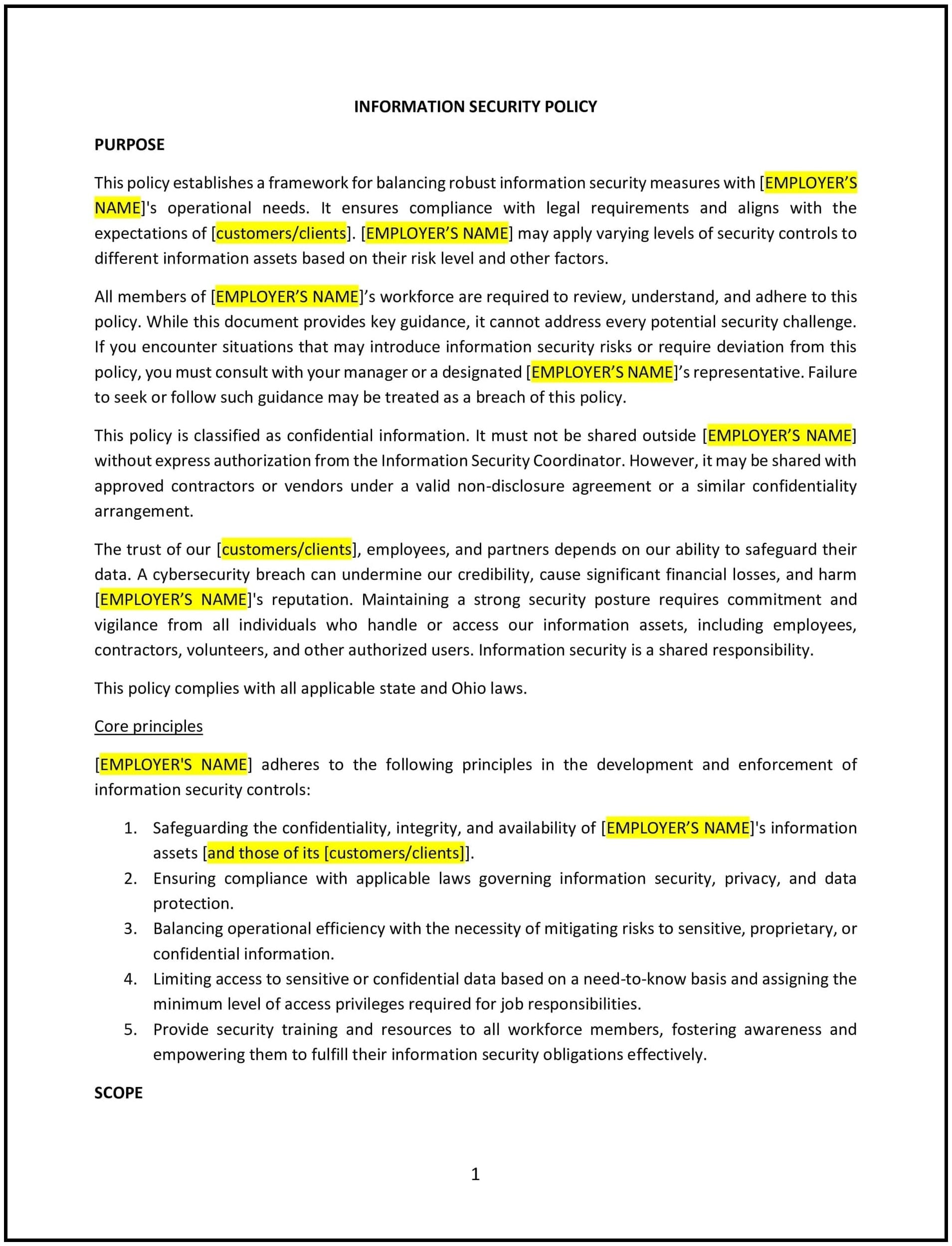
An information security policy provides Ohio businesses with guidelines for safeguarding the confidentiality, integrity, and availability of sensitive business information. This policy outlines the measures in place to protect data from unauthorized access, theft, or destruction, and specifies the responsibilities of employees, managers, and IT personnel in ensuring information security. It includes requirements for password protection, access controls, data encryption, and network security, as well as procedures for responding to security breaches.
By implementing this policy, Ohio businesses can mitigate the risk of data breaches, protect customer and business information, and support compliance with state and federal regulations regarding information security.
How to use this information security policy (Ohio)
- Define protected information: The policy should specify the types of information that are protected under the policy, such as personal data, financial records, intellectual property, and confidential business information. It should also outline the importance of protecting this information and the potential consequences of security breaches.
- Set access control requirements: The policy should specify who has access to sensitive information and under what conditions. This includes guidelines for creating strong passwords, multi-factor authentication, and limiting access based on job roles and responsibilities.
- Implement encryption and data protection measures: The policy should outline the use of encryption to protect data in transit and at rest, ensuring that sensitive information is secure both on the network and on individual devices.
- Establish procedures for data disposal: The policy should include guidelines for securely disposing of or deleting sensitive information when it is no longer needed. This may include physical destruction of paper records or wiping data from digital devices.
- Address network and system security: The policy should set requirements for securing the business's network, including firewalls, anti-virus software, intrusion detection systems, and other safeguards to protect against cyberattacks and unauthorized access.
- Define responsibilities for employees: The policy should outline the specific responsibilities of employees to ensure information security, including how to recognize phishing attempts, report security threats, and maintain the security of their devices and accounts.
- Develop an incident response plan: The policy should include procedures for responding to security breaches, including how to report and document incidents, how to mitigate the effects of a breach, and how to notify affected parties.
- Ensure compliance with regulations: The policy should specify the business’s obligations under Ohio state laws and federal regulations, such as the Health Insurance Portability and Accountability Act (HIPAA), the General Data Protection Regulation (GDPR), and the California Consumer Privacy Act (CCPA), and ensure that the business complies with these requirements.
- Review and update regularly: The policy should be reviewed periodically to ensure it remains aligned with current security threats, changes in Ohio state laws, and updates to industry best practices.
Benefits of using this information security policy (Ohio)
This policy provides several key benefits for Ohio businesses:
- Protects sensitive data: The policy helps prevent unauthorized access to sensitive information, reducing the risk of data breaches and ensuring that customer and business data is kept secure.
- Mitigates legal risks: By complying with Ohio state laws and federal regulations, such as HIPAA and GDPR, the policy helps businesses avoid legal penalties, fines, and lawsuits related to data breaches.
- Enhances customer trust: Businesses that prioritize information security demonstrate a commitment to protecting their customers' data, which helps build trust and loyalty.
- Improves business continuity: By protecting against cyber threats and data breaches, the policy helps ensure that business operations can continue smoothly, even in the event of an attack or security incident.
- Reduces financial risks: Data breaches and security incidents can result in significant financial losses, including the cost of remediation, legal fees, and reputational damage. The policy helps reduce these risks by implementing preventive measures and establishing a clear response plan.
- Promotes a culture of security: The policy fosters a culture of security awareness, encouraging employees to be vigilant and proactive in protecting business information and assets.
- Increases operational efficiency: With clear guidelines in place for information security, businesses can streamline their operations, improve risk management, and reduce the likelihood of security-related disruptions.
Tips for using this information security policy (Ohio)
- Communicate the policy clearly: Ensure that all employees understand the information security policy by including it in the employee handbook, reviewing it during onboarding, and providing ongoing training on best practices for protecting business data.
- Provide regular training: Offer regular training on information security threats, including phishing attacks, malware, and social engineering tactics, so that employees can recognize and respond to security risks effectively.
- Use encryption and secure communication methods: Implement strong encryption for both data storage and communication to protect sensitive information in transit. This includes securing emails, online transactions, and cloud storage.
- Monitor systems and networks: Continuously monitor the business’s systems and networks for unusual activity or potential security threats. This can include using intrusion detection systems, vulnerability scans, and other tools to detect and respond to security breaches in real-time.
- Conduct regular audits: Regularly audit the business’s information security practices and infrastructure to identify vulnerabilities and ensure compliance with the policy.
- Enforce strong password policies: Implement strong password policies, such as requiring multi-factor authentication and periodic password changes, to protect employee accounts and sensitive business systems.
- Establish a clear incident response process: Ensure that all employees know how to report security incidents and understand the steps the business will take to respond to potential breaches. This includes establishing a team responsible for managing security incidents and communicating with affected parties.
- Update the policy regularly: The policy should be reviewed and updated regularly to reflect emerging security threats, technological advancements, and changes in Ohio state laws or federal regulations related to information security.