Internal investigations policy (Alabama): Free template
Got contracts to review? While you're here for policies, let Cobrief make contract review effortless—start your free review now.
Customize this template for free
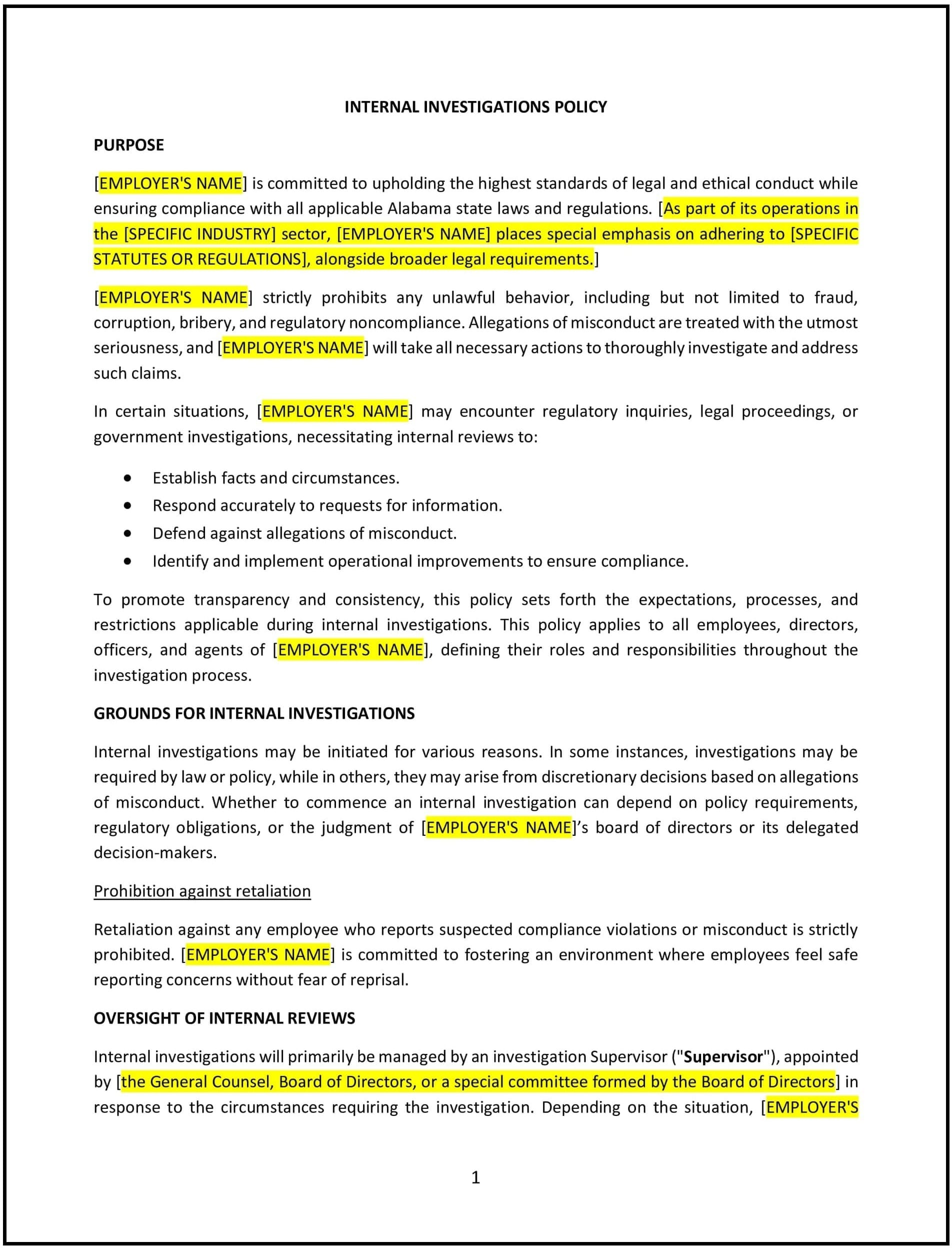
Internal investigations policy (Alabama)
An internal investigations policy provides a structured framework for addressing workplace concerns, such as employee misconduct, harassment, discrimination, or policy violations. For SMBs in Alabama, this policy ensures that all investigations are handled consistently, fairly, and in compliance with applicable laws, fostering trust and accountability in the workplace.
By outlining roles, responsibilities, and procedures, this policy helps businesses maintain a respectful work environment and resolve issues effectively.
How to use this internal investigations policy (Alabama)
- Define the purpose of investigations: Clearly state the objectives, such as determining facts, ensuring compliance with company policies, and maintaining workplace integrity.
- Establish reporting channels: Provide clear instructions for employees to report concerns or complaints, such as through HR, an anonymous hotline, or a designated email address.
- Identify responsible parties: Assign roles for conducting investigations, such as HR representatives, legal counsel, or external investigators for complex cases.
- Detail the investigation process: Outline the steps, including initial review, evidence collection, interviews, and documentation, to ensure consistency and thoroughness.
- Emphasize confidentiality: Highlight the importance of protecting the privacy of all parties involved while complying with legal requirements.
Benefits of using an internal investigations policy (Alabama)
A well-defined internal investigations policy supports a transparent and fair workplace. Here’s how it helps:
- Promotes accountability: Demonstrates your commitment to addressing workplace issues promptly and fairly.
- Ensures consistency: Provides a standard process for handling complaints, reducing the risk of bias or errors.
- Protects confidentiality: Safeguards the privacy of employees and sensitive information throughout the investigation.
- Reduces legal risks: Aligns with Alabama and federal laws, mitigating potential liabilities related to workplace disputes.
- Builds trust: Encourages employees to report concerns by showing that their issues will be taken seriously and handled appropriately.
Tips for implementing an internal investigations policy (Alabama)
- Train managers and HR staff: Provide training on conducting fair and effective investigations, including how to handle sensitive topics and document findings.
- Use neutral investigators: Ensure that investigations are led by unbiased individuals to maintain objectivity and credibility.
- Document thoroughly: Maintain detailed records of all investigation steps, including evidence, interviews, and conclusions, to support future actions or legal requirements.
- Communicate outcomes: Share the results of the investigation with relevant parties while protecting confidentiality.
- Review and refine: Regularly assess the policy and investigation processes to ensure alignment with legal updates and workplace needs.