Internal investigations policy (California): Free template
Got contracts to review? While you're here for policies, let Cobrief make contract review effortless—start your free review now.
Customize this template for free
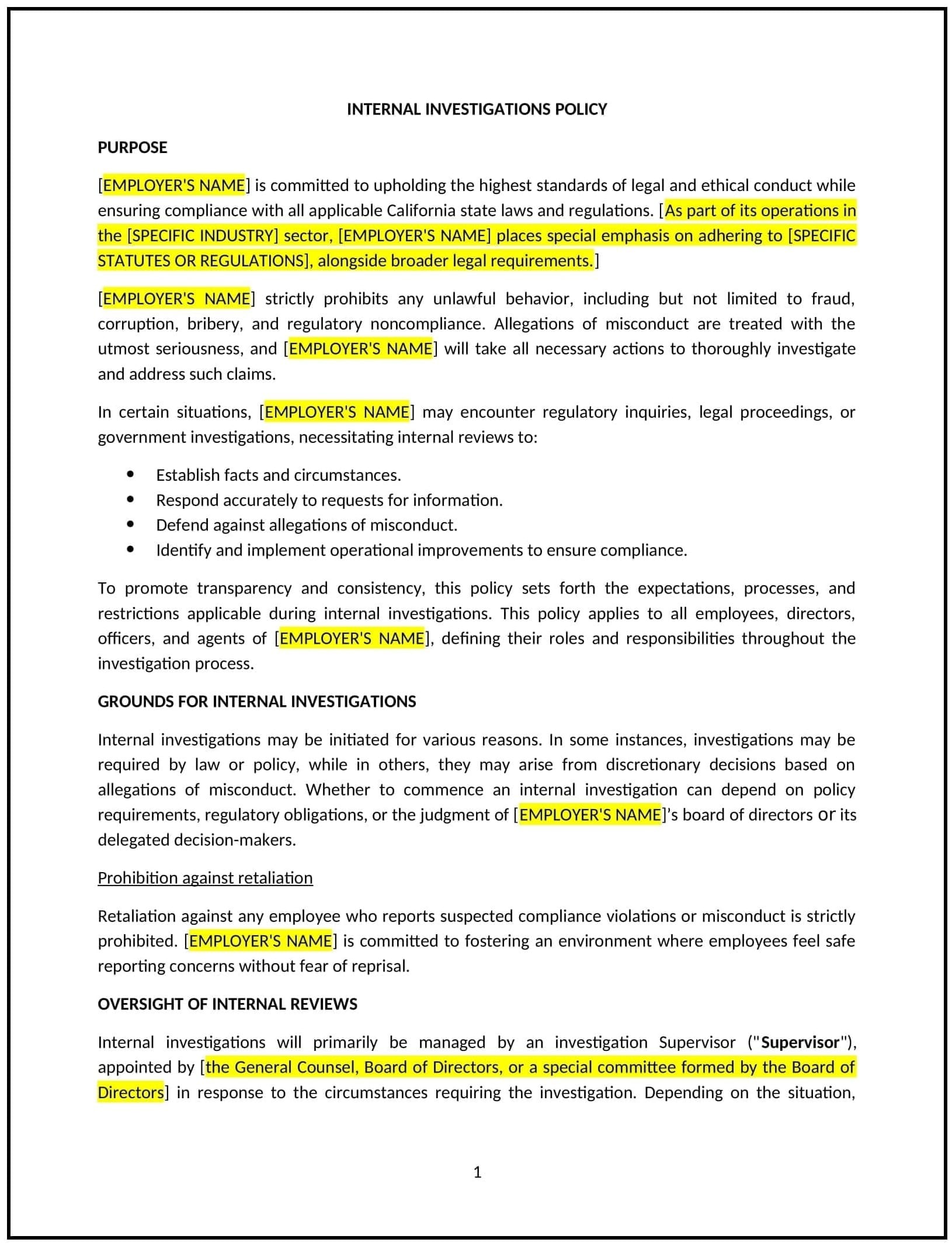
Internal investigations policy (California)
In California, an internal investigations policy provides businesses with guidelines for conducting fair, thorough, and compliant investigations into workplace incidents, such as harassment claims, misconduct, or policy violations. This policy supports adherence to California laws, including the Fair Employment and Housing Act (FEHA), which requires prompt and impartial investigations into workplace complaints.
This policy outlines the procedures for initiating, conducting, and concluding investigations while ensuring confidentiality, non-retaliation, and compliance with legal obligations. By implementing this policy, California businesses can maintain a respectful and lawful workplace.
How to use this internal investigations policy (California)
- Define investigation triggers: Specify the types of incidents that may prompt an investigation, such as employee complaints, policy violations, or legal compliance concerns.
- Assign responsibilities: Identify who will lead investigations, such as HR personnel or external investigators, and ensure they are appropriately trained.
- Outline investigation procedures: Provide clear steps for conducting investigations, including gathering evidence, interviewing parties, and documenting findings.
- Ensure confidentiality: Emphasize the importance of maintaining privacy for all parties involved, sharing information only on a need-to-know basis.
- Communicate outcomes: Detail how investigation results will be shared with relevant stakeholders and the steps for resolving issues or taking corrective actions.
Benefits of using this internal investigations policy (California)
This policy offers several advantages for California businesses:
- Supports compliance: Reflects California laws, such as FEHA, by ensuring timely and impartial handling of workplace complaints.
- Promotes fairness: Establishes consistent procedures for addressing incidents, protecting the rights of all parties involved.
- Enhances trust: Demonstrates the business’s commitment to resolving workplace issues fairly and lawfully.
- Reduces risks: Helps prevent legal disputes by documenting thorough and unbiased investigations.
- Encourages accountability: Clarifies roles and responsibilities for investigating and resolving workplace concerns.
Tips for using this internal investigations policy (California)
- Reflect California-specific laws: Ensure the policy aligns with FEHA requirements and other relevant state regulations.
- Train investigators: Provide training on conducting impartial investigations, interviewing techniques, and documenting findings.
- Use external investigators when needed: Engage third-party investigators for complex or sensitive cases to ensure impartiality.
- Document thoroughly: Maintain detailed records of investigations, including evidence, interviews, and conclusions, to support transparency and legal compliance.
- Review regularly: Update the policy to reflect changes in California laws, workplace practices, or industry standards.