Internal investigations policy (Indiana): Free template
Got contracts to review? While you're here for policies, let Cobrief make contract review effortless—start your free review now.
Customize this template for free
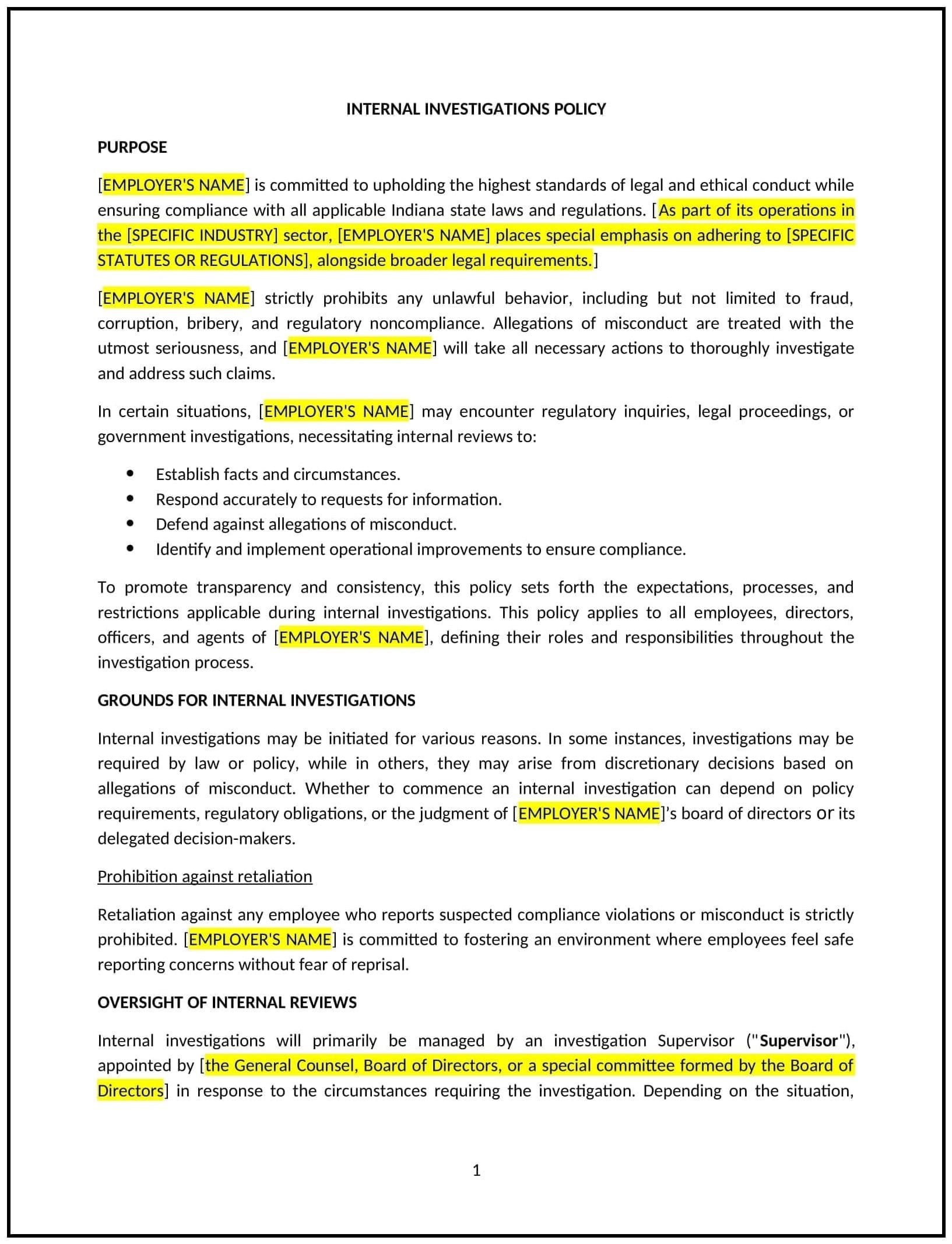
Internal investigations policy (Indiana): Free template
The internal investigations policy helps Indiana businesses establish clear procedures for handling internal investigations into employee misconduct, policy violations, or allegations of wrongdoing. This policy outlines the steps for conducting fair, thorough, and confidential investigations into matters such as harassment, discrimination, theft, fraud, and other unethical behavior within the organization. By using this template, businesses can ensure that investigations are handled consistently, employees' rights are respected, and any issues are resolved in compliance with legal and ethical standards.
By implementing this policy, Indiana businesses can foster a fair and transparent workplace, protect their reputation, and take appropriate action when necessary to maintain a positive and compliant work environment.
How to use this internal investigations policy (Indiana)
- Define the scope of investigations: Clearly outline the types of issues that may trigger an internal investigation, such as violations of company policy, unethical behavior, harassment, discrimination, or criminal activity. The policy should specify which allegations require formal investigation procedures.
- Establish investigation procedures: Provide a step-by-step process for conducting internal investigations, including how complaints will be received, how investigators will be selected, and how evidence will be gathered. The policy should specify how interviews will be conducted, how documentation will be maintained, and the timeline for completing the investigation.
- Ensure confidentiality: Emphasize the importance of confidentiality throughout the investigation process. The policy should ensure that only authorized personnel have access to sensitive information, and employees involved in the investigation are expected to maintain discretion.
- Protect employee rights: Outline how employees involved in the investigation, including the complainant, the accused, and witnesses, will be treated fairly. The policy should ensure that all parties are provided with an opportunity to present their side, and that they are not retaliated against for participating in the process.
- Assign responsibilities: Clearly designate who will be responsible for overseeing and conducting internal investigations, such as HR personnel, managers, or external investigators. The policy should also outline the roles of senior management, legal counsel, and other departments in the investigation process.
- Set timelines and milestones: Establish reasonable timelines for the investigation process, including the steps for initiating the investigation, gathering evidence, conducting interviews, and reaching a conclusion. The policy should specify that investigations will be conducted promptly, while allowing sufficient time to gather accurate information.
- Address outcomes and corrective actions: Define the potential outcomes of an internal investigation, including disciplinary actions, retraining, policy changes, or other corrective measures. The policy should specify how the business will communicate the findings of the investigation and any actions that will be taken.
- Prevent retaliation: The policy should include a clear statement that retaliation against employees who report misconduct, participate in investigations, or assist in the investigation process will not be tolerated. This helps create a safe environment for reporting concerns without fear of adverse consequences.
- Review and update the policy: Regularly review and update the internal investigations policy to ensure it remains compliant with applicable laws and reflects best practices. The policy should be reviewed periodically to address any changes in legal requirements or company operations.
Benefits of using this internal investigations policy (Indiana)
Implementing this policy provides several key benefits for Indiana businesses:
- Ensures consistency and fairness: By establishing clear procedures for handling investigations, the policy ensures that all investigations are conducted fairly, consistently, and transparently, which helps maintain employee trust and confidence.
- Protects the company’s reputation: Conducting thorough, unbiased investigations and taking appropriate actions based on findings helps protect the company’s reputation, preventing allegations of mishandling complaints or covering up misconduct.
- Reduces legal risks: A well-defined policy reduces the risk of legal challenges by ensuring that investigations comply with applicable laws, such as those related to harassment, discrimination, and workplace safety.
- Enhances employee trust: A transparent and fair investigation process helps employees feel confident that their concerns will be taken seriously and handled appropriately, fostering a culture of openness and accountability.
- Promotes a compliant workplace: By addressing misconduct and policy violations through internal investigations, businesses promote a compliant and ethical workplace, ensuring that company policies and legal requirements are followed.
- Supports workplace integrity: The policy reinforces the business’s commitment to integrity by demonstrating that it will not tolerate unethical behavior and will take action when necessary to address violations.
Tips for using this internal investigations policy (Indiana)
- Communicate the policy clearly: Ensure that all employees are aware of the internal investigations policy by including it in the employee handbook, onboarding materials, and training sessions. Employees should understand the procedures for reporting misconduct and the steps involved in the investigation process.
- Ensure unbiased investigations: Investigators should be trained to conduct impartial investigations, free from bias or preconceived notions. Consider appointing external investigators for more complex or high-profile cases to ensure objectivity and transparency.
- Maintain thorough documentation: Keep detailed records of all stages of the investigation, including interviews, evidence collected, and the final outcome. Documentation is crucial for ensuring accountability and for addressing any potential legal challenges.
- Foster a culture of reporting: Encourage employees to report concerns without fear of retaliation. The policy should emphasize that the business values transparency and ethical behavior and that misconduct will be addressed promptly.
- Protect the confidentiality of the investigation: Ensure that all parties involved in the investigation understand the importance of maintaining confidentiality to protect the integrity of the process and the privacy of those involved.
- Act promptly and transparently: Investigations should be conducted in a timely manner, with updates provided to relevant stakeholders. Communicate the results of the investigation and any actions taken to ensure accountability and transparency.