Internal investigations policy (Iowa): Free template
Got contracts to review? While you're here for policies, let Cobrief make contract review effortless—start your free review now.
Customize this template for free
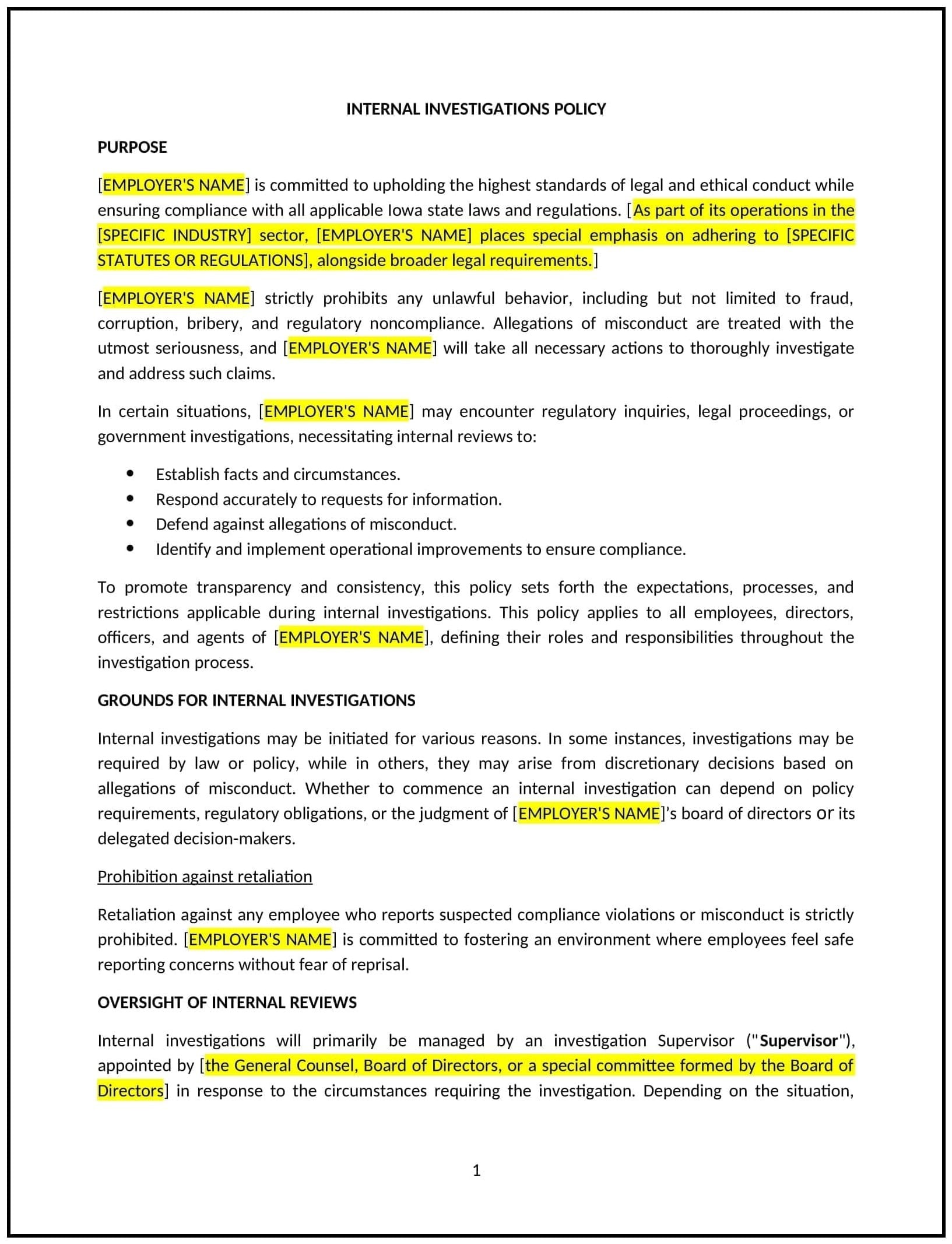
Internal investigations policy (Iowa)
An internal investigations policy helps Iowa businesses effectively address potential misconduct, ethical violations, or legal concerns within the organization. This policy outlines the process for conducting fair, impartial, and thorough investigations into allegations, ensuring that all employees are treated with respect and that the company handles the matter in compliance with legal and ethical standards.
By implementing this policy, businesses can protect their reputation, mitigate legal risks, and foster a transparent, accountable workplace culture.
How to use this internal investigations policy (Iowa)
- Define the scope of investigations: Establish the types of allegations or misconduct that will trigger an internal investigation, such as fraud, harassment, discrimination, or conflicts of interest.
- Assign responsibility: Designate specific individuals or teams responsible for conducting investigations, such as HR personnel, legal counsel, or external investigators.
- Set investigation procedures: Develop a step-by-step process for conducting investigations, including how to collect evidence, interview witnesses, and maintain confidentiality.
- Ensure impartiality: Implement procedures to ensure that investigations are unbiased and that all parties involved have an opportunity to present their side of the story.
- Establish confidentiality protocols: Maintain confidentiality throughout the investigation process to protect the privacy of employees involved and preserve the integrity of the investigation.
- Document the process: Keep detailed records of all investigation activities, including interviews, evidence gathered, and any actions taken, to ensure transparency and accountability.
- Take corrective action: Outline procedures for determining appropriate consequences based on the findings of the investigation and ensure that actions are consistent and fair.
- Review and update the policy: Periodically assess and update the internal investigations policy to reflect changes in state and federal laws or company needs.
Benefits of using this internal investigations policy (Iowa)
This policy offers several key benefits for Iowa businesses:
- Protects the organization: Conducting thorough investigations helps businesses identify and address issues before they escalate, minimizing legal and financial risks.
- Promotes fairness: An established process ensures that all employees are treated fairly and impartially during an investigation, fostering trust in the organization’s handling of complaints.
- Enhances accountability: Clear guidelines for conducting investigations and enforcing consequences ensure that employees are held accountable for their actions.
- Reduces workplace misconduct: A transparent investigation process discourages unethical behavior, as employees understand that misconduct will be addressed appropriately.
- Strengthens workplace culture: Implementing a fair and thorough internal investigation process fosters a culture of integrity, respect, and transparency within the organization.
- Safeguards against legal exposure: By following a well-defined policy, businesses can minimize the risk of lawsuits related to mishandling investigations or failing to address misconduct.
Tips for using this internal investigations policy (Iowa)
- Ensure training for investigators: Businesses should provide training for individuals responsible for conducting investigations to ensure they understand legal requirements, investigative techniques, and confidentiality protocols.
- Maintain neutrality: Investigators should remain neutral throughout the investigation and avoid any conflicts of interest or bias that could undermine the integrity of the process.
- Provide support to employees: Ensure that employees involved in the investigation feel supported, whether they are the complainant, respondent, or witness.
- Communicate expectations: Clearly communicate to employees that any form of retaliation against individuals involved in the investigation will not be tolerated.
- Implement corrective actions consistently: Businesses should apply corrective actions in a consistent and fair manner, ensuring that any disciplinary measures align with company policies and the severity of the misconduct.
- Protect confidentiality: Limit the distribution of investigation-related information to only those who need to know, to maintain confidentiality and avoid damaging reputations.
- Document everything: Keep accurate, detailed records of each investigation, including interviews, findings, and decisions, to ensure transparency and defend against potential legal claims.