Internal investigations policy (Kansas): Free template
Got contracts to review? While you're here for policies, let Cobrief make contract review effortless—start your free review now.
Customize this template for free
Internal investigations policy (Kansas)
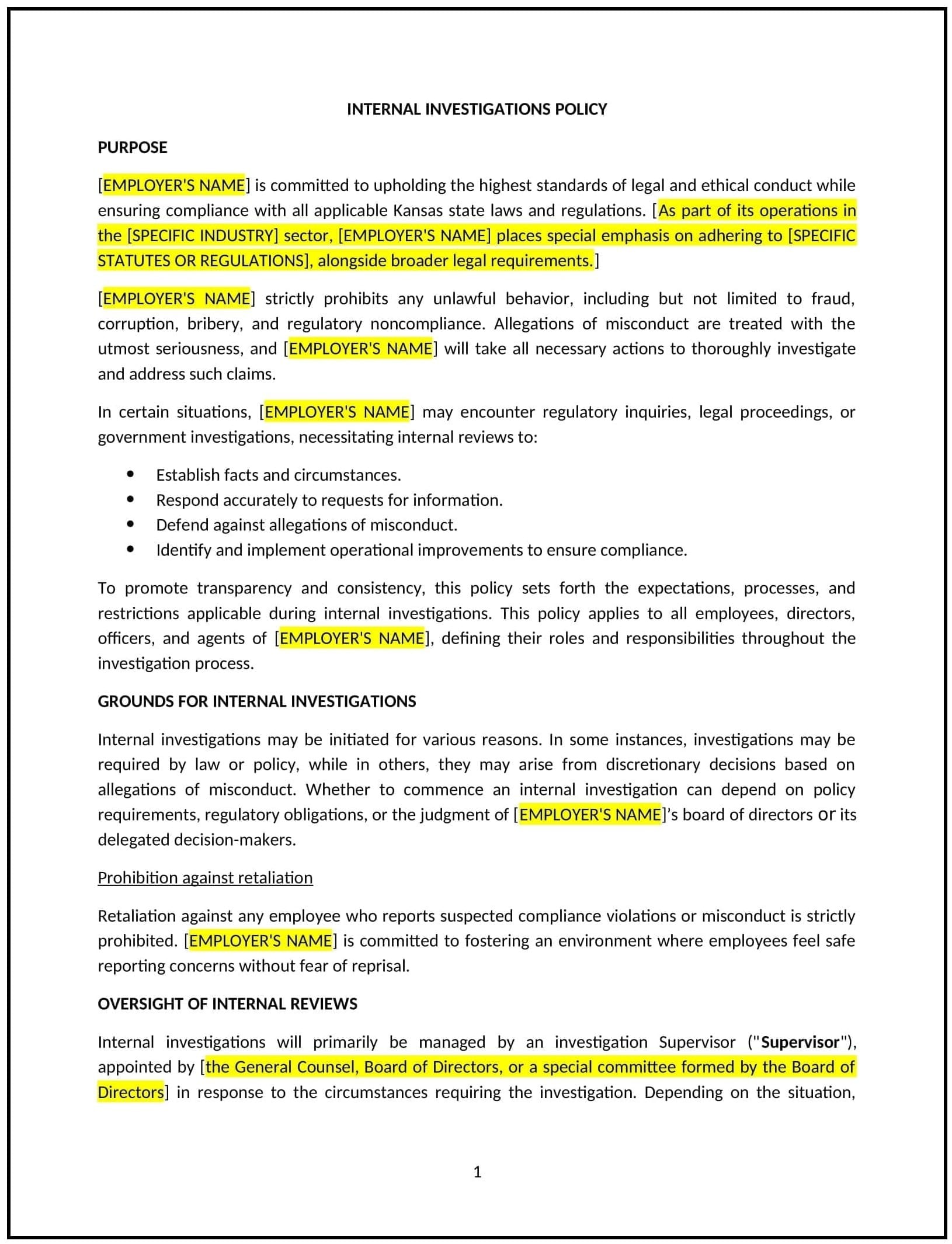
An internal investigations policy helps Kansas businesses define the procedures for investigating employee misconduct, including allegations of harassment, discrimination, fraud, theft, or violations of company policies. This policy outlines the steps for conducting fair, thorough, and confidential investigations to resolve issues within the organization.
By implementing this policy, businesses can maintain a fair and transparent process for handling internal issues, protect employee rights, and uphold company standards of conduct.
How to use this internal investigations policy (Kansas)
- Define the scope of investigations: Businesses should outline what types of misconduct or violations will trigger an investigation, such as unethical behavior, harassment, or breaches of company policy.
- Establish reporting procedures: Employees should be aware of how to report concerns or complaints, whether to HR, management, or through an anonymous reporting system.
- Assign investigators: Businesses should designate qualified individuals to handle investigations, ensuring they are impartial and trained in conducting thorough, confidential inquiries.
- Ensure confidentiality: Investigations should be conducted confidentially, with information shared only on a need-to-know basis to protect both the integrity of the investigation and the privacy of those involved.
- Provide due process: Employees being investigated should be informed of the allegations against them, given an opportunity to respond, and treated fairly throughout the process.
- Document findings: Businesses should maintain detailed records of the investigation process, including interviews, evidence collected, and conclusions reached.
- Implement corrective actions: Based on the findings, businesses should take appropriate disciplinary or corrective actions, ensuring that any violations are addressed promptly and consistently.
- Review and update regularly: Businesses should periodically review the policy to ensure it reflects current legal requirements and company practices.
Benefits of using an internal investigations policy (Kansas)
- Promotes fairness and transparency: A structured policy ensures that all investigations are handled fairly, impartially, and consistently.
- Protects the company’s reputation: By handling misconduct investigations professionally and confidentially, businesses protect their reputation and maintain trust with employees.
- Reduces legal risks: A clear, documented process for conducting investigations helps businesses minimize the risk of legal challenges or lawsuits resulting from mishandled allegations.
- Encourages a respectful workplace: By addressing misconduct quickly and fairly, businesses promote a respectful, safe, and inclusive work environment.
- Improves decision-making: A consistent investigation process leads to well-informed decisions regarding discipline, corrective actions, or policy changes.
- Supports employee morale: Employees are more likely to feel safe and supported knowing that the business has a fair process for handling concerns.
Tips for using this internal investigations policy (Kansas)
- Communicate the policy clearly: Businesses should ensure that employees are aware of the internal investigations policy, how to report concerns, and the process involved.
- Train investigators: Businesses should train designated investigators on how to conduct investigations impartially, maintain confidentiality, and ensure that the process is fair to all parties involved.
- Protect whistleblowers: Businesses should create a system to protect employees who report misconduct from retaliation, ensuring a safe environment for reporting.
- Monitor the process: Businesses should regularly review investigations to ensure that they are conducted in a timely manner and that corrective actions are taken as needed.
- Keep records: Businesses should maintain detailed documentation of all investigations, including the steps taken, evidence reviewed, and final outcomes, for future reference or legal purposes.
- Address bias: Investigators should be trained to recognize and mitigate any potential bias, ensuring that the investigation remains impartial and fair.