Internal investigations policy (Mississippi): Free template
Got contracts to review? While you're here for policies, let Cobrief make contract review effortless—start your free review now.
Customize this template for free
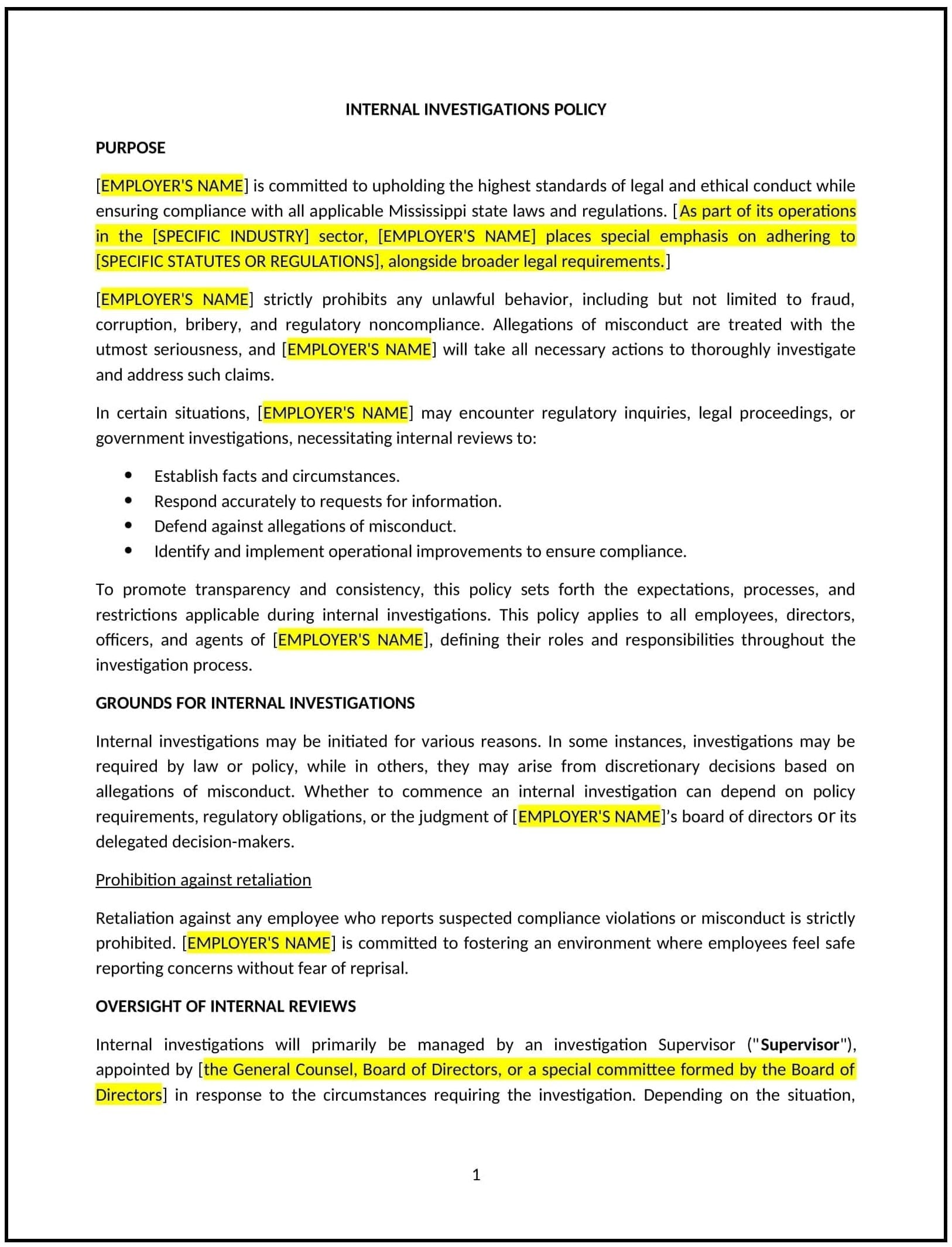
Internal investigations policy (Mississippi)
An internal investigations policy helps Mississippi businesses ensure that any internal issues, including employee misconduct, harassment, or fraud, are investigated thoroughly and fairly. This policy outlines the process for conducting investigations, establishing roles and responsibilities, and ensuring compliance with both legal and company standards.
By adopting this policy, businesses can mitigate risks, resolve conflicts effectively, and protect their workforce by promoting transparency and accountability within the organization.
How to use this internal investigations policy (Mississippi)
- Define the scope of investigations: Specify the types of incidents or allegations that warrant an internal investigation, such as harassment, discrimination, theft, fraud, or violations of company policy.
- Establish investigation procedures: Outline the steps that should be taken during an investigation, including gathering evidence, interviewing witnesses, and ensuring confidentiality throughout the process.
- Designate responsible parties: Identify the personnel responsible for conducting investigations, which may include human resources, legal teams, or third-party investigators. Clarify their roles, responsibilities, and the level of authority they have.
- Provide training: Ensure that employees, particularly managers and HR staff, are trained on how to recognize potential misconduct, handle complaints confidentially, and follow the company’s investigation procedures.
- Protect confidentiality: Stress the importance of maintaining confidentiality during an investigation to protect the privacy of those involved and to ensure a fair and unbiased process.
- Ensure impartiality: Emphasize the need for impartiality during investigations, ensuring that those conducting the investigation remain neutral and avoid conflicts of interest.
- Document findings: Require that all steps, decisions, and findings be thoroughly documented throughout the investigation process. This includes interviews, evidence, and any conclusions drawn.
- Take corrective action: Establish a clear protocol for addressing the findings of an investigation, including disciplinary actions or other corrective measures.
- Inform employees of the outcome: Notify relevant employees about the outcome of the investigation, including any actions taken as a result. Provide employees the opportunity to appeal if necessary.
- Review the policy: Periodically review the internal investigations policy to ensure it remains effective, up-to-date, and aligned with legal requirements and best practices.
Benefits of using this internal investigations policy (Mississippi)
This policy offers several benefits for Mississippi businesses:
- Promotes fairness: A clearly defined process ensures that investigations are conducted fairly and impartially, fostering trust among employees.
- Mitigates legal risks: Conducting thorough and fair investigations helps businesses address potential legal issues, such as claims of discrimination or wrongful termination.
- Protects employees: Employees can feel confident that any allegations will be taken seriously, and the policy promotes a safe environment where concerns are addressed in a professional manner.
- Enhances accountability: Clear procedures for investigations hold employees accountable for their actions and encourage responsible behavior in the workplace.
- Builds transparency: By clearly outlining investigation procedures, businesses foster a culture of openness and transparency, which can lead to improved morale and trust among employees.
- Reduces company risk: Addressing misconduct promptly and professionally helps businesses reduce the risk of reputational damage, lawsuits, or regulatory scrutiny.
Tips for using this internal investigations policy (Mississippi)
- Communicate the policy to all employees: Make sure employees understand the internal investigations policy, including how to report issues and what to expect during the investigation process.
- Regularly review and update the policy: Periodically assess the policy to ensure it remains aligned with current laws, regulations, and company needs.
- Maintain confidentiality throughout: Emphasize the importance of confidentiality and explain the steps employees should take to keep sensitive information private during an investigation.
- Involve legal counsel when necessary: For complex or high-risk investigations, consider involving legal counsel to ensure that the process complies with applicable laws and that the business is protected.
- Provide training for managers: Ensure that managers and supervisors know how to handle complaints appropriately, initiate investigations when necessary, and document their findings.
- Document everything: Keep detailed records of all investigative steps, findings, and outcomes, which will help protect the business in case of future legal challenges.