International travel policy (Indiana): Free template
Got contracts to review? While you're here for policies, let Cobrief make contract review effortless—start your free review now.
Customize this template for free
International travel policy (Indiana): Free template
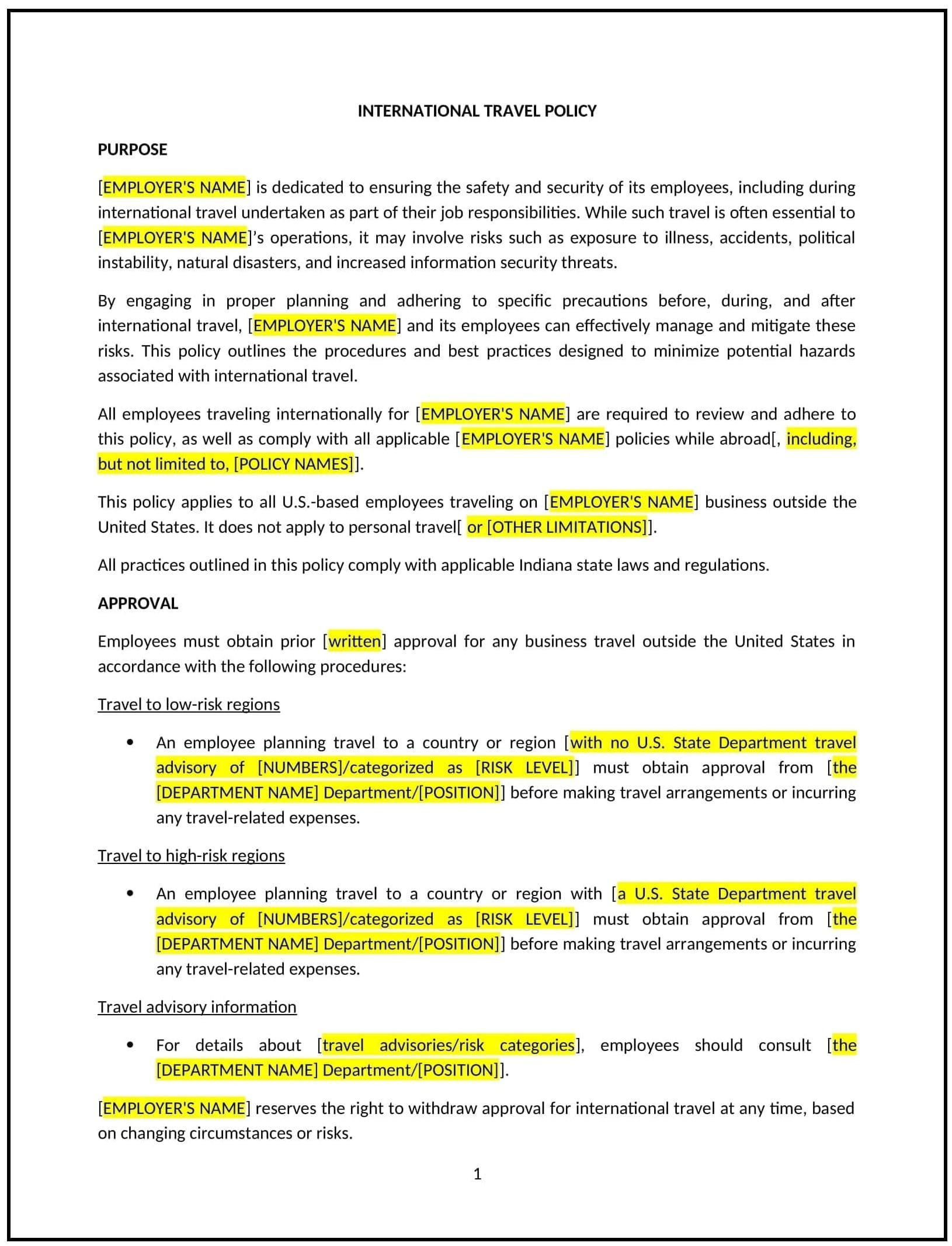
The international travel policy helps Indiana businesses set clear guidelines and expectations for employees who need to travel abroad for work-related purposes. This policy outlines the procedures for booking travel, covering expenses, ensuring safety and security, and maintaining compliance with international laws and regulations. By using this template, businesses can manage international travel effectively, ensuring that employees are supported, expenses are tracked, and potential risks are minimized.
By implementing this policy, Indiana businesses can enhance operational efficiency, safeguard employees during travel, and streamline travel management while keeping expenses in check.
How to use this international travel policy (Indiana)
- Define travel approval process: Establish a clear process for approving international travel, including who must approve the trip, how far in advance approval is needed, and the criteria used to determine whether the trip is necessary. The policy should clarify any documentation required for approval, such as a travel request form.
- Outline travel booking procedures: Specify who is responsible for booking international travel (e.g., employees, travel manager, or travel agency) and any preferred vendors or booking platforms. The policy should also address guidelines on class of service, lodging preferences, and travel itineraries.
- Set guidelines for travel expenses: Define what expenses are reimbursable for international travel, including airfare, accommodation, meals, transportation, and incidentals. The policy should also include per diem rates or reimbursement limits, and the procedures for submitting expense reports and receipts for reimbursement.
- Ensure compliance with legal and regulatory requirements: Outline any legal considerations for international travel, including compliance with visas, work permits, and customs regulations. The policy should highlight the importance of staying compliant with the local laws of the destination country and ensuring all necessary travel documents are in order.
- Address safety and security protocols: Provide guidelines on ensuring employee safety during international travel, including emergency procedures, travel insurance, health precautions (such as vaccinations), and the handling of safety threats or natural disasters. The policy should specify any required health or security checks before departure.
- Provide guidance on communication: Establish expectations for communication during international travel, such as checking in with the office or supervisor at regular intervals, especially during longer trips or in higher-risk destinations. The policy should also address how employees can stay in touch with family members during travel.
- Define the use of company resources: Specify how company resources, such as mobile phones, laptops, and other equipment, should be used during international travel. The policy should include guidelines for securing devices and ensuring data privacy while abroad.
- Clarify personal travel during business trips: If employees extend their business trips for personal reasons, the policy should specify how personal travel impacts company expenses, including what portion of the expenses the employee is responsible for and any time-off policies.
- Include health and wellness considerations: The policy should address the importance of employee health during travel, including guidelines for staying hydrated, managing jet lag, and staying active during long-haul flights. The policy should also encourage employees to follow recommended health precautions related to the destination.
Benefits of using this international travel policy (Indiana)
Implementing this policy provides several key benefits for Indiana businesses:
- Streamlines travel management: A clear and consistent policy ensures that all international travel is planned, approved, and executed efficiently, reducing administrative burden and ensuring employees are prepared.
- Manages travel costs: By setting limits on expenses and providing clear guidelines for booking and reimbursement, the policy helps businesses manage and control travel costs while ensuring fairness and consistency.
- Improves employee safety and security: The policy helps ensure that employees are aware of the steps they need to take for their safety while traveling abroad, including emergency contacts, insurance, and local laws.
- Enhances compliance with regulations: The policy ensures that businesses and employees comply with visa requirements, work permits, customs regulations, and other legal obligations that may vary by country, reducing legal risks.
- Increases operational efficiency: By providing clear guidelines for travel, expenses, and reporting, businesses can avoid misunderstandings, delays, or confusion related to international travel arrangements.
- Promotes employee well-being: The policy can promote employee well-being by addressing health and safety concerns during travel, ensuring that employees feel supported and confident when traveling for work.
Tips for using this international travel policy (Indiana)
- Communicate the policy clearly: Ensure that all employees who are required to travel internationally are aware of the policy and have access to it. Include it in employee handbooks, onboarding materials, and relevant communications for ease of access.
- Monitor and update regularly: Review and update the policy periodically to address changes in travel procedures, regulations, or best practices. This is especially important as international travel restrictions and safety concerns may evolve.
- Use technology to manage travel: Consider using travel management tools or platforms to help streamline the booking, approval, and expense reporting processes. This can simplify tracking and ensure compliance with company guidelines.
- Educate employees about safety risks: Provide employees with pre-travel briefings on safety, cultural considerations, and security protocols, especially when traveling to high-risk destinations. This will help them feel more prepared and secure while abroad.
- Set clear expectations for reimbursement: Ensure employees understand the procedures for submitting travel expenses and the timelines for reimbursement. The policy should also clarify the types of expenses that are covered and any limits on spending.