Got contracts to review? While you're here for policies, let Cobrief make contract review effortless—start your free review now.
Customize this template for free
International travel policy (Iowa)
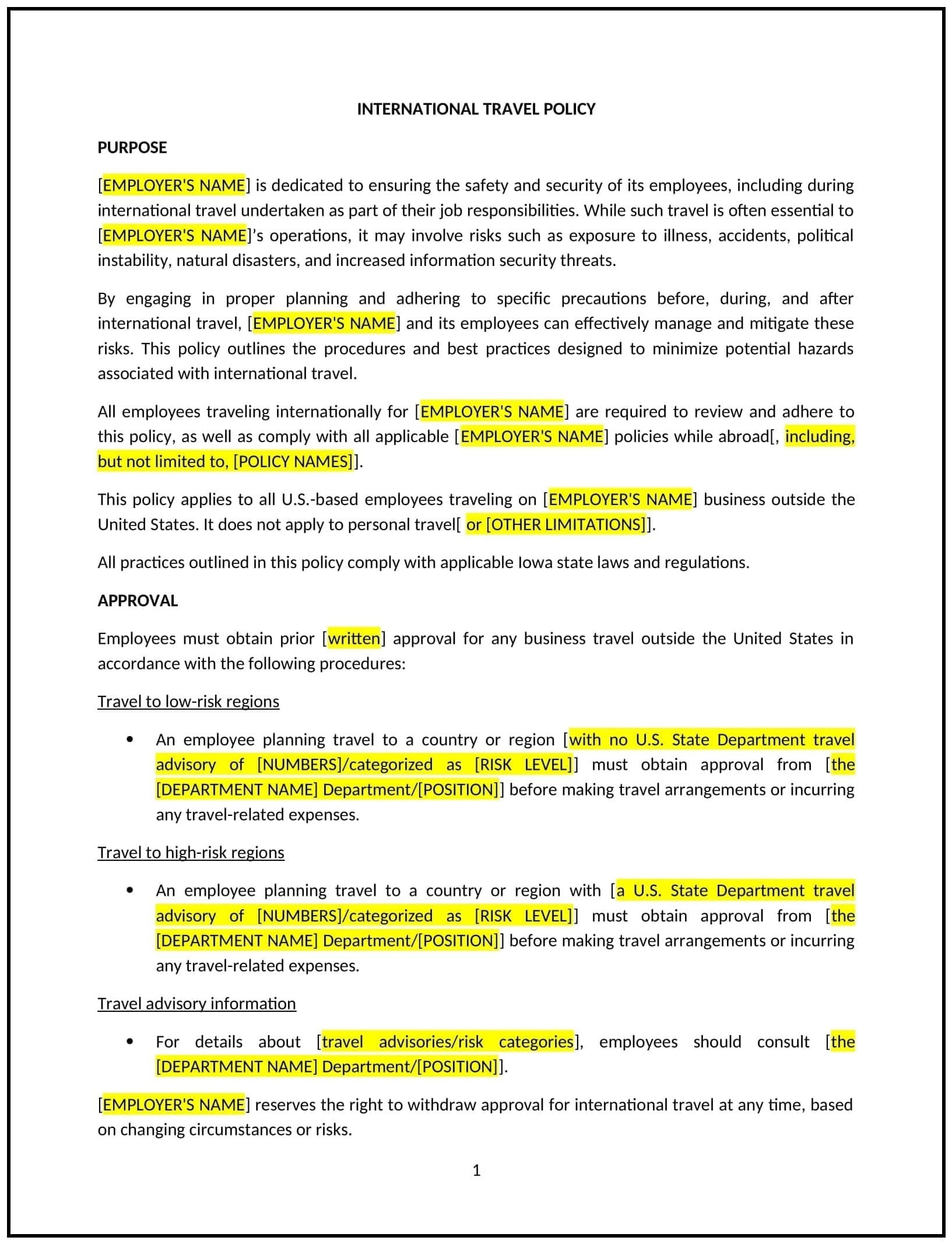
An international travel policy helps Iowa businesses manage and control employee travel across borders while ensuring safety, efficiency, and compliance with relevant laws and regulations. This policy outlines guidelines for booking travel, expenses, safety precautions, and emergency protocols. By implementing this policy, businesses can effectively manage international travel risks, control travel-related costs, and ensure that employees are well-prepared for business trips abroad.
By adopting this policy, businesses in Iowa can support their employees' international assignments, mitigate travel risks, and ensure that travel procedures are consistently followed across the organization.
How to use this international travel policy (Iowa)
- Define travel approval procedures: Establish clear guidelines on who can approve international travel requests and the process for obtaining approval prior to booking.
- Set guidelines for booking travel: Provide a preferred travel agency or booking platform for employees to use when making travel arrangements, and specify any class or accommodation preferences.
- Establish travel expenses policies: Set clear rules for what expenses are reimbursable during international travel, including transportation, accommodation, meals, and incidentals, and any limits or caps on specific expenses.
- Provide travel safety and security guidelines: Outline procedures for handling travel risks, including emergency contacts, travel insurance, and protocols for handling safety concerns abroad.
- Implement health precautions: Ensure that employees are aware of health and vaccination requirements before traveling to specific countries and provide guidance on international health insurance or medical assistance.
- Outline reporting requirements: Require employees to submit travel reports, including itineraries, expenses, and any issues encountered during the trip.
- Communicate cultural considerations: Encourage employees to familiarize themselves with the culture, customs, and etiquette of the destination country to foster positive interactions and respect for local norms.
- Regularly review and update the policy: Periodically assess and update the policy to reflect changes in international travel regulations, business needs, and employee feedback.
Benefits of using this international travel policy (Iowa)
This policy offers several key benefits for Iowa businesses:
- Reduces travel-related risks: By providing clear guidelines and procedures, businesses can better protect employees from potential risks, such as health hazards or security threats during international travel.
- Controls travel costs: Clear expense guidelines help businesses manage and control travel-related costs, ensuring that travel budgets are adhered to.
- Enhances employee preparation: With the right tools and information, employees are better prepared for international trips, reducing travel-related stress and increasing productivity.
- Improves safety and security: Providing employees with clear safety protocols and emergency contacts ensures that they know what steps to take in case of an emergency during travel.
- Streamlines travel logistics: A well-defined process for travel approvals and bookings ensures that all travel arrangements are coordinated efficiently and in compliance with company guidelines.
- Promotes cultural awareness: Encouraging employees to understand cultural differences and prepare for local customs helps promote smoother business relations and a more positive experience during international trips.
Tips for using this international travel policy (Iowa)
- Set clear expectations: Businesses should clearly communicate expectations regarding travel approvals, bookings, expenses, and reporting requirements before employees embark on international trips.
- Prioritize employee safety: Ensure that employees have access to resources, such as travel insurance, emergency contacts, and relevant safety information specific to their destination.
- Offer support for international health concerns: Businesses should ensure that employees are aware of any necessary vaccinations, health risks, and access to medical assistance during their trip.
- Track and manage travel expenses: Implement an easy-to-use expense reporting system that allows employees to submit travel expenses efficiently while staying within company policies and budgets.
- Educate employees on cultural differences: Providing training on cultural sensitivity and expectations can help employees navigate international business environments more effectively.
- Review travel risks regularly: Businesses should stay informed about the latest travel advisories, health concerns, and safety risks to ensure the policy remains relevant and up to date.
- Offer post-travel debriefings: After an international trip, businesses should ask employees for feedback on their experience, challenges, and any improvements to be made to the policy.