International travel policy (Minnesota): Free template
Got contracts to review? While you're here for policies, let Cobrief make contract review effortless—start your free review now.
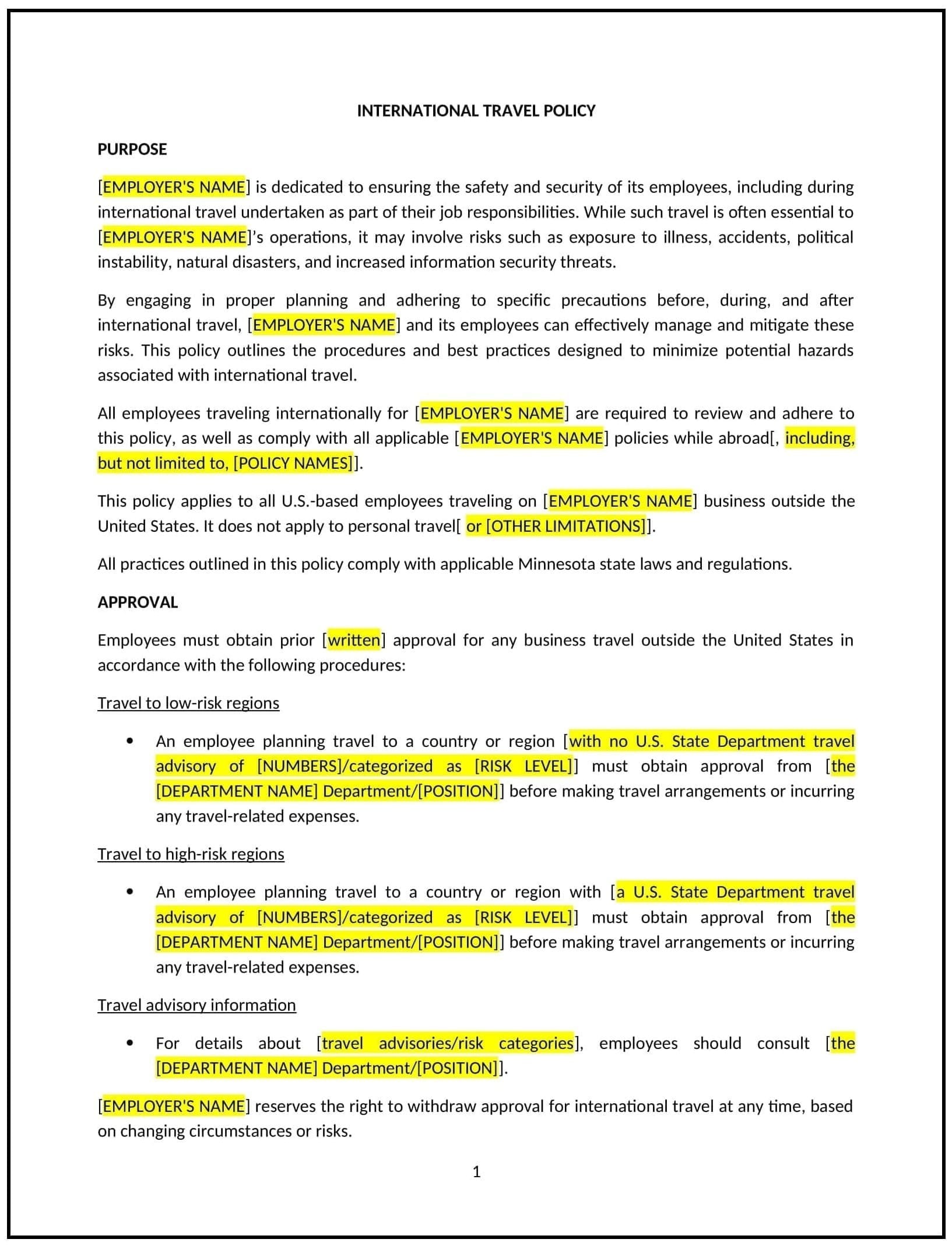
Customize this template for free
International travel policy (Minnesota)
This international travel policy is designed to help Minnesota businesses establish clear guidelines for employees traveling abroad for work-related purposes. Whether businesses are managing short-term trips, long-term assignments, or remote work from international locations, this policy provides a framework to ensure safety, efficiency, and support compliance with legal and organizational standards. Tailored to Minnesota’s business environment, this policy emphasizes risk management, cost control, and employee well-being.
By implementing this policy, businesses in Minnesota can support employees during international travel, reduce risks, and maintain operational consistency.
How to use this international travel policy (Minnesota)
- Define eligibility: Clearly outline which employees are eligible for international travel, such as those with specific job roles or project requirements.
- Establish approval processes: Provide guidelines for requesting and approving international travel, including required documentation and timelines.
- Address safety and security: Include protocols for assessing travel risks, obtaining travel insurance, and accessing emergency support.
- Set expense guidelines: Outline allowable expenses, such as airfare, accommodations, meals, and transportation, and provide instructions for submitting expense reports.
- Provide health and vaccination requirements: Specify any health-related prerequisites, such as vaccinations or medical clearances, for traveling employees.
- Include communication expectations: Set expectations for staying in touch with the business during travel, including check-ins and availability for work-related matters.
- Address cultural and legal considerations: Provide resources or training to help employees navigate cultural differences and comply with local laws.
- Review and update the policy: Regularly assess the policy’s effectiveness and make adjustments as needed to reflect changes in travel risks, business needs, or legal requirements.
- Communicate the policy: Share the policy with employees during onboarding and through internal communications to ensure awareness and understanding.
Benefits of using this international travel policy (Minnesota)
This policy offers several advantages for Minnesota businesses:
- Promotes safety: Clear guidelines help protect employees from travel-related risks, such as health issues or security threats.
- Controls costs: Expense guidelines and approval processes help manage travel budgets effectively.
- Supports employee well-being: Providing resources and support for international travel enhances employee confidence and comfort.
- Reduces risks: Addressing legal, cultural, and logistical considerations minimizes the risk of disruptions or liabilities.
- Enhances efficiency: Structured processes for approvals, expenses, and communication streamline international travel management.
- Builds trust: A transparent and supportive policy fosters trust and confidence among employees who travel for work.
- Aligns with business goals: Consistent travel practices support the business’s operational and strategic objectives.
Tips for using this international travel policy (Minnesota)
- Communicate the policy effectively: Share the policy with employees during onboarding and through regular training sessions.
- Provide travel resources: Offer employees access to travel agencies, insurance providers, or safety training programs.
- Monitor expenses: Regularly review expense reports to ensure compliance with the policy and identify opportunities for cost savings.
- Be flexible: Allow for adjustments to travel plans in case of emergencies or unforeseen circumstances.
- Encourage feedback: Regularly seek input from employees on how the policy can be improved to better meet their needs and the business’s goals.
- Review the policy periodically: Update the policy as needed to reflect changes in travel risks, business needs, or legal requirements.