IT and electronics communication policy (California): Free template
Got contracts to review? While you're here for policies, let Cobrief make contract review effortless—start your free review now.
Customize this template for free
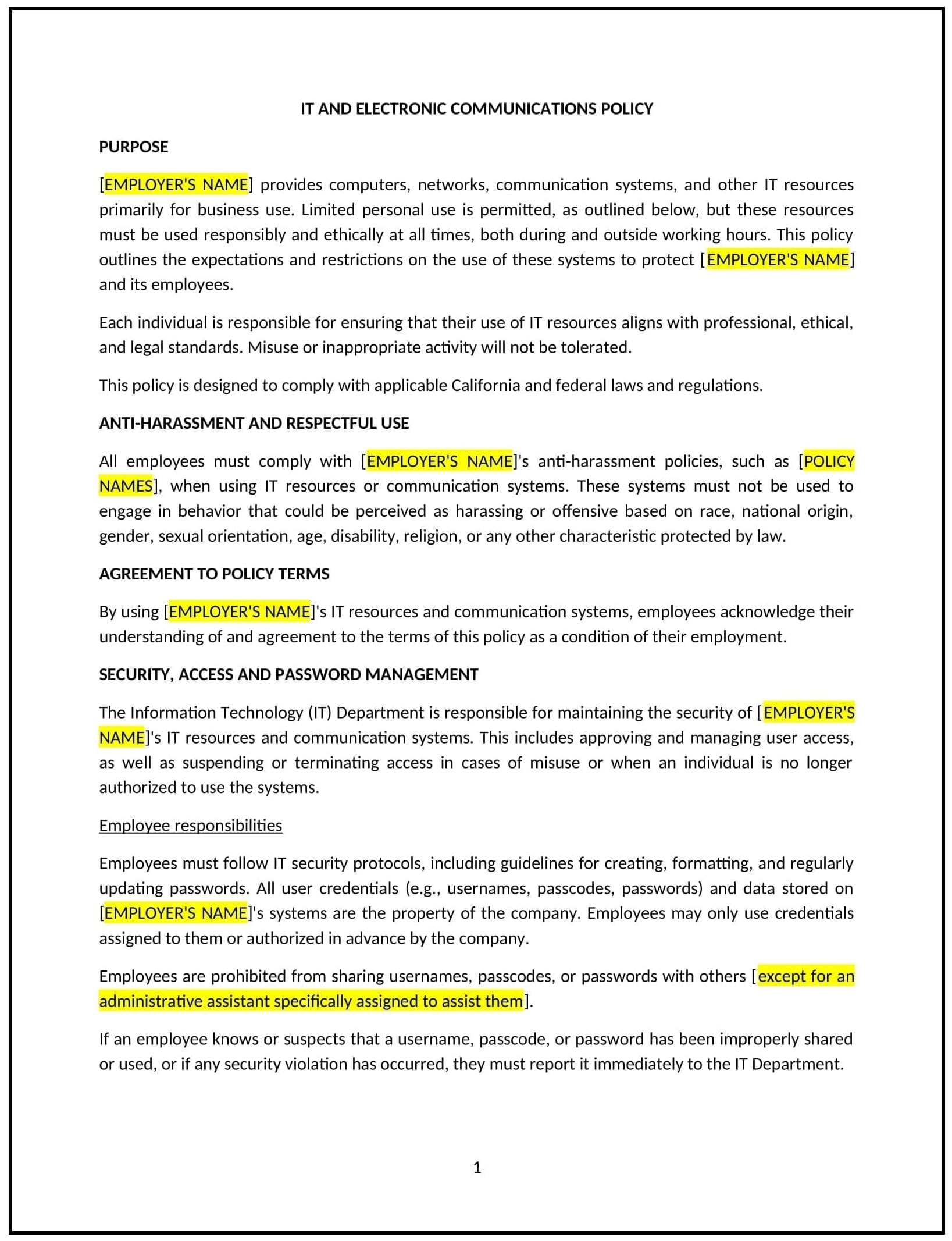
IT and electronics communication policy (California)
In California, an IT and electronics communication policy provides businesses with guidelines for the appropriate use of technology resources, such as computers, email, and internet access, while supporting compliance with state and federal laws, including privacy and cybersecurity regulations.
This policy outlines acceptable use, security protocols, and employee responsibilities. By implementing this policy, California businesses can safeguard sensitive information, promote productivity, and reduce legal and operational risks.
How to use this IT and electronics communication policy (California)
- Define acceptable use: Specify how employees can use business-provided technology, including email, internet, and devices, for work purposes.
- Establish security protocols: Outline measures to protect sensitive data, such as using strong passwords, enabling encryption, and following cybersecurity best practices.
- Address prohibited activities: Clearly state activities that are not allowed, such as accessing inappropriate websites, unauthorized downloads, or sharing confidential information.
- Communicate monitoring practices: Inform employees of the business’s right to monitor electronic communications while respecting California privacy laws.
- Provide reporting procedures: Encourage employees to report IT security concerns or suspected policy violations promptly.
Benefits of using this IT and electronics communication policy (California)
This policy offers several advantages for California businesses:
- Supports compliance: Reflects California laws governing data protection, cybersecurity, and workplace privacy.
- Protects assets: Safeguards business data, intellectual property, and IT systems from unauthorized access or misuse.
- Promotes productivity: Ensures technology resources are used effectively for business purposes.
- Reduces risks: Minimizes exposure to security breaches, legal liabilities, and reputational damage.
- Encourages accountability: Clarifies employee responsibilities for using IT and communication resources appropriately.
Tips for using this IT and electronics communication policy (California)
- Reflect California-specific laws: Address privacy considerations under the California Consumer Privacy Act (CCPA) and cybersecurity requirements.
- Train employees: Provide regular training on acceptable use, cybersecurity threats, and best practices for safeguarding business resources.
- Use monitoring tools responsibly: Balance monitoring needs with employee privacy rights, ensuring compliance with state regulations.
- Update protocols: Regularly review and enhance security measures to address evolving cybersecurity threats.
- Review regularly: Update the policy to reflect changes in technology, California laws, or business operations.