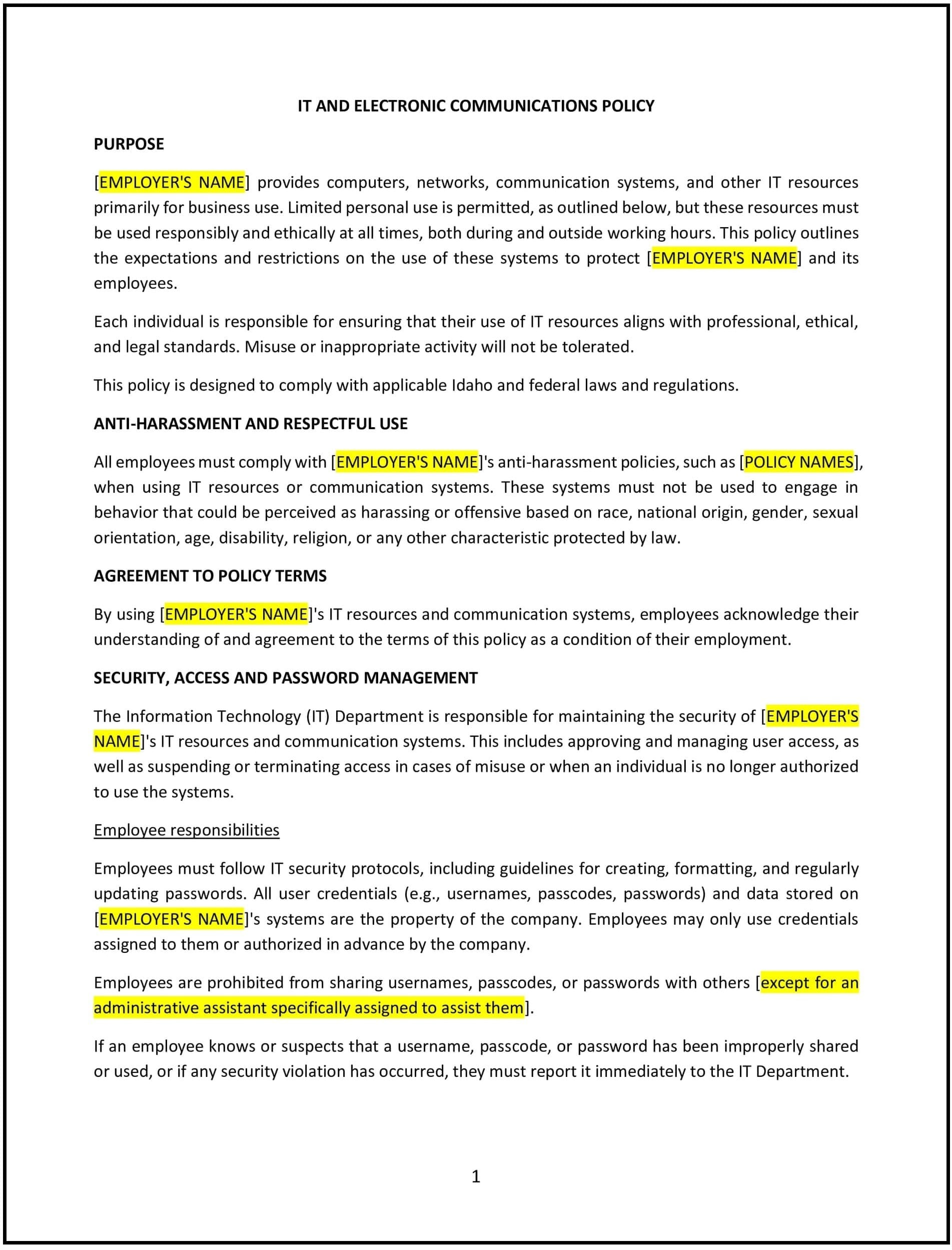
IT and electronics communication policy (Idaho): Free template
Got contracts to review? While you're here for policies, let Cobrief make contract review effortless—start your free review now.
Customize this template for free
Jury duty leave policy (Idaho)
A jury duty leave policy helps Idaho businesses establish clear guidelines for employees who are summoned to serve on a jury. This policy outlines the process for requesting leave, the duration of leave, and the business’s commitment to supporting employees during their civic duty. It also addresses how businesses handle pay during jury duty and ensures employees feel supported while fulfilling their legal obligations.
By adopting this policy, businesses can demonstrate their commitment to civic responsibility while maintaining smooth operations and fostering trust with employees.
How to use this jury duty leave policy (Idaho)
- Define eligibility: Specify which employees are eligible for jury duty leave, such as full-time, part-time, or temporary workers. This ensures clarity and consistency in applying the policy.
- Outline the request process: Provide clear instructions for employees to notify the business of their jury duty summons, including required documentation and advance notice timelines.
- Address pay during leave: State whether the business will provide paid or unpaid leave during jury duty, in alignment with Idaho state laws and company practices. Include details about any supplemental pay or use of paid time off (PTO).
- Set expectations for communication: Encourage employees to keep the business informed about the duration of their jury duty service and any changes to their availability.
- Ensure job protection: Reassure employees that their job will be protected while they serve on jury duty, as required by Idaho law. This helps alleviate concerns about job security.
- Promote civic responsibility: Emphasize the business’s support for employees fulfilling their civic duty and encourage participation in the jury selection process.
- Review legal requirements: Ensure the policy aligns with Idaho state laws regarding jury duty leave, including protections against retaliation or discrimination.
Benefits of using this jury duty leave policy (Idaho)
This policy offers several advantages for Idaho businesses:
- Demonstrates civic responsibility: Supporting employees during jury duty reflects the business’s commitment to community engagement and civic participation.
- Builds employee trust: Providing clear guidelines and job protection during jury duty fosters trust and loyalty among employees.
- Maintains compliance: The policy helps businesses adhere to Idaho state laws regarding jury duty leave, reducing the risk of legal disputes.
- Enhances workplace morale: Employees appreciate businesses that support their civic obligations, leading to higher job satisfaction and morale.
- Streamlines operations: Clear policies minimize disruptions by providing a structured process for managing jury duty leave requests.
- Promotes fairness: A consistent policy ensures all employees are treated equally when requesting jury duty leave.
Tips for using this jury duty leave policy (Idaho)
- Communicate the policy effectively: Share the policy with employees during onboarding and through internal communication channels to ensure awareness and understanding.
- Train managers: Provide training for managers on how to handle jury duty leave requests, including documentation requirements and pay considerations.
- Monitor leave requests: Keep track of jury duty leave requests to ensure consistency and fairness in applying the policy.
- Review legal updates: Stay informed about changes to Idaho state laws regarding jury duty leave and update the policy as needed.
- Encourage transparency: Foster open communication with employees about their jury duty obligations and the support available to them.
- Document everything: Maintain records of jury duty leave requests, approvals, and any correspondence to ensure accountability and compliance.