IT and electronics communications policy (Mississippi): Free template
Got contracts to review? While you're here for policies, let Cobrief make contract review effortless—start your free review now.
Customize this template for free
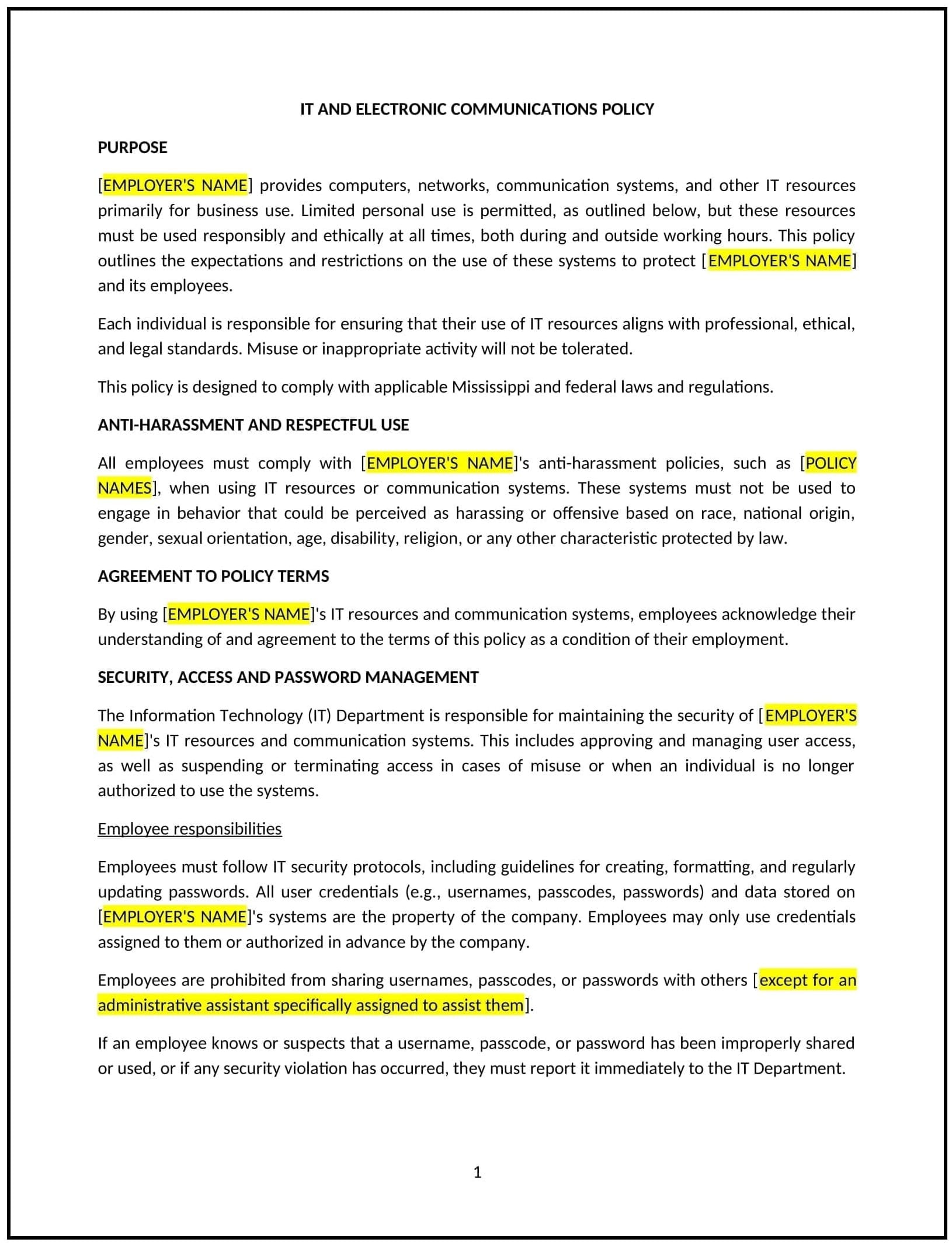
IT and electronics communications policy (Mississippi)
An IT and electronics communications policy helps Mississippi businesses manage and protect their electronic communication systems, including emails, internet use, and mobile devices. This policy outlines the guidelines for appropriate use of company-provided electronic resources, addresses security concerns, and ensures that employees understand their responsibilities regarding the use of technology in the workplace.
By adopting this policy, businesses can safeguard company data, reduce the risk of cyber threats, and ensure that employees use electronic communication systems in a manner that aligns with organizational goals and legal requirements.
How to use this IT and electronics communications policy (Mississippi)
- Define acceptable use: Clearly define what constitutes acceptable use of company-provided electronics and IT systems, including email, internet, social media, mobile devices, and other communication tools. Specify that company resources should be used for business purposes and not for personal gain.
- Outline prohibited activities: Identify activities that are prohibited on company devices, such as using company resources for illegal activities, visiting inappropriate websites, downloading unauthorized software, or sharing confidential information.
- Establish monitoring practices: Inform employees that the company reserves the right to monitor the use of company electronics and communication systems to ensure compliance with the policy. Specify the extent and nature of monitoring practices.
- Implement security protocols: Define the security measures employees must follow to protect company data, including password protection, multi-factor authentication (MFA), encryption, and safe handling of sensitive information.
- Address privacy concerns: Provide guidelines for respecting employees’ privacy while using company resources, ensuring that monitoring does not violate employee privacy rights.
- Set guidelines for remote work: Outline how the policy applies to employees working remotely, including the use of personal devices for work purposes and security practices for accessing company systems from offsite locations.
- Manage data storage and retention: Set rules for storing, managing, and disposing of company data, ensuring that employees are aware of the procedures for archiving and deleting electronic communications and files.
- Define consequences for violations: Clearly specify the consequences of violating the policy, including disciplinary action, termination, and legal ramifications.
- Review and update the policy regularly: Regularly review the IT and electronics communications policy to ensure it aligns with technological advancements, legal changes, and company operations.
Benefits of using this IT and electronics communications policy (Mississippi)
This policy offers several benefits for Mississippi businesses:
- Protects company data: By setting clear guidelines for the use of IT systems, businesses can safeguard sensitive company and customer data from unauthorized access or misuse.
- Reduces cyber risks: The policy helps minimize the risks of cyber threats, such as hacking, phishing, and malware, by implementing security protocols and monitoring systems.
- Ensures compliance: Adopting the policy helps businesses comply with data protection regulations, industry standards, and other legal requirements related to electronic communications and data security.
- Increases operational efficiency: By defining acceptable use and guidelines for electronic communication, businesses can improve employee productivity and reduce distractions during work hours.
- Promotes ethical behavior: Clear guidelines for the use of company resources foster ethical behavior, ensuring that employees understand the expectations regarding privacy, security, and compliance.
- Enhances trust: By prioritizing data security and employee privacy, businesses build trust with customers, employees, and other stakeholders.
Tips for using this IT and electronics communications policy (Mississippi)
- Communicate the policy to all employees: Ensure that every employee is aware of the IT and electronics communications policy and understands their responsibilities. Consider holding training sessions to reinforce key points.
- Monitor usage regularly: Implement monitoring tools to track employee use of company devices and communication systems. This can help identify potential security risks and ensure compliance with the policy.
- Secure remote access: For employees working remotely, ensure that they follow proper security protocols when accessing company systems from personal devices or external networks.
- Protect confidential information: Remind employees of the importance of safeguarding confidential data, both online and offline. Employees should be trained on how to recognize phishing attempts and avoid disclosing sensitive information.
- Perform regular audits: Conduct regular audits of company devices and communication systems to ensure compliance with the policy and identify potential security weaknesses.
- Stay updated with technology: As technology evolves, regularly update the policy to account for new tools, software, and security protocols that may be necessary for protecting company data.