Got contracts to review? While you're here for policies, let Cobrief make contract review effortless—start your free review now.
Customize this template for free
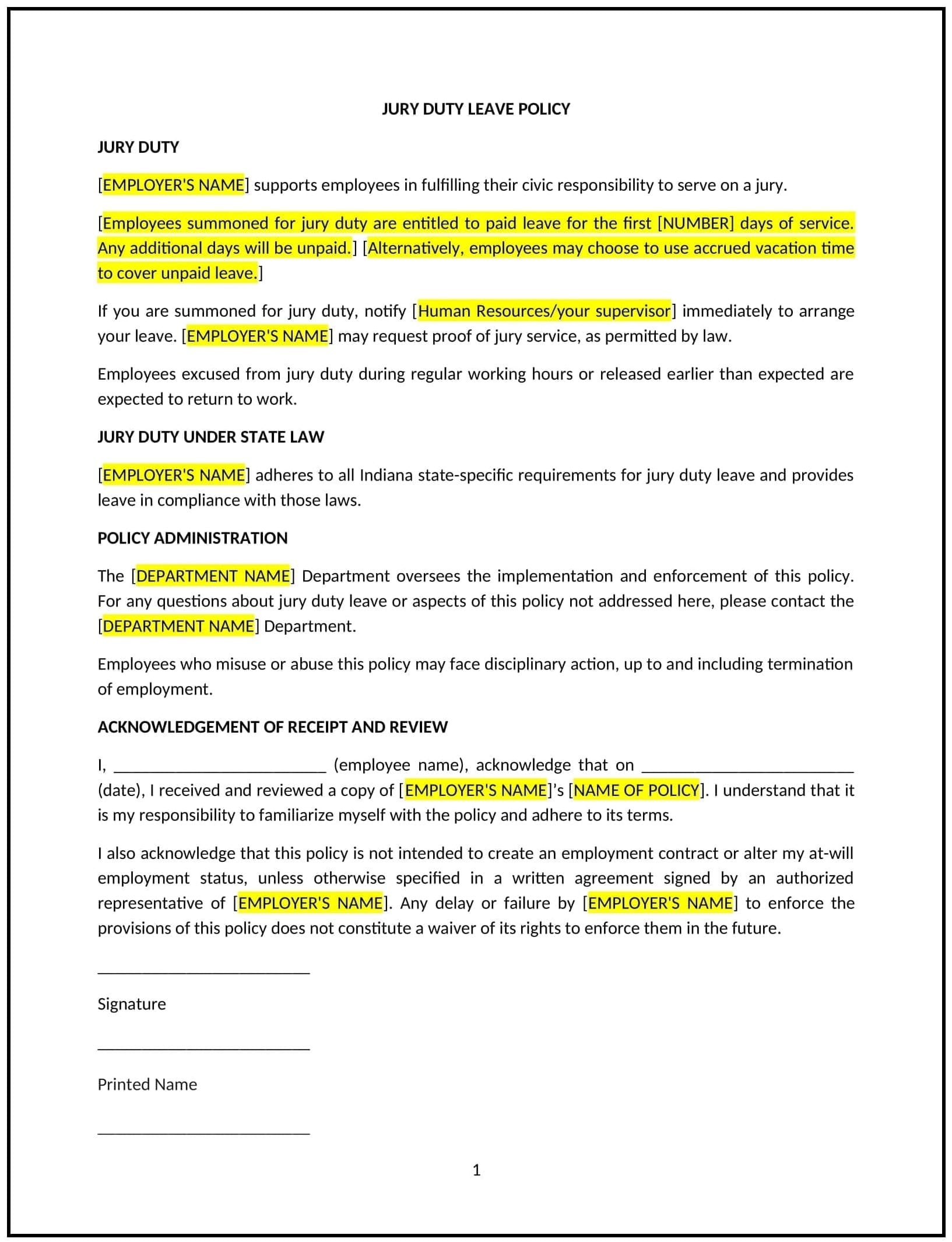
Jury duty leave policy (Indiana): Free template
The jury duty leave policy helps Indiana businesses manage employee leave when they are called to serve on a jury. This policy outlines the procedures for requesting leave, compensation, and the rights of employees when fulfilling their civic duty. It specifies how the business will handle employee absences due to jury duty, ensuring that employees are aware of their rights and responsibilities, while maintaining business continuity. By using this template, businesses can ensure that employees understand the process, and the business can plan and manage leave effectively.
By implementing this policy, Indiana businesses can promote a respectful and supportive workplace, protect employees' rights, and maintain legal compliance while managing employee leave efficiently.
How to use this jury duty leave policy (Indiana)
- Define eligibility for jury duty leave: Specify which employees are eligible for jury duty leave and whether there are any specific criteria, such as employment duration or job function. Clarify if full-time, part-time, and temporary employees are all entitled to this leave.
- Establish notification process: Outline the process by which employees must notify the company of their jury duty service, including how far in advance they must inform the business and the documentation they need to provide (e.g., jury summons). This ensures that employees give sufficient notice for planning purposes.
- Specify compensation during jury duty: Define whether employees will be paid during their jury duty leave and the compensation amount (e.g., full pay, partial pay, or unpaid). The policy should clarify if employees must use accrued paid time off (PTO) or vacation days if they are not receiving full pay during the leave.
- Address job protection: Reinforce that employees are entitled to return to their same or similar position after jury duty leave, as required by law. The policy should outline job protection rights under Indiana and federal law to prevent retaliation or discrimination for taking leave.
- Clarify duration of jury duty leave: Outline how long employees can take leave for jury duty. If the leave extends beyond a reasonable time due to prolonged trials or other circumstances, the policy should specify how the business will handle extended absences.
- Define additional requirements or expectations: Address any other requirements, such as whether employees must report to work on days when they are not required to serve on a jury, or if they are expected to work remotely during off-hours. The policy should also clarify expectations for communicating with management during jury duty.
- Explain consequences for non-compliance: The policy should outline any potential consequences if an employee fails to follow the proper notification procedures or does not attend jury duty when required by law.
Benefits of using this jury duty leave policy (Indiana)
Implementing this policy provides several key benefits for Indiana businesses:
- Promotes legal compliance: The policy helps businesses comply with state and federal regulations regarding jury duty leave, reducing the risk of legal challenges or penalties related to employee rights.
- Supports employees’ civic responsibilities: By providing paid or unpaid leave for jury duty, businesses show support for their employees' civic duties while maintaining a positive work environment.
- Minimizes workplace disruption: By clearly defining the process for requesting leave and managing absences, businesses can plan for temporary staffing adjustments, ensuring business operations continue smoothly.
- Reduces risk of discrimination or retaliation: A well-defined policy protects businesses from claims of discrimination or retaliation against employees who take jury duty leave, fostering a fair and respectful workplace.
- Enhances employee satisfaction: Offering jury duty leave in accordance with legal requirements helps build trust with employees and demonstrates the business’s commitment to supporting their rights and responsibilities.
- Prevents confusion and miscommunication: A clear policy sets expectations for both the business and employees regarding jury duty leave, ensuring that both parties understand their rights, responsibilities, and procedures.
Tips for using this jury duty leave policy (Indiana)
- Communicate the policy effectively: Ensure that all employees are aware of the jury duty leave policy by including it in the employee handbook, onboarding materials, and internal communications. Employees should be made aware of their rights and the process for requesting jury duty leave.
- Track jury duty leave requests: Keep a record of all jury duty leave requests, including dates and any supporting documentation, to help with planning and ensure compliance with the policy. Tracking these absences can also help manage staffing needs during employee absences.
- Be flexible with extended jury duty: If an employee is required to serve on an extended jury trial, ensure that the policy accounts for potential longer-term absences. Consider offering flexible work arrangements or additional support to employees who are absent for extended periods.
- Respect employee privacy: Employees should only be required to provide documentation to confirm their jury duty service, not the details of the case. The policy should respect employees' privacy while ensuring proper documentation is submitted.
- Stay updated with state and federal laws: Periodically review the policy to ensure it remains compliant with changes to state and federal laws related to jury duty leave and employee rights.