Jury duty leave policy (Mississippi): Free template
Got contracts to review? While you're here for policies, let Cobrief make contract review effortless—start your free review now.
Customize this template for free
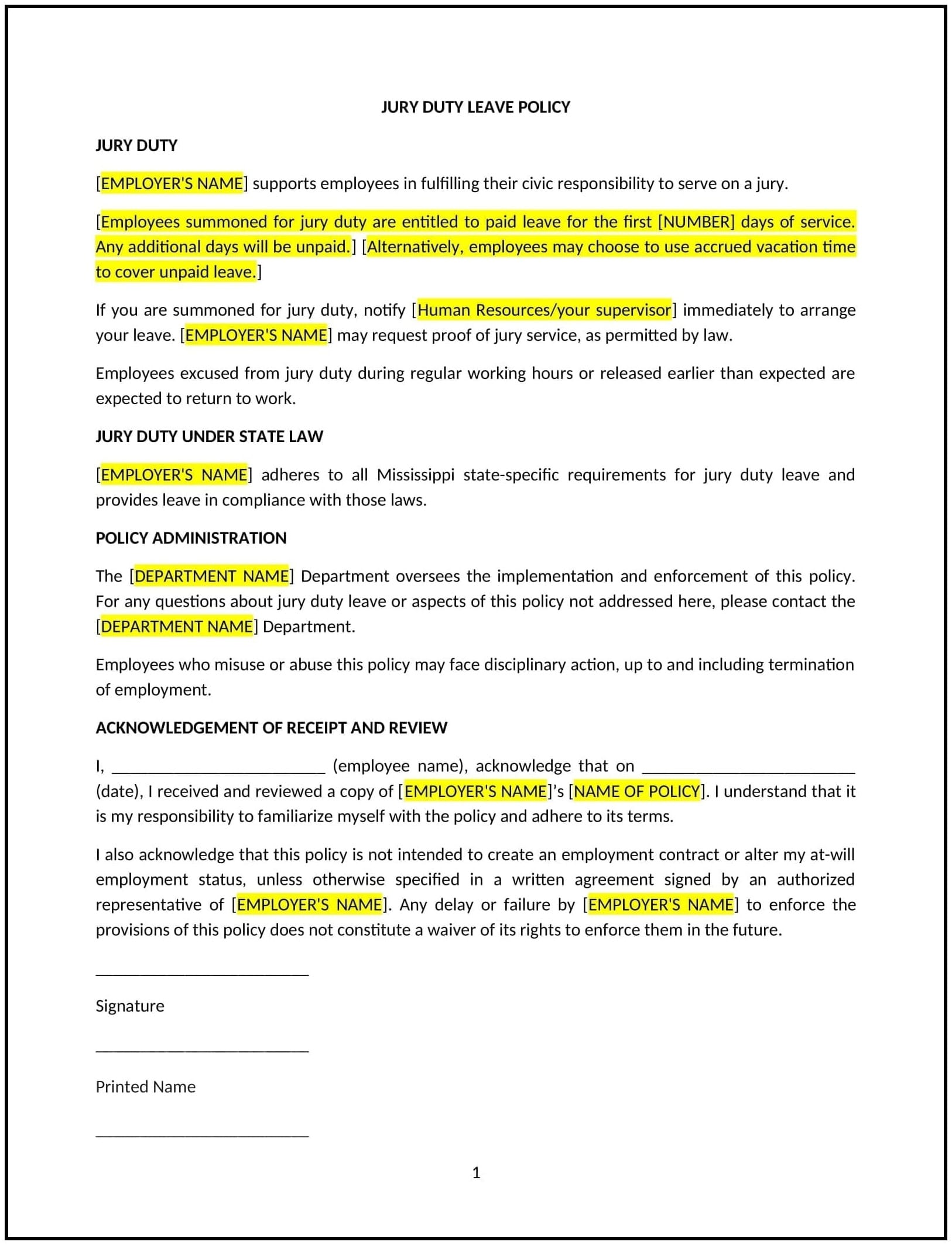
Jury duty leave policy (Mississippi)
A jury duty leave policy helps Mississippi businesses manage employee absences related to jury service while ensuring fair treatment and minimizing disruption to operations. This policy outlines the procedure for employees who are summoned for jury duty, detailing their rights, the company’s obligations, and the process for requesting and compensating time off.
By adopting this policy, businesses can maintain a positive relationship with employees, support legal compliance, and uphold employees’ civic duties without impacting business productivity.
How to use this jury duty leave policy (Mississippi)
- Define eligibility for jury duty leave: Specify that all full-time and part-time employees who receive a jury duty summons are eligible for leave. Clarify whether the leave is paid or unpaid and any requirements for eligibility, such as length of employment.
- Outline the notification process: Employees should notify their supervisor or HR department as soon as they receive a jury duty summons. The policy should include a timeline for submitting the summons, such as within a certain number of days after receipt.
- Clarify pay during jury duty: If applicable, explain whether employees will be paid during jury duty leave. This can depend on company policy, state law, or specific employment contracts. The policy should state the terms clearly, such as whether employees will receive full pay, partial pay, or no pay.
- Set expectations for return to work: Specify the procedure for employees to return to work after jury duty, including when they are expected to resume their normal duties and any documentation needed, such as proof of jury service.
- Explain extended absences: If an employee’s jury duty extends beyond a few days, the policy should clarify whether additional leave is available and how the employee should handle extended absences.
- Address employees serving on long-term jury duty: In the case of employees who serve on extended or grand juries, provide a plan for how the business will manage such absences and whether additional accommodations will be made.
- Ensure non-retaliation: The policy should specify that employees will not face retaliation for taking jury duty leave and that their job will be protected. This is critical for maintaining a fair and legally compliant workplace.
- Review and update the policy regularly: Regularly review the jury duty leave policy to ensure it aligns with any changes in Mississippi state law or federal law regarding jury service and leave rights.
Benefits of using this jury duty leave policy (Mississippi)
This policy offers several benefits for Mississippi businesses:
- Ensures legal compliance: By providing jury duty leave, businesses comply with state and federal laws requiring that employees be allowed time off for jury service.
- Promotes fairness and civic responsibility: The policy encourages employees to fulfill their civic duties while ensuring that their job is not jeopardized by jury service.
- Fosters positive employee relations: Offering jury duty leave shows that the business values and supports employees’ legal obligations, enhancing overall employee satisfaction and trust.
- Minimizes disruptions: By establishing a clear process for managing jury duty leave, businesses can better plan for employee absences and maintain continuity of operations.
- Prevents legal disputes: Clear guidelines help avoid misunderstandings or legal challenges related to jury duty leave, ensuring that employees and the business understand their rights and responsibilities.
Tips for using this jury duty leave policy (Mississippi)
- Communicate the policy to all employees: Ensure that employees are aware of the jury duty leave policy and know how to submit a request for leave. This information should be provided during onboarding and included in the employee handbook.
- Document the process: Keep clear records of all jury duty leave requests and approvals. This documentation helps avoid confusion and provides a clear record in case of any issues.
- Plan for coverage during absences: Identify key roles and responsibilities that need to be covered during an employee’s jury duty absence and make contingency plans for staffing.
- Offer flexible work options: If possible, consider offering flexible working arrangements, such as remote work, for employees who are serving on jury duty for extended periods.
- Support long-term absences: For employees serving on long-term juries, provide clear communication about how their absence will be managed, including whether additional time off will be granted.
- Review and update the policy regularly: Ensure the policy is updated to reflect any changes in state or federal law regarding jury duty and leave requirements.