Jury duty leave policy (Ohio): Free template
Supports civic responsibility by granting job-protected leave for jury service and related legal duties.
- Policies
- Ohio
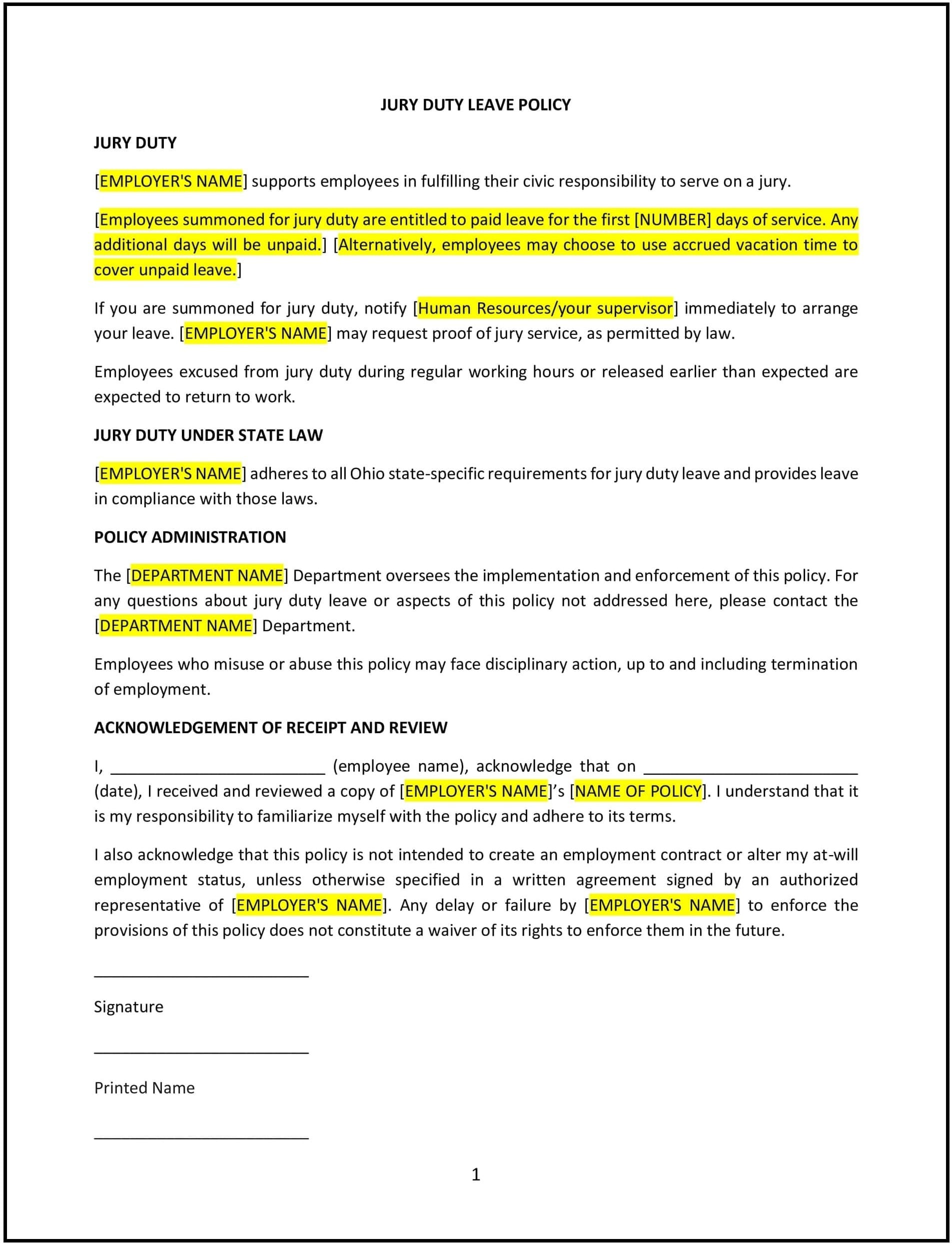
Jury duty leave policy (Ohio)
A jury duty leave policy provides Ohio businesses with guidelines for managing employee leave when called for jury duty. The policy outlines employees' rights to take time off for jury service, the process for requesting leave, and the responsibilities of both the employer and employee during this time. It also covers whether the business offers paid or unpaid leave, any documentation required, and the procedures for returning to work after jury duty.
By implementing this policy, Ohio businesses can ensure they comply with legal obligations, provide fair treatment to employees serving on a jury, and maintain smooth operations during employee absences.
How to use this jury duty leave policy (Ohio)
- Define eligibility: The policy should specify which employees are eligible for jury duty leave, typically including full-time employees who are summoned for jury duty in Ohio. The policy should also address whether the leave applies to state or federal jury duty and any exceptions based on employment status.
- Outline the process for requesting leave: Employees should be instructed on how to request jury duty leave, including notifying their supervisor as soon as they receive a jury summons. The policy should include a timeline for submitting the request and any documentation required to confirm jury service.
- Address paid vs. unpaid leave: The policy should clarify whether the business provides paid leave for jury duty or if it is unpaid. If paid leave is provided, the policy should specify the duration of paid leave and any limits, such as the maximum number of paid days allowed.
- Provide documentation requirements: Employees should be required to provide a copy of the jury summons or other relevant documentation as proof of their jury duty service. The policy should specify the timeline for submitting this documentation to HR or the employee's supervisor.
- Ensure protection from retaliation: The policy should emphasize that employees are protected from retaliation for serving on a jury, in accordance with Ohio state law. Employees should feel confident that they will not face negative consequences for participating in jury duty.
- Define return-to-work procedures: The policy should outline the procedures employees should follow when returning to work after jury duty, including any necessary communication with their supervisor or HR department regarding their absence.
- Review and update regularly: The policy should be reviewed periodically to ensure it aligns with Ohio state laws, federal regulations, and the business’s operational needs.
Benefits of using this jury duty leave policy (Ohio)
This policy provides several key benefits for Ohio businesses:
- Ensures legal compliance: The policy helps businesses comply with Ohio state laws and federal regulations regarding jury duty leave, ensuring employees are given the appropriate time off and protection from retaliation.
- Promotes fairness: By providing clear guidelines for jury duty leave, the policy ensures that all employees are treated fairly and equitably when summoned for jury duty.
- Reduces workplace disruptions: The policy helps businesses plan for employee absences due to jury duty, reducing the impact on operations and minimizing any potential disruption to the work environment.
- Builds trust and goodwill: Offering paid or unpaid jury duty leave demonstrates the business’s commitment to supporting employees’ civic duties and rights, fostering a positive and supportive workplace culture.
- Mitigates legal risks: By adhering to jury duty leave requirements, the business reduces the risk of legal action, complaints, or fines related to non-compliance with state or federal jury duty laws.
- Enhances employee morale: Knowing that the business supports their civic responsibilities without fear of penalty can improve employee satisfaction and loyalty, leading to higher morale and retention.
Tips for using this jury duty leave policy (Ohio)
- Communicate the policy clearly: Ensure that all employees are aware of the jury duty leave policy by including it in the employee handbook, discussing it during onboarding, and posting it in common areas or on the company intranet for easy access.
- Provide guidance on documentation: Make sure employees understand the documentation they need to provide, such as a jury summons or confirmation of attendance. This helps streamline the process and ensures proper recordkeeping.
- Plan for employee absences: Be prepared for employee absences by cross-training staff and having contingency plans in place. This ensures business continuity while employees are fulfilling their jury duty obligations.
- Respect confidentiality: Ensure that any documentation or communication related to jury duty leave is handled confidentially, as it pertains to personal and legal matters.
- Review state laws: Periodically review Ohio state laws related to jury duty to ensure the policy remains compliant with any legal changes or updates to employee rights.
- Foster a supportive environment: Encourage supervisors and managers to support employees during their jury service, including flexible scheduling or adjustments to workload if necessary. This helps maintain a positive relationship with employees.
Frequently asked questions (FAQs)
Similar templates
Where deals go from offer to paid
