Managing underperformance policy (Alaska): Free template
Got contracts to review? While you're here for policies, let Cobrief make contract review effortless—start your free review now.
Customize this template for free
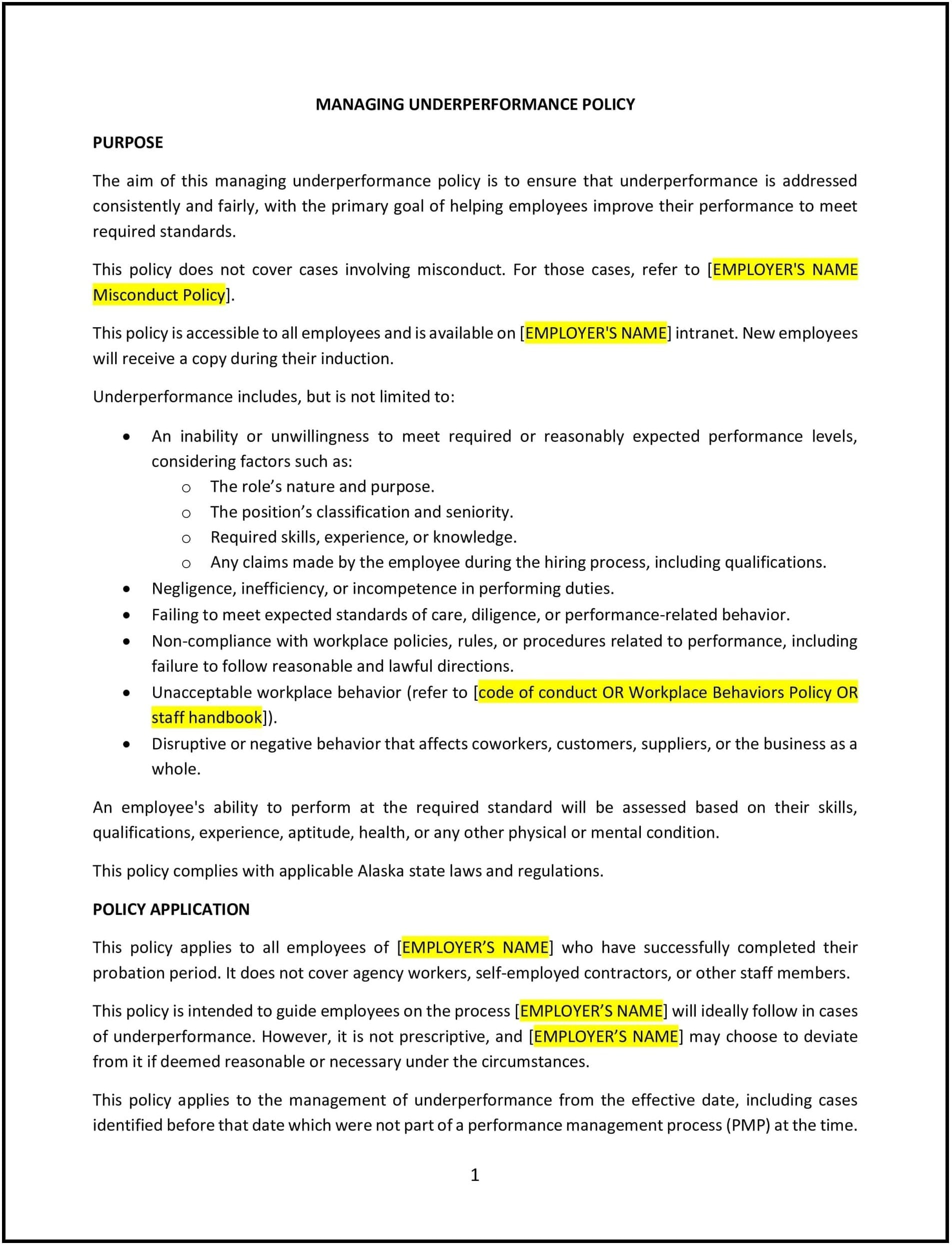
Managing underperformance policy (Alaska)
In Alaska, a managing underperformance policy provides guidelines for addressing and resolving employee performance issues in a fair, consistent, and constructive manner. This policy ensures that businesses handle underperformance effectively while supporting employees in meeting their goals. By implementing this policy, businesses can improve productivity, foster a positive work environment, and reduce turnover.
Given Alaska’s unique workforce dynamics, such as remote work arrangements and seasonal employment, businesses may need to tailor their approach to managing underperformance to account for these conditions.
How to use this managing underperformance policy (Alaska)
- Identify performance issues: Clearly outline criteria for identifying underperformance, such as not meeting productivity standards, failing to complete tasks, or behavioral concerns.
- Set performance expectations: Provide employees with clear, measurable performance goals and timelines for improvement.
- Implement a review process: Establish a process for reviewing performance concerns, including gathering feedback from supervisors and colleagues as needed.
- Develop an improvement plan: Create a performance improvement plan (PIP) that outlines specific steps, resources, and support available to help the employee succeed.
- Monitor and evaluate progress: Regularly review the employee’s performance against the improvement plan and provide ongoing feedback.
Benefits of using a managing underperformance policy (Alaska)
A managing underperformance policy provides several benefits for businesses in Alaska. Here’s how it helps:
- Improves productivity: Identifies and addresses performance issues promptly, helping employees meet organizational goals.
- Encourages fairness: Ensures all employees are treated consistently and given equal opportunities to improve their performance.
- Reduces turnover: Supports employees in overcoming challenges, leading to higher retention and job satisfaction.
- Protects against disputes: Provides a clear framework for addressing underperformance, reducing the risk of legal issues or grievances.
- Fosters accountability: Promotes a culture of responsibility and continuous improvement among employees.
Tips for using a managing underperformance policy (Alaska)
- Address remote work challenges: Include guidance for managing underperformance in remote settings, such as tracking productivity or addressing communication gaps.
- Provide training: Equip managers with the skills needed to address underperformance constructively, including setting goals and delivering feedback.
- Use clear documentation: Maintain detailed records of performance issues, improvement plans, and progress reviews to ensure transparency and compliance.
- Offer resources: Provide employees with access to training, mentoring, or other support to help them succeed in meeting their goals.
- Review regularly: Update the policy to reflect changes in company operations, workforce dynamics, or legal requirements.