Managing underperformance policy (Florida): Free template
Got contracts to review? While you're here for policies, let Cobrief make contract review effortless—start your free review now.
Customize this template for free
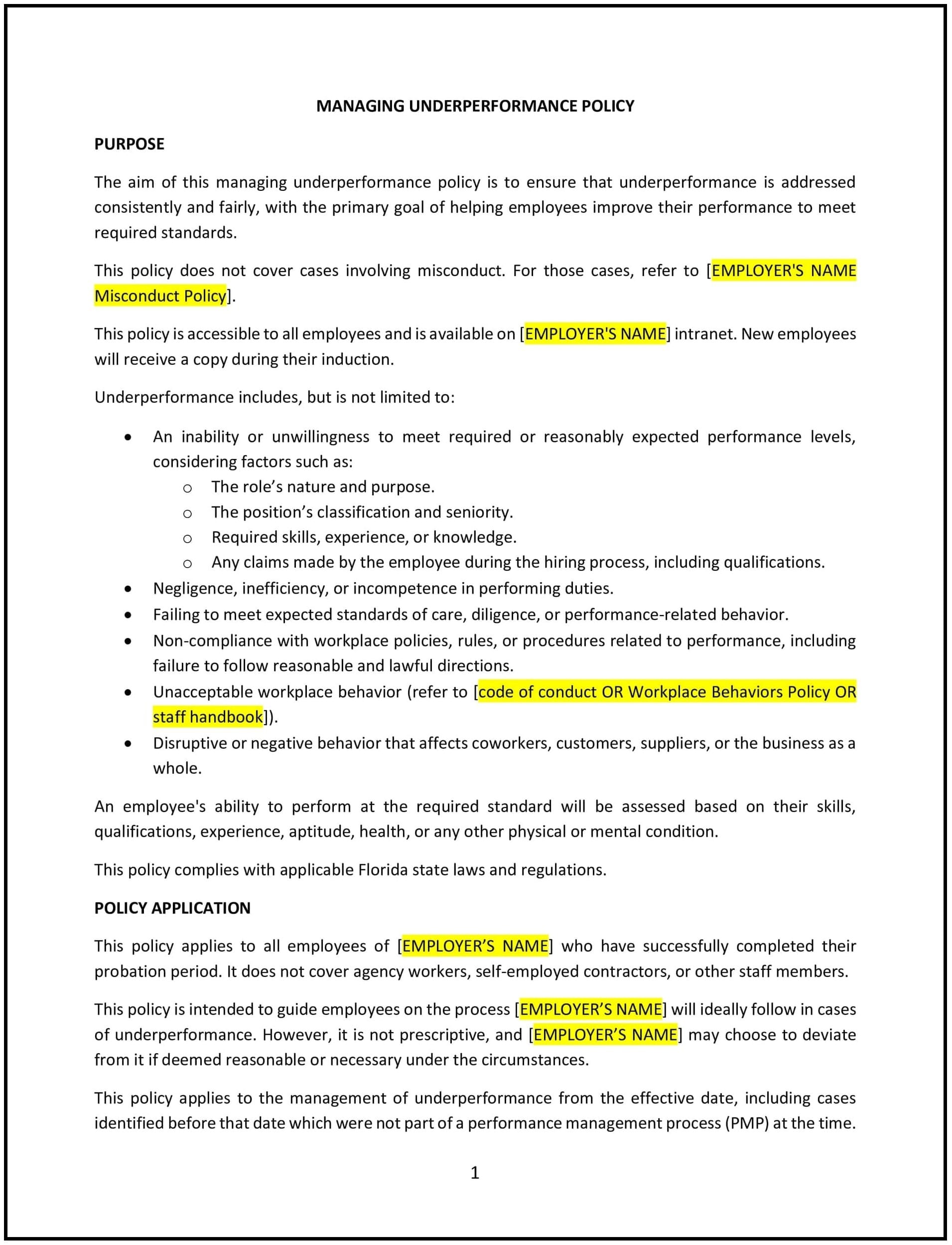
Managing underperformance policy (Florida)
A managing underperformance policy helps Florida businesses address employee performance issues in a fair, constructive, and consistent manner. This policy outlines procedures for identifying, addressing, and resolving underperformance while supporting employees in improving their work outcomes. It is designed to promote accountability, reduce conflicts, and provide clear guidelines for fostering a culture of continuous improvement.
By implementing this policy, businesses in Florida can demonstrate their commitment to employee development, enhance operational efficiency, and align with the state’s focus on fairness and mutual respect in the workplace.
How to use this managing underperformance policy (Florida)
- Define underperformance: Clearly specify what constitutes underperformance, such as missed deadlines, low-quality work, or failure to meet expectations.
- Establish identification procedures: Outline how managers should identify and document instances of underperformance, including specific examples and measurable criteria.
- Address communication protocols: Explain how managers should discuss performance issues with employees, focusing on constructive feedback and collaboration.
- Provide support resources: Specify the types of assistance available to employees, such as training, mentoring, or additional resources to help them improve.
- Develop improvement plans: Provide guidance on creating performance improvement plans (PIPs) that include clear goals, timelines, and evaluation criteria.
- Communicate the policy: Share the policy with employees through handbooks, emails, or training sessions to ensure awareness and understanding.
- Monitor adherence: Regularly review how the policy is applied and address any concerns or discrepancies promptly.
- Update the policy: Periodically assess the policy to reflect changes in workplace dynamics, legal standards, or business needs.
Benefits of using this managing underperformance policy (Florida)
This policy offers several advantages for Florida businesses:
- Promotes accountability: Clear guidelines help employees understand expectations and take responsibility for their performance.
- Reduces conflicts: Defined procedures minimize misunderstandings and ensure consistent handling of performance issues.
- Builds trust: A fair and supportive approach demonstrates the business’s commitment to employee development and mutual respect.
- Aligns with community values: Reflects Florida’s emphasis on fairness, inclusivity, and fostering positive workplace relationships.
- Enhances reputation: Demonstrates the business’s dedication to ethical practices and employee well-being.
- Improves productivity: Addressing underperformance helps employees reach their full potential, benefiting the business as a whole.
- Supports growth: A robust framework fosters a culture of continuous improvement and adaptability.
Tips for using this managing underperformance policy (Florida)
- Communicate clearly: Ensure employees and managers understand the policy by providing written materials and discussing it during meetings or training sessions.
- Train managers: Educate supervisors on how to identify underperformance, provide constructive feedback, and implement improvement plans effectively.
- Be supportive: Focus on helping employees succeed by offering resources, training, and mentorship rather than punitive measures.
- Stay objective: Base decisions on measurable criteria and documented evidence to ensure fairness and consistency.
- Encourage feedback: Solicit input from employees to identify areas for improvement and ensure the policy meets their needs.
- Review periodically: Assess the policy’s effectiveness and make updates as needed to reflect changes in workplace dynamics or business goals.