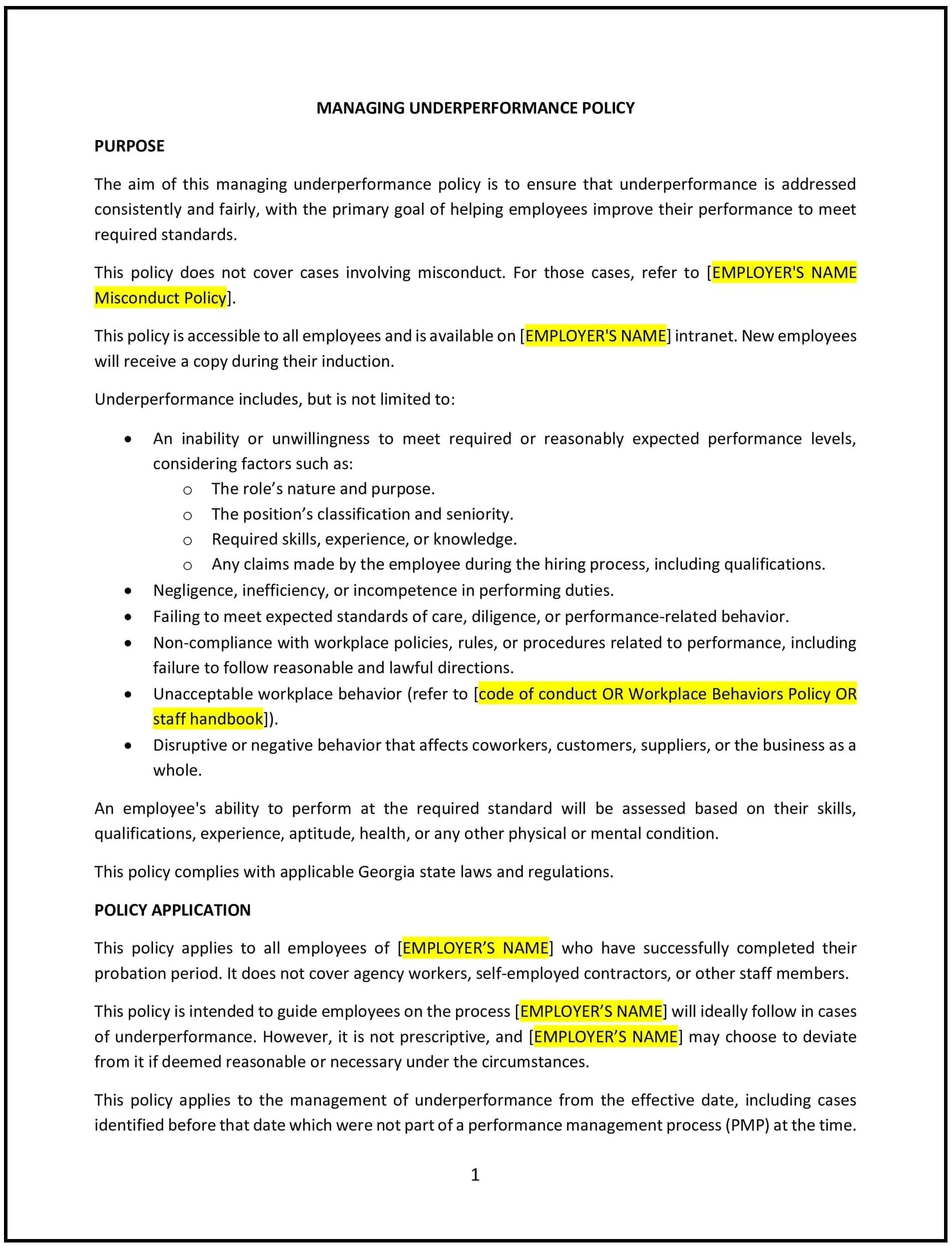
Managing underperformance policy (Georgia): Free template
Guides supervisors through documentation, feedback, and improvement plans addressing performance issues according to Georgia standards.
- Policies
- Georgia
Managing underperformance policy (Georgia)
This managing underperformance policy is designed to help Georgia businesses address employee performance issues effectively and constructively. The policy outlines procedures for identifying, evaluating, and resolving underperformance to promote accountability and support employee development.
By implementing this policy, businesses can foster a culture of improvement, enhance productivity, and maintain high performance standards.
How to use this managing underperformance policy (Georgia)
- Define underperformance: Clearly outline what constitutes underperformance, such as failing to meet goals, deadlines, or behavioral standards.
- Establish performance expectations: Provide employees with clear job descriptions, performance goals, and behavioral expectations from the outset.
- Identify performance issues: Use regular evaluations, feedback sessions, or incident reports to identify areas of underperformance.
- Develop an improvement plan: Work collaboratively with the employee to create a performance improvement plan (PIP) outlining specific goals, timelines, and support resources.
- Offer support: Provide training, mentorship, or additional resources to help the employee address performance gaps.
- Schedule progress reviews: Conduct regular check-ins to assess improvement and offer constructive feedback.
- Document actions: Maintain detailed records of discussions, plans, and outcomes for accountability and future reference.
- Address unresolved issues: Define the steps for addressing continued underperformance, such as additional reviews or disciplinary measures.
- Review and update regularly: Periodically assess the policy to reflect changes in Georgia workplace practices, laws, or organizational goals.
Benefits of using this managing underperformance policy (Georgia)
Implementing this policy provides several advantages for Georgia businesses:
- Promotes accountability: Clear guidelines encourage employees to take responsibility for their performance.
- Supports development: Structured improvement plans help employees address performance gaps and develop professionally.
- Reduces turnover: Early intervention and support increase the likelihood of retaining employees.
- Minimizes conflicts: A consistent approach to managing underperformance reduces misunderstandings and perceived unfairness.
- Reflects Georgia-specific needs: Tailoring the policy to local workplace norms ensures its relevance and effectiveness.
Tips for using this managing underperformance policy (Georgia)
- Communicate expectations clearly: Ensure employees understand their roles, responsibilities, and performance standards.
- Act promptly: Address performance issues as soon as they are identified to prevent further challenges.
- Provide constructive feedback: Use specific examples and actionable suggestions to help employees understand and address gaps.
- Monitor progress closely: Regularly review the employee’s efforts and provide ongoing support to maintain momentum.
- Be consistent: Apply the policy uniformly to all employees to maintain fairness and transparency.
Frequently asked questions (FAQs)
Similar templates
Where deals go from offer to paid
