Managing underperformance policy (Idaho): Free template
Got contracts to review? While you're here for policies, let Cobrief make contract review effortless—start your free review now.
Customize this template for free
Managing underperformance policy (Idaho)
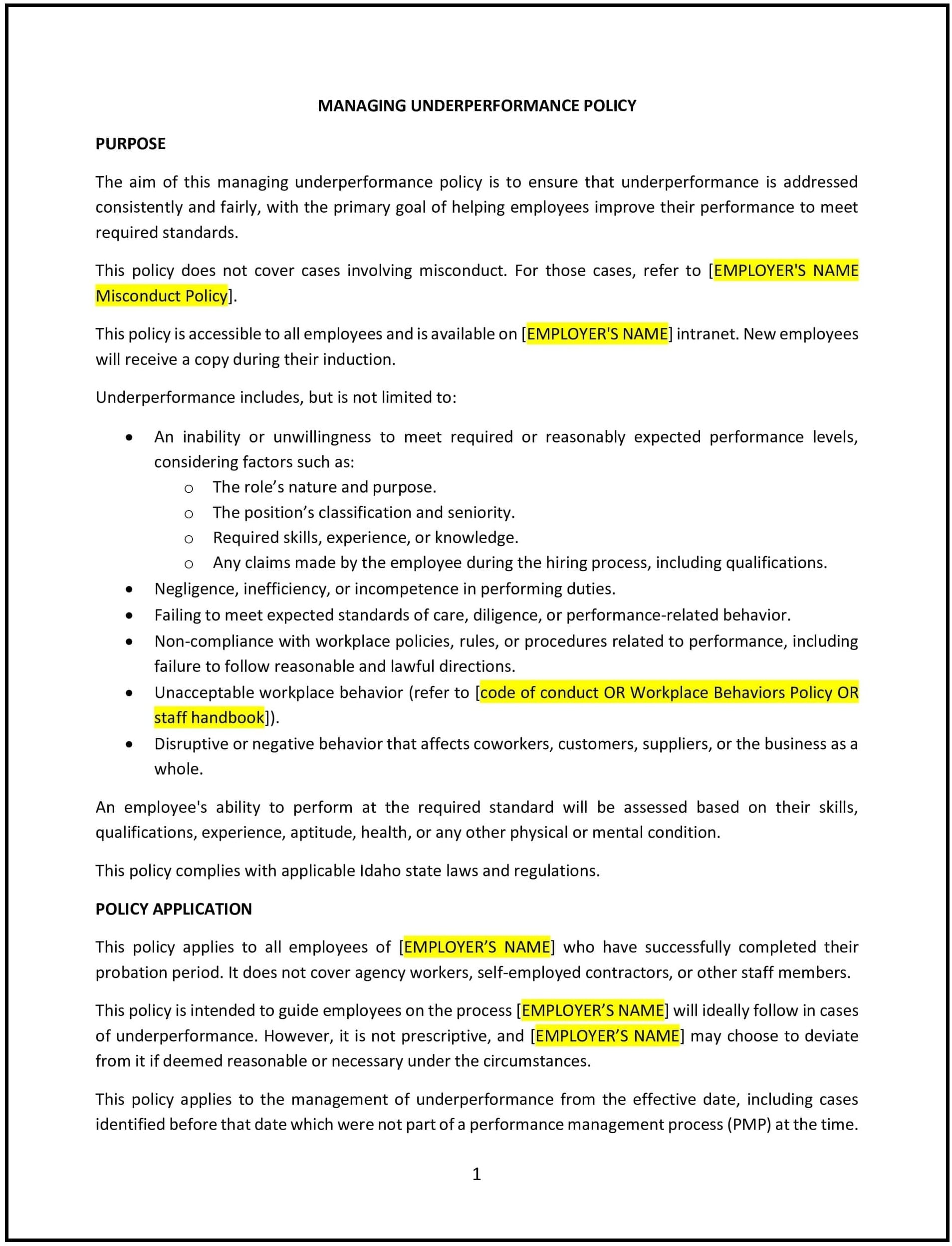
A managing underperformance policy helps Idaho businesses address employee performance issues in a structured and fair manner. This policy outlines the steps for identifying, addressing, and resolving underperformance, including communication protocols, performance improvement plans (PIPs), and follow-up procedures. It also emphasizes the importance of providing employees with the support and resources needed to improve their performance.
By implementing this policy, businesses can foster a culture of accountability, improve employee productivity, and maintain a positive work environment.
How to use this managing underperformance policy (Idaho)
- Identify underperformance: Establish clear performance standards and metrics to help managers identify underperformance. This ensures consistency and fairness in evaluating employee performance.
- Communicate expectations: Provide employees with regular feedback on their performance, including areas for improvement. Clear communication helps employees understand expectations and how they can meet them.
- Develop performance improvement plans (PIPs): Create structured PIPs that outline specific goals, timelines, and support measures to help employees improve their performance. This provides a clear roadmap for addressing underperformance.
- Offer support and resources: Provide employees with the necessary tools, training, or mentorship to help them succeed. This demonstrates the business’s commitment to employee development.
- Monitor progress: Schedule regular check-ins to review the employee’s progress toward meeting the goals outlined in the PIP. This allows for adjustments and ensures accountability.
- Document all steps: Maintain detailed records of performance discussions, PIPs, and follow-up actions. Documentation helps protect the business in case of disputes and ensures transparency.
- Address persistent underperformance: If underperformance continues despite support, outline the steps for further action, such as reassignment, role adjustment, or termination, in compliance with Idaho labor laws.
Benefits of using this managing underperformance policy (Idaho)
This policy provides several advantages for Idaho businesses:
- Improves employee performance: Structured feedback and support help employees address underperformance and achieve their full potential.
- Enhances workplace productivity: Addressing underperformance promptly minimizes disruptions and maintains team efficiency.
- Promotes fairness and transparency: A clear policy ensures all employees are treated consistently and fairly when performance issues arise.
- Reduces legal risks: Proper documentation and adherence to Idaho labor laws help businesses avoid disputes or claims of unfair treatment.
- Fosters a positive work environment: A proactive approach to underperformance demonstrates the business’s commitment to employee growth and success.
- Supports employee development: Providing resources and guidance helps employees improve their skills and contribute more effectively to the business.
Tips for using this managing underperformance policy (Idaho)
- Train managers: Provide training for managers on how to identify underperformance, deliver constructive feedback, and implement PIPs effectively.
- Communicate clearly: Ensure employees understand performance expectations and the consequences of underperformance from the outset.
- Be consistent: Apply the policy uniformly across all employees to avoid perceptions of bias or unfair treatment.
- Focus on solutions: Emphasize support and development rather than punitive measures to encourage employee improvement.
- Document everything: Keep detailed records of performance discussions, PIPs, and follow-up actions to ensure accountability and transparency.
- Review the policy regularly: Update the policy as needed to reflect changes in business needs, workforce dynamics, or Idaho labor laws.