Managing underperformance policy (Indiana): Free template
Got contracts to review? While you're here for policies, let Cobrief make contract review effortless—start your free review now.
Customize this template for free
Managing underperformance policy (Indiana): Free template
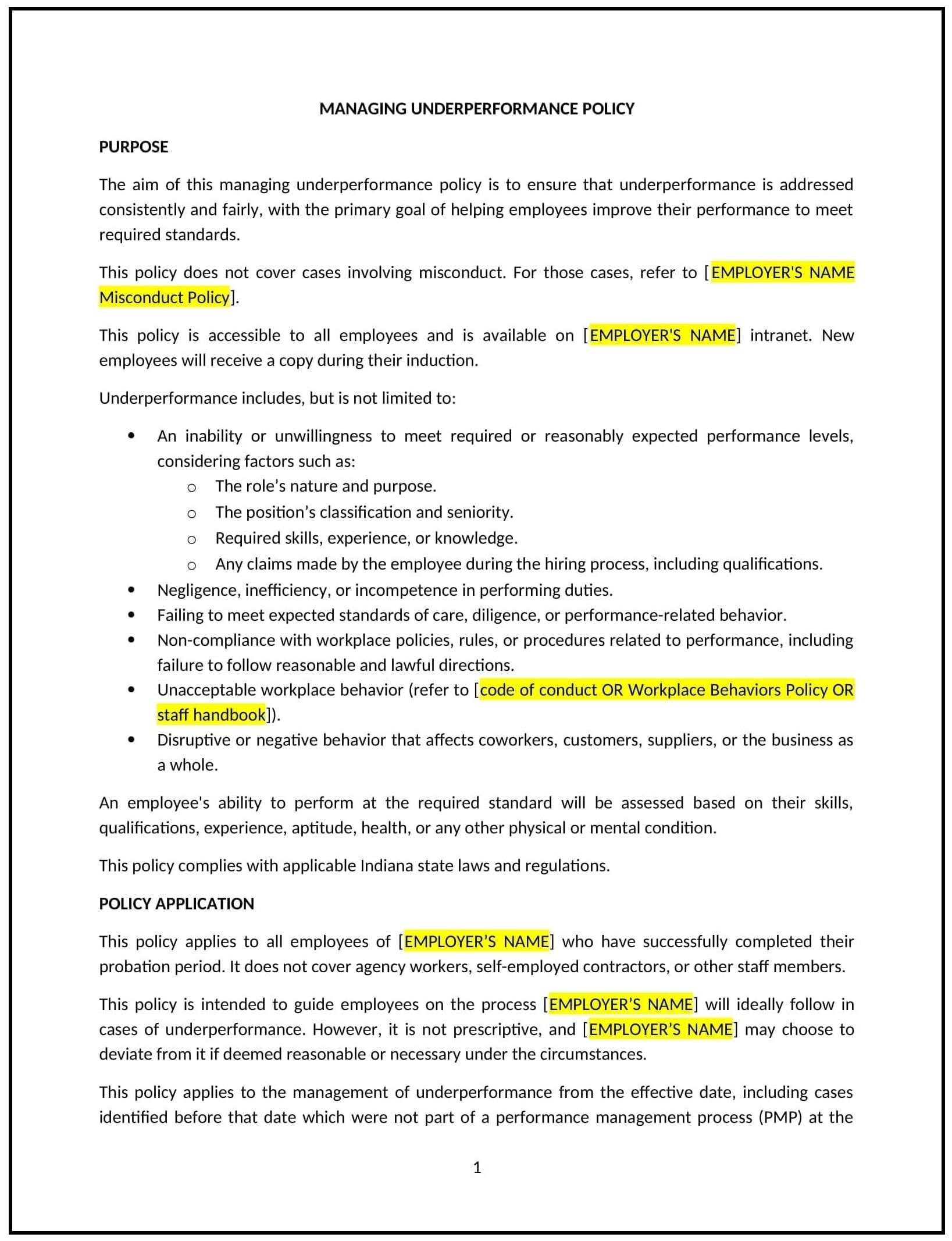
The managing underperformance policy helps Indiana businesses address and manage employee underperformance effectively. This policy provides guidelines for identifying underperformance, addressing the issue with employees, and offering support to help improve performance. It outlines a structured process that includes regular feedback, performance improvement plans (PIPs), and steps for escalation if the employee’s performance does not improve over time. By using this template, businesses can maintain a high-performance culture while offering employees the opportunity to meet expectations and succeed.
By implementing this policy, Indiana businesses can foster a constructive approach to performance management, improve employee engagement, and ultimately enhance overall productivity.
How to use this managing underperformance policy (Indiana)
- Define what constitutes underperformance: Clearly outline the criteria for underperformance, such as failure to meet established goals, missed deadlines, low-quality work, or poor attendance. The policy should specify measurable performance indicators, so employees and managers know what is expected.
- Establish a process for identifying underperformance: Set clear guidelines for how underperformance is identified and documented. This could include regular performance reviews, feedback sessions, or monitoring of key performance indicators (KPIs). The policy should explain the role of supervisors in tracking and addressing performance.
- Provide constructive feedback: Ensure that managers provide regular and constructive feedback to employees regarding their performance. The policy should emphasize the importance of focusing on specific behaviors or results that need improvement and offering suggestions on how to improve.
- Outline the performance improvement plan (PIP): Provide a structured approach for creating and implementing a performance improvement plan (PIP). The policy should define the steps for developing a PIP, including specific goals, timelines, support measures, and regular check-ins to monitor progress.
- Offer support and training: Specify how the business will support underperforming employees, such as offering additional training, mentoring, or resources to help improve performance. The policy should encourage managers to be proactive in offering assistance and guidance to employees.
- Set timelines for improvement: Establish reasonable timelines for employees to demonstrate improvement, typically between 30 and 90 days, depending on the nature of the performance issues. The policy should specify how progress will be tracked and when follow-up meetings will occur.
- Address the consequences of continued underperformance: If performance does not improve after the PIP period, outline the potential consequences, such as reassignment, disciplinary actions, or termination. The policy should be clear about the escalation process and when more formal actions will be taken.
- Promote a fair and consistent process: Ensure that the policy promotes fairness and consistency by applying the same process to all employees and addressing performance issues in a non-discriminatory manner. The policy should specify that decisions regarding underperformance and consequences should be based on objective criteria.
- Encourage open communication: Promote open dialogue between managers and employees regarding performance issues. The policy should encourage employees to ask for feedback and actively participate in their development.
Benefits of using this managing underperformance policy (Indiana)
Implementing this policy provides several key benefits for Indiana businesses:
- Improves employee performance: A clear process for addressing underperformance helps employees understand expectations and gives them the tools and support needed to improve their performance.
- Promotes fairness and transparency: By outlining a consistent and objective process for managing underperformance, businesses can ensure fairness and transparency in performance management, reducing the risk of favoritism or bias.
- Supports employee development: The policy offers employees the opportunity to address performance issues with the help of support, feedback, and training, which helps foster a positive, growth-oriented work environment.
- Increases employee engagement: When employees understand that their performance is being actively managed and that they have the opportunity to improve, they are more likely to feel engaged and motivated to succeed.
- Reduces the risk of legal issues: A well-documented and transparent process for managing underperformance helps businesses minimize the risk of claims related to unfair treatment or discrimination.
- Enhances organizational performance: By addressing underperformance early and providing the necessary support, businesses can maintain high standards and improve overall productivity.
Tips for using this managing underperformance policy (Indiana)
- Communicate the policy clearly: Ensure that all employees understand the managing underperformance policy by including it in the employee handbook, training materials, and during performance reviews. Employees should be aware of the performance expectations and the process for addressing any issues.
- Document performance issues: Keep detailed records of any performance concerns, feedback provided, and actions taken to address underperformance. This documentation will be important if further action is needed or if the employee raises any concerns.
- Be proactive in offering support: Managers should take the initiative to support employees who may be struggling with performance issues by offering training, mentoring, or additional resources. The policy should encourage managers to act early rather than waiting for the problem to escalate.
- Set clear, measurable goals: When developing a performance improvement plan (PIP), make sure the goals are specific, measurable, achievable, relevant, and time-bound (SMART). This ensures clarity for both the employee and manager in terms of what needs to be accomplished.
- Provide regular feedback: Offer regular check-ins with employees on their progress toward the goals set in their PIP. Regular feedback helps keep employees on track and provides them with the opportunity to ask for additional support if needed.