Managing underperformance policy (Iowa): Free template
Got contracts to review? While you're here for policies, let Cobrief make contract review effortless—start your free review now.
Customize this template for free
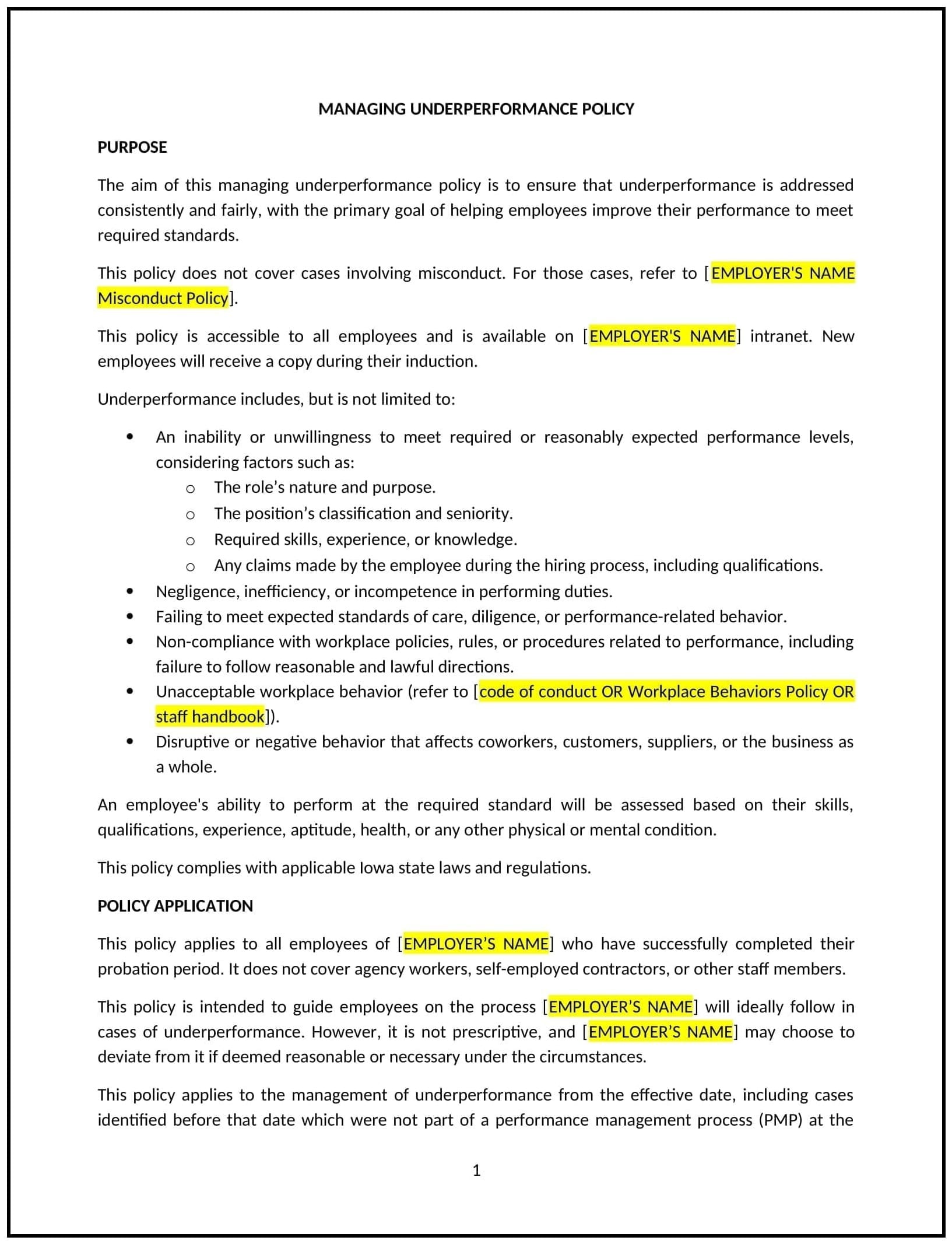
Managing underperformance policy (Iowa)
A managing underperformance policy helps Iowa businesses identify, address, and resolve employee underperformance in a constructive and fair manner. This policy provides a framework for identifying when an employee’s performance does not meet expectations, offering guidance on how to manage the situation while supporting the employee’s development. By implementing this policy, businesses can maintain productivity, improve employee performance, and ensure a fair and transparent approach to managing underperformance.
By adopting this policy, businesses in Iowa can effectively manage performance issues, provide employees with the tools they need to succeed, and foster a positive work environment based on accountability and support.
How to use this managing underperformance policy (Iowa)
- Define performance expectations: Establish clear performance standards and objectives for employees, including measurable criteria for job performance.
- Identify signs of underperformance: Develop guidelines for recognizing underperformance, such as missed deadlines, poor quality work, or failure to meet key performance indicators (KPIs).
- Implement a performance review process: Regularly evaluate employee performance through formal performance reviews, feedback sessions, and goal-setting discussions.
- Address underperformance early: Businesses should address performance issues as soon as they are identified, ensuring that employees are given an opportunity to improve before the situation escalates.
- Provide support and feedback: Offer constructive feedback and provide employees with resources, training, or coaching to help them improve their performance.
- Establish a performance improvement plan (PIP): If necessary, create a PIP outlining specific areas for improvement, measurable goals, and a timeline for achieving the desired performance levels.
- Monitor progress: Regularly assess the employee’s progress toward meeting the goals outlined in the PIP, and provide ongoing feedback and support.
- Take appropriate action: If performance does not improve after the PIP, businesses may need to consider alternative actions, such as reassignment, demotion, or termination, following a fair and consistent process.
- Review and update the policy regularly: Periodically review the policy to ensure it aligns with business needs, legal requirements, and best practices.
Benefits of using this managing underperformance policy (Iowa)
This policy offers several key benefits for Iowa businesses:
- Improves employee performance: By identifying performance issues early and providing the necessary support, businesses can help employees improve their skills and meet expectations.
- Increases productivity: Addressing underperformance leads to higher overall productivity, ensuring that employees contribute effectively to business goals.
- Promotes fairness and consistency: A well-defined process for managing underperformance ensures that all employees are treated fairly and consistently, reducing the risk of discrimination or favoritism.
- Strengthens employee development: Offering employees the tools and resources they need to succeed supports their growth and fosters a culture of continuous improvement.
- Reduces legal risks: A clear and consistent approach to managing underperformance helps protect businesses from potential legal claims related to unfair treatment or wrongful termination.
- Enhances employee engagement: When employees see that the business is committed to their success and development, they are more likely to feel valued and remain engaged in their work.
Tips for using this managing underperformance policy (Iowa)
- Set clear expectations: Businesses should ensure that employees understand their performance goals and what is expected of them in their roles.
- Address issues promptly: Employees should not be left unaware of underperformance issues. Prompt and timely feedback is essential for improvement.
- Provide regular feedback: Managers should conduct regular check-ins with employees to discuss performance, offer feedback, and adjust goals if necessary.
- Offer support and development: Businesses should provide employees with opportunities for skill development, training, and coaching to help them improve their performance.
- Keep documentation: Document all performance issues, feedback sessions, and PIPs to maintain a record of the process and decisions made.
- Be transparent: Businesses should clearly communicate the steps involved in the performance management process, including what happens if the employee does not meet performance expectations.
- Follow a consistent process: Ensure that performance management is applied consistently across the organization to maintain fairness and transparency.
- Consider employee well-being: In addition to performance issues, businesses should consider external factors, such as personal challenges or workplace dynamics, that may impact an employee’s performance.