Managing underperformance policy (Kansas): Free template
Got contracts to review? While you're here for policies, let Cobrief make contract review effortless—start your free review now.
Customize this template for free
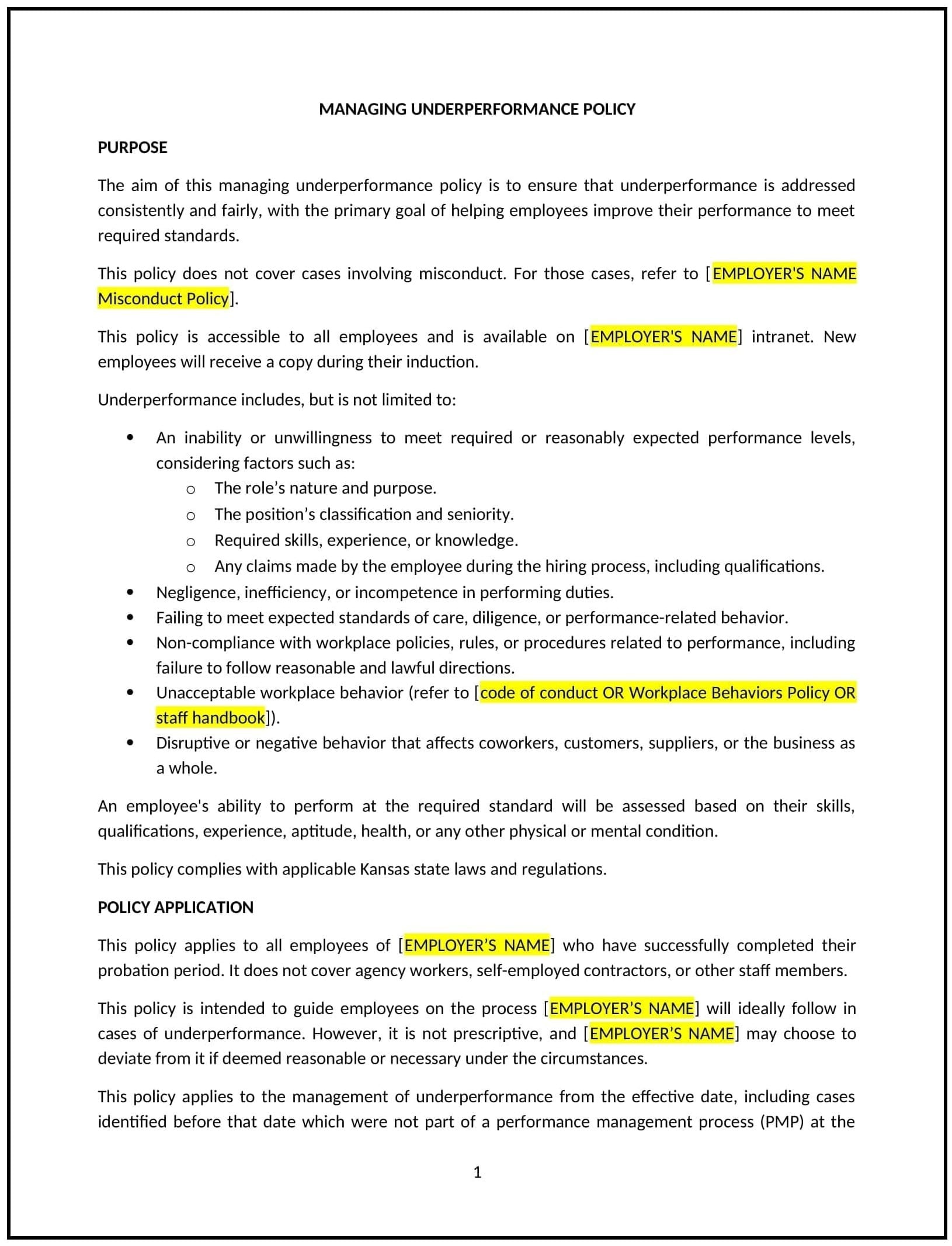
Managing underperformance policy (Kansas)
A managing underperformance policy helps Kansas businesses address and manage situations where an employee is not meeting performance expectations. This policy outlines the steps for identifying underperformance, providing support to employees, and taking corrective action if needed.
By implementing this policy, businesses can maintain a productive workforce, provide employees with opportunities to improve, and handle performance issues fairly and consistently.
How to use this managing underperformance policy (Kansas)
- Define underperformance: Businesses should clearly define what constitutes underperformance, including not meeting performance targets, failing to meet job requirements, or exhibiting a lack of engagement.
- Establish a performance review process: Businesses should implement regular performance reviews to assess employees’ progress, set goals, and provide feedback on areas for improvement.
- Identify the causes of underperformance: Before taking action, businesses should investigate the reasons for underperformance, considering factors such as inadequate training, personal issues, or unclear expectations.
- Provide support and feedback: Businesses should offer constructive feedback and provide employees with the tools, resources, and support needed to improve their performance, such as additional training or mentoring.
- Set clear improvement expectations: Businesses should set specific, measurable, achievable, relevant, and time-bound (SMART) goals for the employee to work towards and establish a timeline for improvement.
- Monitor progress: Businesses should regularly check in with the employee to assess progress, provide additional support if needed, and determine if performance improvements have been made.
- Take corrective action if needed: If performance does not improve within the set timeframe, businesses should implement corrective actions, which may include performance improvement plans, reassignment, or, in extreme cases, termination.
- Review and update regularly: Businesses should periodically review the policy to ensure it aligns with changing company needs, industry standards, and legal requirements.
Benefits of using a managing underperformance policy (Kansas)
- Improves productivity: Addressing underperformance proactively helps businesses improve overall productivity by ensuring all employees meet expectations and contribute to company goals.
- Provides clear expectations: A formal policy sets clear expectations for employees, helping them understand their performance standards and how they can succeed.
- Enhances fairness and consistency: Businesses can ensure all employees are managed consistently, providing equal opportunities for improvement and addressing issues fairly.
- Reduces legal risks: A well-documented and fair process for managing underperformance reduces the risk of legal challenges related to employee treatment or wrongful termination.
- Increases employee morale: By offering support and opportunities for improvement, businesses can help employees feel valued and invested in their professional growth.
- Promotes a culture of continuous improvement: Regular feedback and performance reviews encourage employees to strive for personal development, which benefits the business as a whole.
Tips for using this managing underperformance policy (Kansas)
- Communicate the policy clearly: Businesses should ensure that all employees are aware of the underperformance policy and understand the process for performance reviews, feedback, and improvement.
- Document all steps: Businesses should keep detailed records of performance reviews, feedback, improvement plans, and any corrective actions taken to ensure transparency and consistency.
- Provide training for managers: Managers should be trained on how to address underperformance constructively, communicate effectively with employees, and handle performance issues professionally.
- Offer support and guidance: Businesses should offer appropriate support and resources, such as additional training or mentoring, to help employees improve their performance.
- Be timely: Address performance issues early to avoid prolonged periods of underperformance that can negatively affect team dynamics and company goals.
- Evaluate the effectiveness: Businesses should regularly assess the effectiveness of the policy and the performance management process, making adjustments as needed to improve results.